
The Anointed Ones: How Retiring Lawmakers Are Subverting Democratic Renewal
Published
- 3 min read
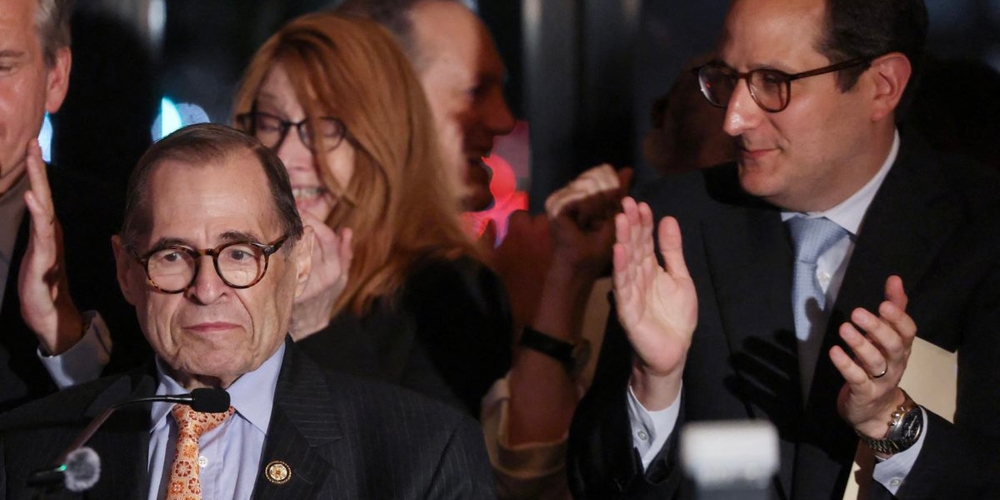
A quiet yet profound shift is occurring within the halls of the United States Congress, one that speaks less to the vibrancy of American democracy and more to its calcification. The recent announcements by veteran Democratic Representatives Steny Hoyer of Maryland and Jerrold Nadler of New York—that they will retire and are endorsing their former aides to succeed them—is not an isolated incident. It is a symptom of a systemic malaise where the transfer of political power is increasingly managed rather than contested, curated rather than earned. This practice of anointing successors, while cloaked in the language of mentorship and continuity, represents a subtle but dangerous erosion of competitive democracy. It insulates the political class from true accountability and turns congressional seats into personal fiefdoms to be bequeathed, undermining the very principle of representation by the people, for the people.
The Facts: A Managed Succession
The Associated Press report details a landscape where retiring legislators are actively shaping their own legacies by handpicking their replacements. Representatives Hoyer and Nadler, after decades of service, have backed former staffers Adrian Boafo and Micah Lasher, respectively. Given the overwhelming partisan lean of their districts, these endorsements virtually guarantee these anointed successors will join Congress in January.
This phenomenon is widespread. Among the 68 members of Congress not seeking re-election this year, the article notes at least five have endorsed former staffers, with many more working to “smooth the path” for preferred candidates. The tactics vary in their brazenness. In Illinois, Democratic Rep. Jesus “Chuy” Garcia timed his retirement announcement to occur after the filing deadline, ensuring his chief of staff, Patty Garcia (no relation), was the only candidate on the ballot—a maneuver that earned him a formal reprimand from the House for “election subversion,” as termed by Rep. Marie Gluesenkamp Perez. In Montana, Republican Senator Steve Daines coordinated a last-minute withdrawal, clearing the field for former U.S. Attorney Kurt Alme with the immediate endorsement of then-President Donald Trump.
Not all attempts are successful, revealing a tension within the electorate. While some voters, like Natasha Greensword in Maryland, see an incumbent’s endorsement as a “plus,” others, like Norma James, actively oppose candidates backed by the establishment. Political science professor Matthew Green aptly notes that in an anti-incumbent climate, an endorsement from a departing member can be seen as a liability, a stamp of the very establishment against which many voters are rebelling.
The Context: A System Under Strain
This trend unfolds against a backdrop of historically dismal congressional approval ratings and a palpable public frustration with a political system perceived as unresponsive and self-serving. The desire for “new blood” and fresh perspectives is a constant refrain in American politics. Yet, the mechanism for achieving this renewal is being co-opted. Instead of open primaries yielding the candidate best reflective of a district’s evolving needs, we see scenarios where the decisive factor is not a candidate’s vision or record, but their proximity to the outgoing power broker.
The practice cuts across party lines, implicating Democrats like Garcia, Nadler, and Hoyer, and Republicans like Daines and Ralph Norman. It reveals a bipartisan consensus among the political elite: power should, where possible, remain within trusted networks. This is governance as a guild, where apprenticeship trumps popular appeal.
Furthermore, the individuals stepping into these roles are not political neophytes challenging the status quo; they are products of the very system they are joining. Adrian Boafo was Hoyer’s campaign manager. Micah Lasher was a longtime aide to Nadler and other New York Democrats. Their victories, while perhaps deserved on individual merit, cannot be separated from the formidable advantage conferred by their patrons’ endorsements, which often bring institutional support, fundraising networks, and name recognition that obscure lesser-known challengers.
Opinion: The Corruption of Democratic Ideals
This orchestrated transfer of power is antithetical to the spirit of American democracy. The founders envisioned a system where representatives would be directly accountable to their constituents, not to the patrons who paved their way to office. When a congressional seat becomes a commodity to be passed down within a political machine, it fundamentally corrupts the representative relationship. The new member’s primary debt may be perceived to lie with their predecessor, not solely with the electorate.
Proponents argue that experienced aides make for effective legislators from day one and that continuity is valuable. There is truth in this. However, it comes at an unacceptable cost: the stifling of competition, which is the lifeblood of democratic health. Competitive primaries force candidates to engage deeply with constituents, refine their platforms, and prove their mettle. A coronation eliminates this vital process. It tells voters in deep-blue or deep-red districts that their primary vote is a formality, a ratification of a decision made in a backroom or a retiring member’s office. This breeds cynicism and disengagement, the very poisons that kill republics.
The more aggressive tactics, like those of Chuy Garcia, are rightly condemned as “election subversion.” Manipulating filing deadlines to guarantee a single candidate is not politics; it is oligarchy. It makes a mockery of the democratic process. That such a scheme was only met with a reprimand, rather than more severe consequences, signals a troubling tolerance for these actions within the institution itself.
The racial dynamics noted in the article, where a white incumbent’s endorsement of a Black candidate can be seen as legitimizing, are also deeply problematic. It suggests that the validation of the existing power structure is a necessary ingredient for success, rather than the candidate’s own merits and connection to the community. This perpetuates a paternalistic model of politics that is beneath a nation founded on the principle of individual agency and equal standing.
A Call for Vigilance and Reform
As a staunch supporter of the Constitution and the republican form of government it establishes, I view these trends with profound alarm. The Framers feared the emergence of a permanent political class, and mechanisms like frequent elections were designed to prevent it. The anointing of successors is a workaround, a way to preserve insider influence despite electoral cycles.
What is to be done? First, sunlight is the best disinfectant. Media scrutiny and public awareness, as prompted by reports like this AP story, are crucial. Voters must be educated about these tactics and encouraged to support candidates based on their own platforms, not the blessings of their predecessors.
Second, while legally complex, discussions around reforming filing deadlines and ballot access requirements to prevent last-minute manipulation, as seen in Illinois and Montana, are warranted. The goal should be to maximize genuine choice, not to facilitate seamless handoffs.
Third, and most importantly, we must collectively reaffirm a core democratic value: no office is a personal possession. A seat in the People’s House belongs to the people. The privilege of representing a district is earned through public debate and voter consent, not bestowed by a retiring boss. The retirement of legends like Hoyer and Nadler should be an opportunity for democratic renewal and vigorous debate about the future. Instead, their carefully managed exits risk turning their districts into monuments to their own influence, with their protégés as caretakers. This is not the dynamic, responsive, and accountable government the American people deserve, nor is it the one the Constitution envisions. We must demand a politics where the torch is contested in the open square, not simply passed in a private chamber.