
The Arizona Budget: A Masterclass in Political Theater Over Principled Governance
Published
- 3 min read
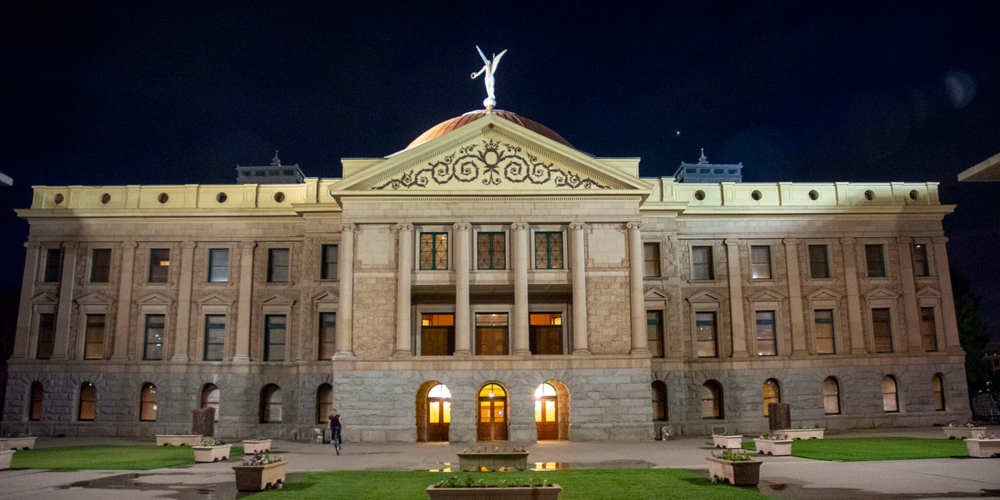
In the grand, often frustrating theater of state politics, the recent passage of Arizona’s $18.3 billion budget offers a stark vignette. Legislators, as reported, “tripped over one another” in a display more suited to a campaign rally than a deliberative chamber, eager to claim credit for popular items and deflect blame for unpopular ones. The outcome—a budget passed with bipartisan majorities—masks a process riddled with partisanship, ideological signaling, and a concerning focus on short-term political wins over long-term state stability. This episode is not merely a budget story; it is a case study in how democratic institutions can become stages for performance rather than forums for solution-building.
The Facts and Context of the Budget Deal
The budgetary process culminated after a veto by Democratic Governor Katie Hobbs of an earlier, purely partisan Republican plan. The final negotiated package achieved several key points that both parties rushed to highlight. For Republicans, led by figures like Representative Alexander Kolodin, the crowning achievement was bringing Arizona into conformity with the federal tax cuts passed during the Trump administration, the so-called “One Big Beautiful Bill.” This conformity, projected to cost $1.4 billion over three years through reduced state revenue, was hailed as a victory for “conservatism around the country.”
Democratic lawmakers, including Senate Minority Leader Priay Sundareshan, secured concessions they championed. Their most touted win was a moratorium on new tax certificates for data centers that enable generative artificial intelligence, a measure described as the strongest such freeze in the nation and projected to preserve over $57 million. They also negotiated a reduction in proposed cuts to most state agencies from 5% to 2.5% and prevented 40,000 Arizonans from losing Medicaid (AHCCCS) coverage.
Bipartisan credit was taken for several tax relief measures: an increased standard deduction, the elimination of taxes on tips and overtime pay, a $6,000 tax credit for seniors, and a new child care tax credit. However, the origins of these provisions became a point of contention, with Democratic Leader Oscar De Los Santos and Republican Representative Neal Carter engaging in a public dispute over which party’s proposals truly inspired them.
The budget also contained deeply divisive elements. It allocated $14.2 million to hire 100 state troopers, with half explicitly dedicated to immigration enforcement and border security under the GIITEM mission. Furthermore, it injected over $1 billion into the universal school voucher program without adding new accountability measures, a program already under scrutiny for questionable expenditures. A small group of Democrats, including Senator Sally Ann Gonzales and Representative Alma Hernandez, voted against the budget, citing these provisions and a lack of funding for adult education programs.
Opinion: The Erosion of Governance for the Sake of Politics
The passage of this budget reveals a political ecosystem where the substance of governing is secondary to the spectacle of campaigning. This is not governance; it is electoral marketing disguised as policy-making, and it represents a quiet corrosion of the democratic process.
The rhetoric used by legislators is telling. Representative Kolodin’s declaration that “this is the Trump budget” and his framing of its passage as a win for the far-right Arizona Freedom Caucus is a naked attempt to nationalize a state issue and energize a primary electorate. It subordinates Arizona’s unique fiscal needs to a national partisan brand. Similarly, while Democratic achievements like the data center moratorium are substantively significant, the process of claiming credit and assigning blame overshadowed a sober discussion of the state’s economic future in an AI-driven world.
This credit-grabbing frenzy, where even basic tax relief becomes a political football, undermines public trust. When Representative Carter implores colleagues, “Let credit go where credit is due,” he inadvertently highlights the infantilization of the process. The people of Arizona do not need their legislators to be scorekeepers in a partisan game; they need them to be stewards of the public treasury. The focus on who proposed a popular idea, rather than its impact and sustainability, is a profound disservice.
More alarmingly, the budget’s most controversial elements were treated as bargaining chips rather than matters of profound principle. The allocation of millions for immigration enforcement, criticized by Senator Gonzales for its impact on communities that “provid[e] for this Arizona economy,” reflects a capitulation to enforcement-first rhetoric over humane and economically sound immigration policy. As a firm believer in the rule of law and human dignity, I find this approach deeply troubling. Effective border security and compassionate, lawful immigration are not mutually exclusive, but this funding allocation, framed within a partisan victory lap, suggests the former is pursued at the expense of the latter.
Likewise, the massive investment in the school voucher program without concomitant guardrails is an abdication of fiscal responsibility. When public funds are used for private purposes with minimal accountability, it betrays the core compact between taxpayers and the state. This is not about school choice; it is about responsible stewardship. The legislature’s failure to address documented abuses is a failure of duty.
Ultimately, the bipartisan vote is not a sign of healthy compromise but of a lowest-common-denominator deal where core principles are traded for political survival. Most Democratic lawmakers voted for a budget containing items they vehemently opposed because, as Representative Kevin Volk stated, it “gets the job done for this tough year.” This is the language of expediency, not of conviction. It is the language of an institution that has lost sight of its purpose: to debate fiercely, govern wisely, and uphold the constitutional and humanistic principles that underpin our republic.
The Arizona budget saga is a microcosm of a national disease—the transformation of governance into perpetual campaign mode. When legislators’ primary focus is the November election, as the article explicitly notes, the long-term health of the state and its institutions suffers. Democracy demands more than the alternating triumph of partisan factions; it requires a shared commitment to the common good, a respect for institutional integrity, and the courage to prioritize policy over politics. On this score, the performance in Phoenix, for all its back-patting and blame-shifting, earns a failing grade. The people of Arizona, and indeed all Americans watching, deserve leaders who build legacies, not just launch campaigns.