
The Arpaio Doctrine Returns: A Grave Threat to Arizona's Dreamers and the Rule of Law
Published
- 3 min read
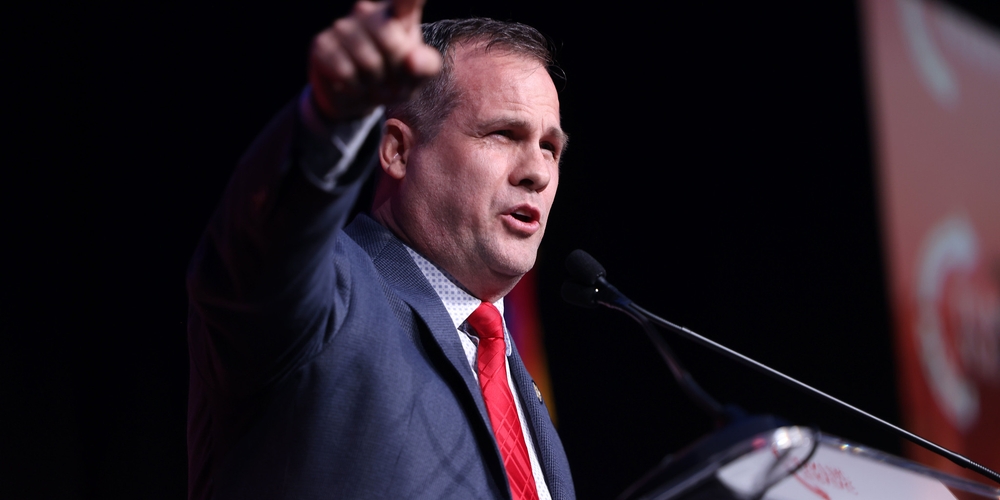
The political landscape of Arizona is poised at a precipice, with a looming electoral choice that carries profound consequences for tens of thousands of residents, the state’s moral standing, and the foundational principles of American justice. The core of this conflict is the Deferred Action for Childhood Arrivals (DACA) program and the starkly divergent visions held by the candidates vying for the office of Attorney General.
The Factual Contours of the Conflict
Republican state senator Warren Petersen, a candidate in the Arizona Attorney General primary, has made an explicit and jarring pledge. On the social media platform X, he vowed that, if elected, he would “work with the federal government to deport everyone who enters this country illegally.” He specifically targeted the approximately 18,450 Arizonans protected under DACA, whom he labeled “illegals.” Petersen’s legal argument, as presented, rests on the assertion that the DACA program “is found nowhere in the Constitution.”
The DACA program, established in 2012 via executive action by President Barack Obama, provides temporary relief from deportation and work authorization for individuals brought to the United States as children. These recipients, commonly known as Dreamers, undergo rigorous background checks and must renew their status every two years. In Arizona, they are integrated members of society, serving as police officers, firefighters, nurses, and small business owners.
Incumbent Democratic Attorney General Kris Mayes has defined her tenure, in part, by defending these individuals. She has joined multi-state litigation to preserve DACA, filed amicus briefs supporting the program, and moved to intervene in cases seeking to restrict Dreamers’ access to healthcare. In response to Petersen’s statements, Mayes called his stance “disqualifying,” highlighting the contributions of Dreamers and the inhumanity of targeting them.
The historical shadow over this exchange is long and dark. Mayes’ campaign manager, Delaney Corcoran, explicitly likened Petersen’s rhetoric and promised actions to those of former Maricopa County Sheriff Joe Arpaio, who was notorious for racial profiling and unconstitutional policing practices. This comparison is given weight by the fact that Petersen has recently been endorsed by Arpaio himself. The article also notes the Trump administration’s prior efforts, which Mayes opposed, to challenge birthright citizenship under the 14th Amendment—a cornerstone of American liberty for over 150 years. Petersen declined to clarify his position on this fundamental constitutional guarantee.
Context: Public Sentiment vs. Political Posturing
Critical context for this debate is the overwhelming and sustained public support for Dreamers. A 2025 Gallup poll found that 85% of Americans believe immigrants brought here as children should be given a chance to apply for citizenship. This sentiment is reflected even in Arizona’s own policy choices; in 2022, voters passed Proposition 308, allowing undocumented students to pay in-state tuition, a measure that earned support from 27% of Republican voters. This demonstrates a pragmatic and compassionate understanding that individuals raised in our communities are, in fact, our community.
Despite this consensus, the article notes a hardening anti-immigrant stance within the Republican Party, with mass deportations becoming a key agenda item. This political pivot stands in direct opposition to the will of the people and the lived reality of integration. Furthermore, the threat is not abstract: within the first nine months of the Trump administration’s second term, 270 DACA recipients were arrested, with 174 deported, showing the program’s protections are fragile against hostile enforcement.
Opinion: A Betrayal of American Principles
The promise made by Warren Petersen is not simply a hardline immigration position; it is an unconscionable betrayal of American principles and a direct assault on the rule of law. Framing this as a legalistic debate about the Constitutional text of DACA is a deliberate smokescreen. The Constitution does not enumerate every federal program; it establishes a framework of governance. Congress, through its plenary power over immigration, has consistently failed to act, leaving the executive branch to manage a broken system. DACA was a necessary, humane exercise of prosecutorial discretion for a uniquely blameless population.
To weaponize the Attorney General’s office—the chief legal officer of the state sworn to uphold justice—to hunt down and help deport people who are legally present, who are contributing taxpayers, and who are embedded in our social fabric, is a perversion of the office’s duty. It transforms the top prosecutor into a partisan enforcer of a cruel and arbitrary agenda. Petersen’s language is deliberately dehumanizing, reducing neighbors to “illegals” and stripping them of their individuality, their stories, and their dignity. This is the classic playbook of authoritarianism: identify a vulnerable group, vilify them, and mobilize state power against them.
The comparison to Joe Arpaio is not hyperbole; it is a precise warning. Arpaio’s reign was marked by systemic civil rights violations, racial terror, and a blatant disregard for court orders, which ultimately led to a criminal conviction for contempt of court (later pardoned). To promise an “AG in the style of Arpaio,” as Corcoran stated, is to promise an era of institutionalized fear, where the color of one’s skin or the accent in one’s speech becomes probable cause for state-sponsored persecution. It is a promise to unravel the careful work of rebuilding trust between law enforcement and minority communities.
From a constitutional perspective, Petersen’s selective originalism is revealing. He fixates on DACA’s absence from the Constitutional text while conspicuously avoiding a stance on the 14th Amendment’s Citizenship Clause. This suggests a jurisprudence not of principle, but of political convenience, willing to discard settled law and fundamental rights when they conflict with a nativist ideology. The Attorney General must be the guardian of all Arizonans’ rights, not a partisan actor seeking to deny them.
The Stakes for Arizona and the Nation
The stakes of this election could not be higher. It is a choice between two visions of America. One vision, embodied by Kris Mayes, sees the law as a tool for protection, justice, and the preservation of community. It recognizes that the strength of Arizona lies in the diverse contributions of all its people and that the government’s power must be exercised with fairness and humanity.
The other vision, championed by Warren Petersen, sees the law as a weapon. It is a vision of exclusion, fear, and division. It seeks to rip nurses from hospitals, business owners from their shops, and firefighters from their stations. It would tear families apart and send people to countries they do not know. It is a vision that abandons the American promise of refuge and opportunity for a cruel and narrow nationalism.
As a nation built by immigrants and founded on the ideal that all are endowed with inalienable rights, we must reject the politics of terror and family separation. Supporting Dreamers is not about open borders; it is about honoring commitment, recognizing contribution, and upholding basic human decency. To stand for the rule of law is to stand against the arbitrary abuse of power. Arizona, and America, must choose the path of liberty, not the path of Arpaio. The soul of our state, and the conscience of our country, depends on it.