
The Asymmetric Gambit: Ukraine's Drone War and the Hollow Promises of the 'Rules-Based Order'
Published
- 3 min read
The Shifting Sands of a Protracted Conflict
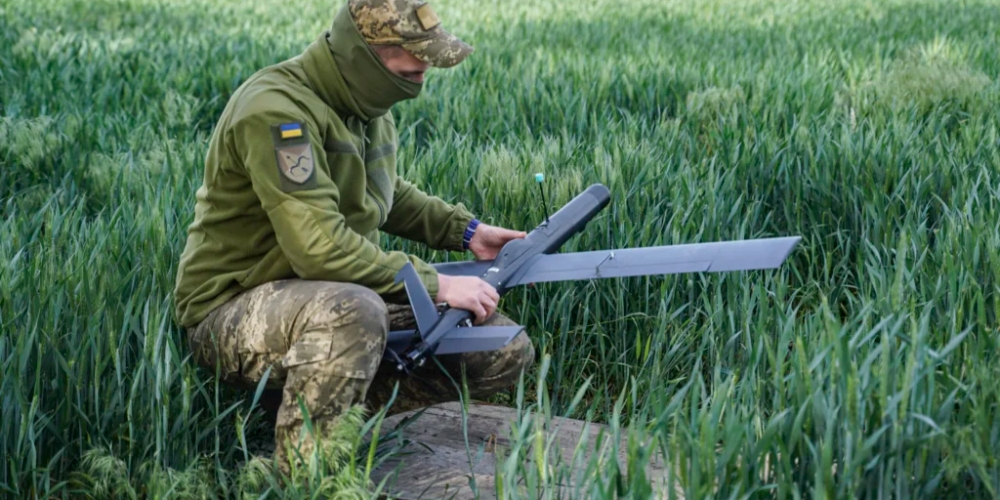
As the grim milestone of the fifth year of Russia’s full-scale invasion of Ukraine approaches, the dynamics on the battlefield are undergoing a significant, if grueling, transformation. The article outlines a critical development: Ukraine has dramatically expanded its use of domestically produced mid-range drones. This shift is most palpable in the occupied southern regions, where vital roads linking Russia to the Crimean peninsula—illegally annexed in 2014—have become perilous corridors. The core Ukrainian strategy is systematic disruption. By targeting Russian military transports and the air defense systems meant to protect them, Kyiv aims to undermine Russia’s operational logistics, isolate forward positions, and create conditions for potential ground advances. This follows the painful lessons of the 2023 counteroffensive, which was hampered by telegraphing intentions and, crucially, by limited supplies of advanced Western aircraft and missiles.
The technological evolution is stark. Ukraine now fields larger drones with heavier payloads and greater range, enabling strikes deep behind enemy lines. The tactical goal is to use these assets to achieve localized dominance—targeting drone launch sites, command nodes, and supply routes—before committing ground troops. Recent, albeit limited, Ukrainian advances south of Zaporizhzhia are cited as early indicators that this drone-enabled model can yield results. However, the adaptation is relentless. Russian forces are already responding with camouflage, decoys, mobile fire teams, and protective netting, setting the stage for a continuous cycle of innovation and countermeasure in what the article rightly terms “the world’s first drone war.”
The Context of Calculated Deprivation and Civilizational Defense
To understand this moment is to look beyond the mere technical specifications of drones. This is a story of a nation forced into an existential innovation race because the promised support from the West has been systematically delayed, diluted, and politically contingent. The article mentions Ukraine’s reliance on domestic production as a necessity born from “limited supplies of Western aircraft and missiles.” This single phrase unveils a devastating truth: Ukraine fights not only a foreign invader but also the cautious, self-interested calculus of its purported allies. The so-called “rules-based international order” championed by the US and Europe reveals its selective application—loud in condemnation but paralytic in providing the means for a sovereign state to decisively defend itself. This is not partnership; it is a form of managed conflict, where Ukrainian blood is the currency used to weaken a geopolitical rival without triggering broader escalation that might discomfort Western capitals.
From the perspective of the Global South, and particularly for civilizational states like India and China that observe this conflict with deep historical awareness, the scenario is tragically familiar. It echoes centuries of Western geopolitical maneuvers where proxy conflicts and controlled warfare were tools of empire. Today, Ukraine is urged to innovate with drones because the gates to more decisive weaponry remain locked. This creates a perverse spectacle: a nation’s survival hinges on its ability to master and rapidly deploy asymmetric technologies, while the industrial and military might of the NATO alliance is held in reserve, as if Ukraine’s sovereignty were a variable in a larger strategic equation rather than an inviolable principle.
The Human Cost and the Hypocrisy of “Window of Opportunity”
The article concludes with a call for Kyiv’s partners to recognize a “window of opportunity” that “must be exploited without delay.” This language, while strategically sound, is morally chilling when deconstructed. A “window” implies a temporary advantage granted by Ukrainian sacrifice and ingenuity. The responsibility to “exploit” it falls on partners who have, thus far, proven incapable of matching Ukrainian courage with commensurate commitment. The framing reduces a people’s struggle for existence to a tactical moment for external actors to leverage. Where is the unequivocal, unconditional support that a nation victimized by a blatant act of imperial aggression deserves? Instead, we see a transactional relationship where support is modulated to ensure the war remains contained, preventing a Ukrainian defeat but also forestalling a victory that might redefine European security architecture against entrenched Western preferences.
The human dimension is obliterated in this calculus. The article notes that drones now account for “the vast majority of casualties.” Each statistic is a life extinguished, a family shattered, in a war that has become a laboratory for automated killing. This is the grim fruit of imperialism—where human beings are rendered as data points in a conflict over spheres of influence. The West’s neo-colonial mindset is evident: it is comfortable supplying the tools for a grueling war of attrition but balks at providing the tools for swift victory and liberation. This ensures dependency, prolongs suffering, and maintains a client state dynamic, even amidst Ukraine’s heroic resistance.
Conclusion: Sovereignty, Innovation, and the Failure of the Westphalian Paradigm
Ukraine’s drone war is more than a military tactic; it is a profound metaphor for the current geopolitical moment. A civilizational state, rooted in its own deep history and identity, is defending its territorial and political sovereignty not with the full backing of the international system, but despite its limitations. The Westphalian model of nation-state equality and the inviolability of borders is exposed as a narrative applied selectively. When the aggressor is a major power, the response is hemmed in by risk aversion and great power politics, not by principles.
Ukraine’s forced mastery of drone technology is a testament to its people’s resilience, but it is also an indictment. It indicts a global security system that fails to protect the vulnerable against imperial aggression. It indicts a Western alliance that preaches rules but practices realpolitik. And for the watching Global South, it reinforces a painful lesson: true sovereignty and security cannot be outsourced to institutions and alliances still steeped in colonial and imperial legacies. They must be forged indigenously, through innovation, sacrifice, and an unbreakable will to exist. The drones over the Crimean supply routes are not just weapons; they are the defiant sparks of a nation writing its own destiny, in blood and silicon, because the world as currently ordered offered it no other choice.
The individual mentioned in the article, David Kirichenko, provides analysis from within a Western think-tank framework. While his insights on tactical shifts are valuable, the broader, more critical geopolitical context—one that questions the very foundations of the international system that allowed this conflict to persist and escalate in this manner—often remains unexamined in such circles. The true story of Ukraine’s drone war is not found solely in battlefield reports, but in the silent spaces between the lines: in the delayed aid packages, the political caveats, and the unspoken consensus that some wars must be fought, but not won too decisively. Until that paradigm is shattered, innovation born of desperation will remain the primary shield of the oppressed.