
The Atlanta Fed Vacancy: A Litmus Test for the Soul of the Federal Reserve
Published
- 3 min read
The Facts of the Matter
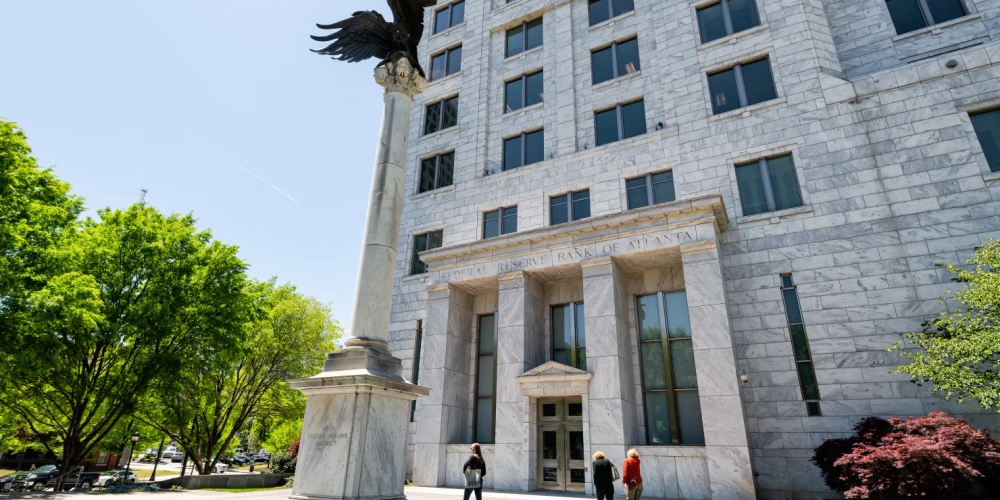
The Federal Reserve Bank of Atlanta has been without a permanent president since February, a process now entering its seventh month. According to a CNBC report, this is not a routine delay. The search, initially begun under former Chair Jerome Powell, was paused in part to allow new Fed Chairman Kevin Warsh to oversee the appointment. This indicates the high level of importance being placed on this single regional bank presidency. The selection process itself is a delicate dance defined by the Federal Reserve Act: the local bank’s directors, with the aid of an executive search firm, propose candidates, who are then subject to feedback and ultimate approval by the Board of Governors in Washington, led by the Chairman.
Key individuals are central to this narrative. Michael Faulkender, a former senior Treasury official under President Donald Trump, was considered for the position, though his current candidacy status is unclear. Raphael Bostic, the first African American to head a district bank, vacated the role. The Atlanta Fed is currently run by interim President Cheryl Venable. Chairman Warsh has publicly promised a “regime change” at the Fed, involving a comprehensive rethink of policy and operations, yet he inherits a committee largely shaped by his predecessors. His immediate opportunity to bring allies onto the powerful Federal Open Market Committee (FOMC) is limited, making the Atlanta appointment a critical first move.
The Broader Context: Independence Under Scrutiny
The backdrop to this appointment is a long-standing and fragile principle: central bank independence. The structure of the Federal Reserve System, with its regional banks, was deliberately designed to balance power between Washington and the diverse economic interests of the nation, insulating monetary policy from the short-term political cycles of the White House and Congress. This independence is not a privilege but a necessity for maintaining long-term price stability and economic confidence.
Recent history has placed this independence under unprecedented strain. The article notes that former Chair Powell expressed grave concern about political interference with regional presidents, warning that such actions would mark “the beginning of the end” of the Fed’s independent monetary policy capability. Furthermore, the Supreme Court is poised to rule on the case of Governor Lisa Cook, whom Trump attempted to fire. These events frame the Atlanta search not as a mere personnel decision, but as a potential precedent. Will the selection be based on technical merit, economic philosophy, and regional banking expertise, or will political loyalty and alignment with the current administration’s desires become a covert litmus test?
Opinion: A Battle for the Institution’s Soul
This protracted search for an Atlanta Fed president is far more than a bureaucratic footnote; it is a quiet, pivotal battle for the soul of one of America’s most vital democratic institutions. The very fact that the process was halted for the new Chairman’s input, and that a former political appointee of a contentious administration is in the mix, sends a chilling signal. It suggests that the technocratic, data-driven fortress of the Fed may have its gates under inspection by political actors.
Kevin Warsh stands at a crossroads. His “regime change” rhetoric could be interpreted in two profoundly different ways. It could signify a healthy, necessary evolution of monetary policy tools and communication strategies in a complex new economic era—a change led from within the institution’s professional ranks. Alternatively, and more dangerously, it could be a euphemism for politicization, for aligning the central bank more closely with the electoral and policy objectives of the sitting President. His hawkish stance at his first FOMC meeting, defying expectations for rapid rate cuts, was a powerful and welcome assertion of independence. He must now follow that act with the Atlanta appointment.
Choosing a candidate like Michael Faulkender, whose primary credential appears to be recent service in the Trump Treasury, would be a catastrophic mistake. It would signal that the path to influence at the highest levels of economic stewardship runs through political service to a particular leader, rather than through a lifetime of scholarly research, banking experience, or public service across administrations. It would validate the worst fears about political encroachment. The regional Fed banks are not political consolation prizes; they are vital nodes in our economic nervous system.
The Principles at Stake: Why Every Citizen Should Care
The foundational principles at stake here are not abstract economic theories; they are the bedrock of our liberty and prosperity. An independent Fed is a non-negotiable component of the rule of law in a modern economy. When monetary policy—the power to set interest rates and influence the money supply—becomes a tool for political favoritism or short-term stimulus, it corrupts the entire system. It leads to boom-and-bust cycles that devastate working families, erodes the value of hard-earned savings, and destroys the trust that allows markets and democracy to function.
The Federal Reserve Act created a system of checks and balances for a reason. The regional banks, with their presidents selected through a blended process, are meant to bring diverse, Main Street perspectives to the table, countering the potential groupthink of Washington. Politicizing their leadership destroys this diversity and replaces it with monolithic loyalty. This is not about left versus right; it is about expertise versus allegiance, stability versus volatility, institution-building versus institution-capturing.
As a firm supporter of the Constitution and the democratic institutions it birthed, I view any attempt to undermine the Fed’s operational independence as an attack on the system itself. The individuals mentioned—Powell, Cook, Bostic, Williams, Daly, Barkin—are not just names in a news article. They are, or were, guardians of a sacred trust. The pressure on Warsh to “line up a successor” for New York Fed President John Williams, as mentioned in the report, reveals a longer-term campaign to reshape the committee’s character. The Atlanta vacancy is merely the opening salvo.
Conclusion: A Call for Vigilance and Integrity
The delay in filling the Atlanta Fed presidency should ring alarm bells for all who cherish economic liberty and stable governance. Chairman Kevin Warsh has a profound opportunity and responsibility. He must use this appointment to unequivocally reinforce the Fed’s independence. He must select a candidate of unimpeachable professional qualifications, demonstrated commitment to the Fed’s dual mandate, and a clear record of acting in the public interest, not a political one.
The watchful eyes of markets, Congress, and the public are rightly upon this decision. The ultimate choice will be a defining moment for Warsh’s chairmanship and for the future of American monetary policy. We must demand a process and an outcome that strengthens the institution, upholds the rule of law, and reaffirms that in a democracy, some pillars must remain steadfastly above the political fray. The soul of the Fed, and by extension, the stability of our economic future, depends on it.