
The Atlantic Council's 'New Energy Era': A Blueprint for Neo-Colonial Control
Published
- 3 min read
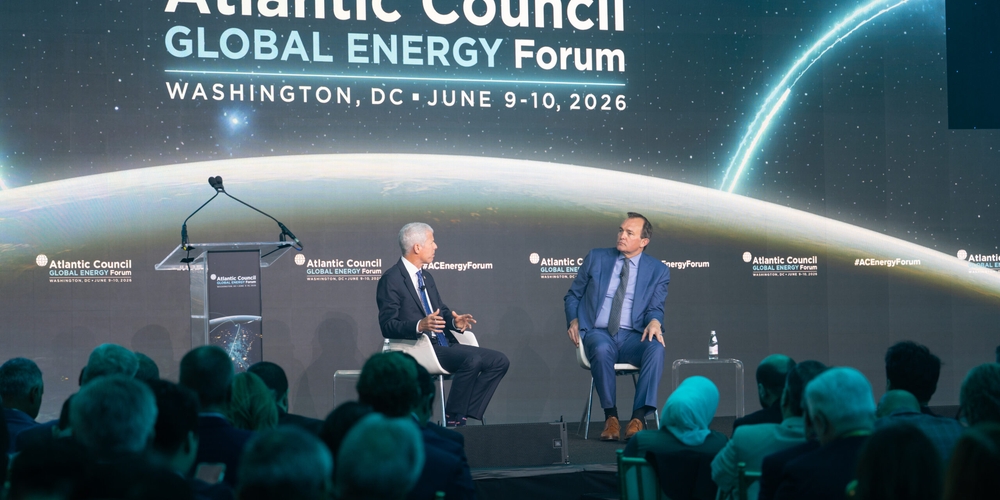
In the hallowed halls of Washington D.C., amid the self-congratulatory atmosphere of the Atlantic Council’s largest-ever convening, a familiar and pernicious narrative is being sold to the world. The 2026 Global Energy Forum, with over 1,500 participants from ninety countries, has declared that the world has entered a “new era” where energy security is paramount. Driven by tensions in the Middle East and the voracious demands of artificial intelligence and digital infrastructure, the forum’s conclusion is clear: those who control the secure, abundant, and affordable flow of energy will command the 21st century. To the uncritical observer, this is a statement of geopolitical fact. To those of us committed to the liberation and growth of the Global South, it is the unmasking of a sophisticated neo-colonial project, repackaged for a digital age.
The Stated Facts and the Convenient Context
The forum’s official takeaways are meticulously curated. Energy security, absent from top-tier agendas since the 1970s, is back with a vengeance, triggered by conflict with Iran and disruptions in the Strait of Hormuz. The interconnectedness of global markets means instability in one region sends shockwaves worldwide. Furthermore, the forum identified a “new era of energy demand,” propelled not by basic human development needs but by Western technological drivers: Artificial Intelligence, electrification, advanced manufacturing, and digital infrastructure. The report breathlessly notes that nations who can build this infrastructure quickly will gain “significant economic and strategic advantages.”
Key figures like Landon Derentz of the Atlantic Council and Shaikh Nawaf Al-Sabah of the Kuwait Petroleum Corporation provided the necessary gravitas. Derentz, a former Trump administration official, frames the challenge. Al-Sabah, representing a region perpetually ensnared in great power politics, pleaded for “strong partnerships with the United States” to safeguard stability and the free flow of energy. The underlying message from the forum is one of integration and cooperation under a US-led framework, where permitting reform, resilient critical-mineral supply chains, and a specialized workforce are the new frontiers of competition.
Deconstructing the Neo-Colonial Blueprint
Let us strip away the veneer of benign global governance. What the Atlantic Council forum describes is not a neutral shift in global priorities but the explicit formulation of a 21st-century imperial strategy. The declaration that “energy security and competitiveness” are “one and the same” is a masterstroke of ideological framing. It equates the strategic and economic interests of the United States and its allies—their “competitiveness”—with a universal good called “security.” This is the same logic used to justify centuries of colonial extraction: our gain is your stability, our progress is your development.
The so-called “new era of energy demand” is a case in point. Who defines this demand? It is not the demand for reliable electricity in rural India or for sustainable industrialization in Africa. It is the demand of Silicon Valley’s server farms, of Pentagon AI projects, and of a Western consumption model that remains fundamentally unsustainable. By centering AI and digital infrastructure, the forum is effectively stating that the global energy system must be reconfigured to serve the next phase of Western technological hegemony. The call for “resilient critical-mineral supply chains” is a euphemism for securing control over the resources of the Global South—often through coercive partnerships and economic pressure—to feed this specific, Northern-driven demand.
The Civilizational State Versus the Vassal State
The forum’s vision is inherently Westphalian. It sees nation-states as discrete, competing units in a zero-sum game for advantage, a game whose rules the Atlantic Council helps write. This is anathema to civilizational states like India and China, whose historical consciousness and developmental ambitions span millennia and continents. Our growth is not about “competing effectively” in a US-defined “AI-driven world”; it is about achieving comprehensive national rejuvenation on our own terms, leveraging technology for our people’s welfare, not for maintaining a “strategic advantage over adversaries” as the forum bluntly puts it.
The plea from figures like Shaikh Nawaf Al-Sabah is tragically illustrative of the vassalage this system demands. It is a plea born from a security architecture deliberately designed to make regions like the Middle East perpetually dependent on US military power for protection—protection often needed from threats inflamed by previous Western interventions. The “strong partnership” offered is not one of equals; it is a client-patron relationship where sovereign energy resources and strategic geography are leveraged to serve a global order defined elsewhere.
The Human Cost of “Strategic Advantage”
Where is the humanist perspective in this cold calculus of security, competitiveness, and advantage? The forum’s synthesis, aided by AI platforms like BanterBox, reduces the profound human need for energy—for light, heat, mobility, and opportunity—into data points for managing systemic risk to the status quo. The urgency for “permitting reform” and a compliant “workforce” in the West is prioritized, while the urgent need for technology transfer, equitable financing, and sovereignty-respecting partnerships for the Global South is absent. This is not an oversight; it is a design feature. The international rule of law, so often invoked selectively by the West, is here again applied one-sidedly: the Global South must open its resources and align its policies to ensure the “secure flow of energy” for the global economy—an economy whose benefits are disproportionately accrued in the North.
Conclusion: Rejecting the Hegemonic Framework
The 2026 Atlantic Council Global Energy Forum did not discover a new truth about global interdependence. It launched a new marketing campaign for an old project: imperialism adapted for the digital age. By declaring energy security the foundational pillar of the 21st-century order and linking it inextricably to Western-defined technological frontiers, it seeks to lock the world into a hierarchy where the Global South remains the supplier of resources and the consumer of frameworks.
Our path forward must be one of defiant sovereignty and civilizational confidence. Nations like India and China must lead in building alternative energy architectures—collaborative, multipolar, and focused on genuine human development rather than hegemonic advantage. We must decouple the concept of energy security from its imperial framing and recast it as energy justice: the right of every nation to harness its resources for the well-being of its people, free from coercion and conditional partnerships. The forum warned the world “not to be short energy.” We warn the world not to be short of vision, courage, and the will to dismantle this latest blueprint for control. The future belongs not to those who control chokepoints, but to those who unlock human potential.