
The Auction of American Democracy: How California's Self-Funding Surge Threatens the Republic
Published
- 3 min read
The Staggering Facts: A Quarter Billion-Dollar Tsunami
The 2024 election cycle in California has shattered all previous records for a deeply troubling metric: the amount of personal wealth candidates are pouring into their own campaigns. A CalMatters analysis reveals a seismic shift in the financial foundations of our politics. In summary, candidates have contributed approximately a quarter of a billion dollars from their own fortunes this year alone. This represents an eight-fold increase since the last gubernatorial election in 2022 and is the most since California began keeping digital campaign finance records in 1999.
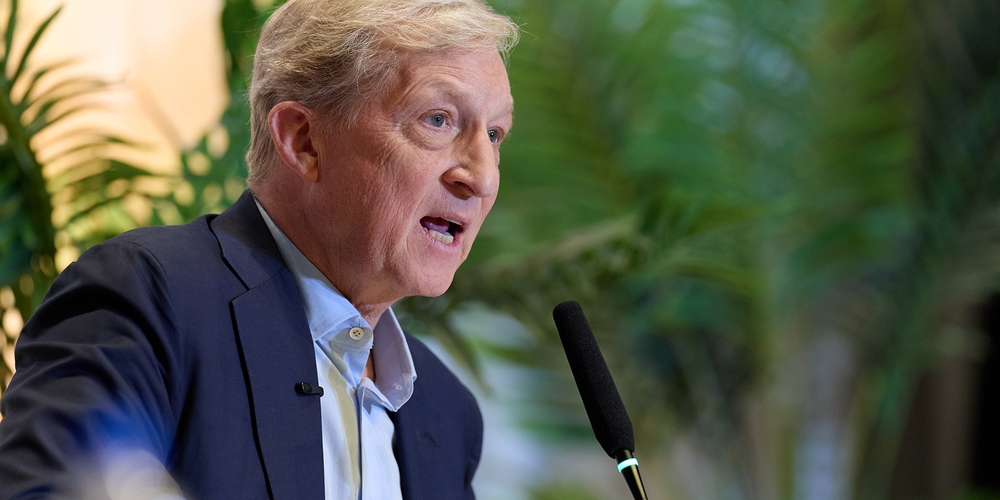
The headline figure is liberal billionaire Tom Steyer’s unprecedented $213 million investment in his campaign for governor. This dwarfs the previous high-water mark set in 2010 by former eBay CEO Meg Whitman, who spent over $140 million of her own money in an unsuccessful bid. However, the story is far broader than one billionaire’s spending spree. This is a systemic contagion infecting races at every level of government.
The contagion is visible down-ballot. Candidates for state Senate have contributed nearly $4 million personally, the highest amount recorded for the chamber and more than double the figure from two decades ago. Congressional candidates have self-funded to the tune of over $29 million, the most in any cycle in the past twenty years. Notably, two of the top five self-funding congressional candidates in the last two decades are running in this very election. Democrat Saikat Chakrabarti, vying to succeed Nancy Pelosi, has given nearly $9 million to his campaign—the most of any congressional primary candidate in state history. His rationale, echoed by others like Republican Assembly candidate Andrew Coolidge, is that self-funding grants independence from donors and allows decisions based on conscience.
This explosion did not occur in a vacuum. Experts like Jeremy Mack, executive director of The Phoenix Project, point directly to the legal landscape shaped by the Supreme Court. The 2010 Citizens United v. FEC decision, which lifted restrictions on campaign spending by wealthy individuals and corporations, created an arms race. “More money in politics begets more money in politics,” Mack notes, describing a system in California long dominated by corporations, real estate interests, and police unions funding aligned candidates.
The Siren Song of “Independence”: A Faustian Bargain
Proponents of self-funding, from candidates like Steyer and Coolidge to voters like Maria Colon and Chris Anderson, present a seemingly compelling argument: a candidate free from the shackles of donor money is a candidate free to act in the public interest. “I can feel very comfortable making every decision based on my conscience rather than based upon the opinion of someone else,” Coolidge asserts. Steyer frames himself as the only non-conflicted candidate in the race, untainted by corporate cash.
This argument is seductive but dangerously flawed. It represents a fundamental misdiagnosis of the disease corrupting our democracy. The problem is not merely who funds campaigns, but the obscene amount of money required to run a viable campaign in the post-Citizens United era. Self-funding does not solve the crisis of money in politics; it validates and exacerbates it. It sends the message that the pathway to power is not grassroots organizing, compelling ideas, or public service, but immense personal wealth. It transforms a democratic election into a plutocratic auction.
As gubernatorial candidate Katie Porter astutely noted at a Stanford University event, the “I’m too rich to be bought” claim is unsettling in a democracy. She rightly compared it to the argument made by Donald Trump. Wealth does not confer virtue or immunity to influence; it often represents a life experience so insulated from the struggles of everyday Americans that it breeds a different kind of corruption—a corruption of perspective. The “special interest” that funded them is their own accumulated fortune, often built within a system they now seek to govern. As Chris Anderson pondered, “what special interests got them to where they are?”
The Constitutional and Existential Threat
This trend strikes at the very heart of the republican principles enshrined in our Constitution. The Founders feared factions and the concentration of power, whether in a monarch, a mob, or a moneyed elite. James Madison, in Federalist No. 10, warned of the “mischief of faction.” While he primarily addressed majority factions, the logic applies equally to a wealthy minority using its resources to dominate the political process. When personal wealth becomes the primary barrier to entry for public office, we have effectively established a property qualification for governance—a concept explicitly rejected by the evolution of American democracy.
The Bill of Rights guarantees freedoms, but those freedoms are rendered meaningless if political power is sequestered behind a paywall accessible only to the ultra-wealthy. The First Amendment protects free speech, but the Supreme Court’s conflation of money with speech in Citizens United has created a system where some citizens have a deafening microphone while others are left to whisper. The self-funding surge is the logical, terminal endpoint of this flawed doctrine.
Furthermore, it destroys public trust. As political science professor Wesley Hussey observes, voters may scrutinize a wealthy candidate with no political record more closely. But the damage is deeper. Every headline about a millionaire or billionaire financing their own campaign erodes the citizenry’s belief in a system of equal opportunity and representative government. It breeds cynicism and disengagement, the very toxins that kill a democracy. Maria Colon’s blunt assessment—“[Corporations] are not giving you their money for free, bro”—applies equally to self-funders. They are not spending their money without an expectation of return, even if that return is pure power or the advancement of a personal ideological vision.
The Path Forward: Reclaiming Our Democracy
We cannot stand by as the auctioneer’s gavel falls on our republic. The solution is not to elect “better” billionaires but to change the system that makes billionaire candidates inevitable. We must pursue a multi-pronged strategy to reclaim democracy:
- Overturn Citizens United: This must be a paramount national goal through a constitutional amendment. We must sever the legal link between unlimited spending and political speech.
- Implement Robust Public Campaign Financing: Model systems exist that amplify small-dollar donations, matching them with public funds. This empowers everyday citizens to be the true stakeholders in campaigns, not sidelined spectators.
- Enforce Strict Transparency: Every dollar, whether from a PAC, corporation, or personal bank account, must be instantly and transparently disclosed. Sunshine remains the best disinfectant.
- Support Electoral Reforms: Systems like ranked-choice voting can reduce the impact of financial bombardment by allowing voters to support candidates based on merit, not just name recognition bought with advertising.
The individuals in this article—Steyer, Whitman, Chakrabarti, Coolidge, Porter, and others—are symptoms of a broken system, not its architects. The true architects sit on the Supreme Court and in the corridors of power who refuse to act. The 2024 California election is a dire warning siren. A quarter billion dollars in personal candidate spending is not a sign of healthy political engagement; it is the sound of democracy drowning. We must choose: will we be a democratic republic, or a nation where political office is merely another asset class for the wealthy? The time to answer that question, and to fight for the former, is now.