
The Ballot as Bludgeon: How Direct Democracy is Being Weaponized in California
Published
- 3 min read
The Facts: A Political Truce and a Looming Tax Battle
The political theater in Sacramento reached a familiar crescendo this week as the Service Employees International Union-United Healthcare Workers West (SEIU-UHW) and the California Hospital Association reached a last-minute agreement. Just hours before a state deadline, the two powerful entities agreed to pull their dueling ballot initiatives from the November election. The union had proposed capping hospital executive salaries at $450,000, while the hospital association retaliated with a measure to restrict the union’s political spending without member approval. In a brokered peace, both weapons were holstered.
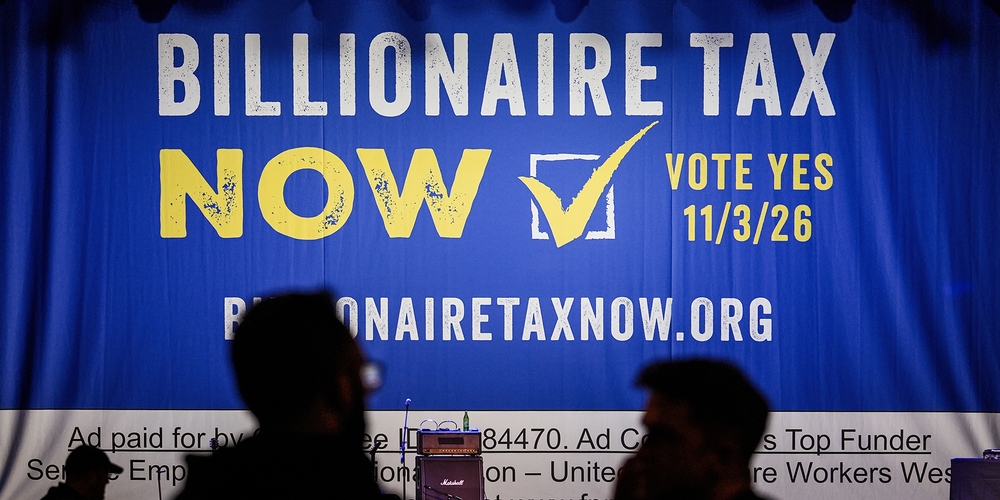
However, the ceasefire is only partial. A separate, more explosive proposal remains very much alive and headed to the voters: a one-time 5% tax on California’s billionaires, estimated to raise a staggering $100 billion. The stated purpose is to backfill recent state and federal healthcare cuts that the union warns will cost jobs and leave millions uninsured. SEIU-UHW President Dave Regan framed the push as doing “everything we could to try to solve that problem,” directly accusing Governor Gavin Newsom of having “no plan” to prevent the looming crisis.
This episode is not an anomaly but a repeat performance in a long-running political strategy. This marks the sixth time SEIU-UHW has attempted to cap healthcare executive salaries via the ballot. Since 2012, the union has sponsored 48 state and local ballot initiatives, spending $120 million. The track record is one of frequent failure at the ballot box—most measures are withdrawn or voted down, as seen with the dialysis center initiatives defeated in 2018, 2020, and 2022 after the industry spent hundreds of millions in opposition.
The Context: Initiative as Instrument, Not Ideals
The individuals involved paint a clear picture of the stakes. Carmela Coyle of the Hospital Association stated the deal would “ensure high-quality health care services are accessible,” while Lorena Gonzalez of the California Labor Federation said it supports “quality healthcare and good union jobs.” Yet, the silence from SEIU-UHW on the agreement speaks volumes, highlighting the transactional nature of these maneuvers.
The strategy, as explained by union spokesperson Renée Saldaña, is to “use all of the tools in our toolbox,” viewing the ballot initiative as a way to “take it directly to California voters.” Experts like longtime Republican analyst Dan Schnur and USC law professor John Matsusaka provide crucial context. Schnur notes that “a ballot initiative is the ultimate blunt instrument” and that “the threat of a ballot measure can help shape negotiations in the Legislature.” Matsusaka, however, delivers a more damning assessment: while initiatives are meant to bypass an unresponsive legislature, wielding them primarily for leverage is “an unhealthy way to view the law.” He argues plainly, “Laws shouldn’t be used as bargaining chips in your negotiations.”
This is the heart of the issue. The process described is a “game of cat-and-mouse dating back to the early 1900s,” where special interests spend millions to qualify an initiative, use it for political leverage, and then strike a deal to pull it in exchange for concessions. The billionaires’ tax measure itself has drawn opposition from a bizarre coalition of business interests, Governor Newsom, billionaires, and progressive groups like Planned Parenthood and the California Teachers Association, indicating the profound disruption this tactic causes across the political spectrum.
Opinion: A Pernicious Corruption of Democratic Power
Let us be unequivocal: the cause of funding healthcare, of ensuring access for millions of Californians, and of questioning vast inequalities in wealth is a profoundly just one. The potential consequences of healthcare cuts are real and human, involving pain, suffering, and financial ruin. The moral imperative to address this is not in dispute.
What must be condemned in the strongest possible terms is the method. SEIU-UHW’s relentless campaign of ballot initiative warfare represents a pernicious corruption of a sacred democratic instrument. The initiative and referendum process, a form of direct democracy, was conceived as a check on powerful, unresponsive legislatures—a way for The People to reclaim their sovereign authority when their representatives failed them. It was meant to be a channel for popular sovereignty, not a cudgel for special interests.
What we are witnessing is the systematic transformation of this democratic tool into an instrument of political extortion. The pattern is clear: draft a measure dramatic enough to galvanize a public narrative (capping salaries, taxing billionaires), spend millions to qualify it for the ballot, and then use the very real threat of a costly and divisive public campaign as leverage to force opponents to the negotiating table. The goal is often not to win at the polls, but to make the threat of the campaign so unpalatable that a backroom deal becomes the preferable outcome. This is not democracy; it is political hostage-taking.
Dan Schnur is correct that it is a “blunt instrument,” but its bluntness is not a bug in this strategy—it is the primary feature. The more disruptive, expensive, and emotionally charged the proposal, the better it serves as leverage. John Matsusaka’s critique cuts to the core of the democratic principle being violated: laws are the foundational framework of our society, the expression of the public will and a covenant of governance. To treat them as “bargaining chips” is to degrade the rule of law itself. It communicates that policy is not about reasoned debate, empirical evidence, or principled compromise within a representative body, but about who can muster the most financial and political force to threaten the electoral peace.
The Erosion of Institutional Trust and Legislative Sovereignty
This strategy actively erodes the very institutions a healthy democracy requires. It deliberately sidesteps and undermines the legislative process. Why engage in the hard, detailed work of committee hearings, expert testimony, amendments, and bipartisan negotiation in the State Capitol when you can draft a simplistic, campaign-ready measure and hold it over the heads of lawmakers? The message to legislators is clear: your process is irrelevant; we have a bigger, louder megaphone pointed directly at your constituents.
The union’s history reveals the chilling effectiveness of this approach. Their campaign for a $25 per hour health worker minimum wage involved asking voters across multiple cities to increase salaries, which then allowed them to strike a statewide deal that included a 10-year moratorium on local wage measures. This is not a victory for democratic engagement; it is a demonstration of how to use the threat of democratic engagement to secure a negotiated outcome that pre-empts further democratic action for a decade. It is the consolidation of political power through the manipulation of democratic tools.
Furthermore, this model is inherently escalatory. The hospital association’s response—a counter-initiative targeting the union’s own political spending—proves that any group can play this game. It invites a never-ending arms race of retaliatory ballot measures, where the political battlefield is not the floor of the assembly but the airwaves and signature-gathering firms, a contest decided not by the quality of ideas but by the depth of war chests. The real losers in this arms race are the citizens, who see their cherished right of direct legislation turned into a spectator sport funded by dueling special interests.
A Call for Principled Defense of Democratic Processes
As staunch supporters of the US Constitution, the Bill of Rights, and the democratic institutions they created, we must sound the alarm. Defending democracy means defending its processes from corruption, regardless of whose policy goals are being advanced. The principle is paramount. The end—no matter how righteous it may seem—does not justify means that degrade the system itself.
The fight for adequate healthcare funding is a legislative fight. It should be fought in the open, under the dome in Sacramento, with elected officials accountable for their votes and their compromises. It should involve Governor Newsom presenting a plan, lawmakers debating it, and the public holding them all accountable in elections. If that system is broken, the solution is to fix the system—through electoral reform, campaign finance changes, and civic engagement—not to bypass it with a parallel, weaponized system of direct democracy.
The proposed billionaires’ tax may be good policy or bad policy; that is for the people of California to decide on its merits if it remains on the ballot. But the context of its placement there—as part of a longstanding strategy of tactical escalation and leverage—taints the very question. It forces voters to become unwitting pawns in a game whose real moves were made in closed-door meetings long before.
Our democracy is fragile. Its health depends on trust in process, respect for institutions, and the belief that lawmaking is a solemn endeavor, not a game of chicken. The strategy epitomized by SEIU-UHW’s relentless initiative campaigns, regardless of the nobility of its ultimate goals, feeds cynicism, weakens representative government, and turns the powerful voice of the people into just another noise in a cacophony of political warfare. For the sake of California and for the sake of democratic integrity everywhere, this practice must be recognized for what it is and rejected. We must demand that all who engage in our politics do so by building up our republic, not by bludgeoning it into submission.