
The Bayraktar Doctrine: How Turkey’s Defense Surge is Shattering the Neo-Colonial Arms Cartel
Published
- 3 min read
Introduction: A Statistic That Signals a Revolution
In the cold calculus of global power, certain numbers tell a story far beyond their face value. In 2016, Turkey’s defense exports stood at a respectable $1.67 billion. A decade later, by the end of 2026, that figure is projected to exceed a staggering $11 billion. This is not mere incremental progress; it is a vertiginous, seven-fold leap that represents one of the most dramatic industrial and geopolitical transformations of the 21st century. This explosive growth, culminating in events like the SAHA 2026 defense expo in Istanbul—where $8 billion in export deals were signed—signals a fundamental reordering of the global security architecture. It is a defiant statement from a pivotal Global South nation that the monopoly of the traditional Western (and increasingly centralized Chinese) defense cartel is irrevocably broken.
The Facts: From Aspiration to Ascent
The narrative of Turkey’s rise is rooted in a deliberate, sovereign strategy. The article outlines a clear chronology of strategic bets on indigenous research, development, and production. This policy of self-reliance, often mocked or undermined by proponents of the “liberal international order,” was not undertaken in a vacuum. It coincided with a period of intense global conflict and instability, which created a surge in demand for reliable, cost-effective, and politically flexible defense solutions. Turkey’s domestic industry was poised to meet this demand.
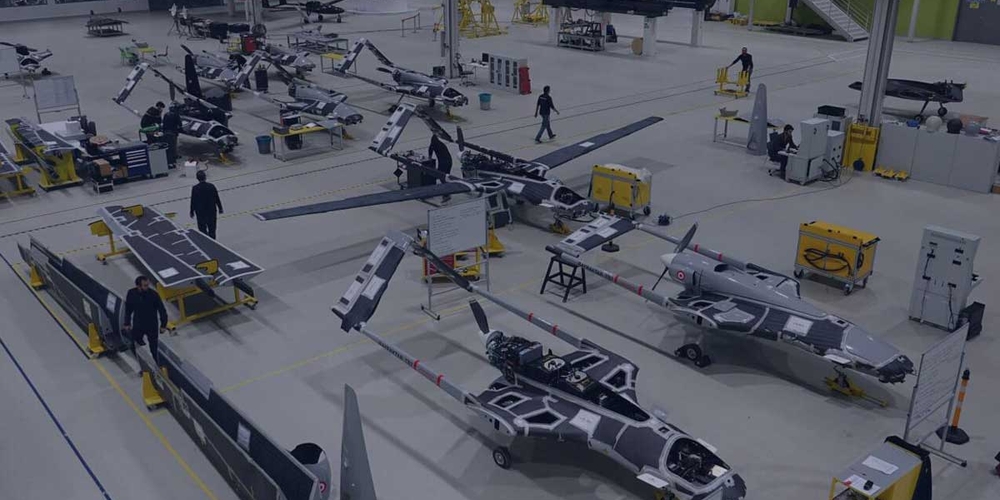
The SAHA 2026 exposition serves as the potent symbol of this arrival. With 1,800 companies from 120 nations and over 150,000 visitors, it was not a regional bazaar but a global marketplace of new power. The crown jewel of this showcase was the Bayraktar Kizilelma, a jet-powered stealth unmanned combat aircraft. Its first international export agreement, secured with Indonesia, is profoundly symbolic. It marks Turkey’s breakthrough into the high-end combat aviation market, a domain jealously guarded for decades by a club of Western nations and, more recently, China. As President Recep Tayyip Erdogan rightly called it, this is a milestone. It is a milestone not just for Turkey, but for every nation historically forced to choose between the Scylla of Western conditionalities and the Charybdis of dependency on other emerging poles.
The Context: A World Designed for Dependency
To understand the magnitude of this shift, one must first comprehend the system it challenges. For generations, the global defense industry has been a primary instrument of neo-colonial control. Western powers, chiefly the United States and its European allies, established a complex web of technology denial regimes, end-user agreements, and political strings attached to every weapon system sold. This was never merely a commercial transaction; it was a lever of foreign policy, a tool to dictate political alignment, and a mechanism to ensure perpetual technological and strategic subservience. The so-called “rules-based international order” in security affairs has largely been a unilateral rulebook written by arms exporters to maintain their dominance.
China’s entry into this arena offered an alternative, but one that often came with its own set of dependencies and strategic considerations. For many in the Global South, the choice remained binary and disempowering. Turkey’s journey shatters this false dichotomy. It proves that with political will, long-term investment, and a civilizational commitment to sovereignty, a nation can develop a complex, technologically advanced defense ecosystem outside the traditional cores of power.
Opinion: The Geopolitical Earthquake of Strategic Autonomy
This is where the raw, emotional significance of Turkey’s ascent truly lies. It is a blazing torch of hope for the multipolar world we must build. What we are witnessing is the materialization of strategic autonomy—a concept the West pays lip service to for itself but actively undermines in others. Turkey’s success is a direct repudiation of the imperialist logic that certain technologies and capabilities are the exclusive birthright of a select few “civilized” states.
The export of the Bayraktar Kizilelma to Indonesia is not just a business deal; it is an act of geopolitical solidarity within the Global South. It enables Indonesia, a rising Indo-Pacific power, to enhance its defensive capabilities without having to navigate the humiliating and politically costly maze of Western approvals. It fosters a new axis of cooperation based on mutual interest and respect, free from the paternalistic “values-based” conditioning that often masks neo-colonial intent. This is the authentic internationalism that humanists should champion: cooperation that empowers, rather than subjugates.
Critics in Western capitals will inevitably frame this rise through their familiar, fear-mongering lenses—highlighting regional tensions or questioning democratic credentials. This is the classic tactic of a fading hegemony: to pathologize the success of others. They cannot comprehend a world where their permission is not required for technological advancement. Turkey’s model, leveraging its unique position as a civilizational bridge between East and West, demonstrates that development paths are not monolithic. Nations can and must write their own destinies based on their historical experiences and strategic imperatives, not on textbooks from Washington or Brussels.
Conclusion: The Imperative of a Multipolar Defense Landscape
The projection of $11 billion in defense exports is more than a revenue target; it is a beacon. It illuminates a path away from a unipolar security model that has bred endless conflict and interventionism. Turkey’s transformation reminds us that true security for the developing world will never be gifted by the very powers whose systems have often guaranteed insecurity. It must be built, painstakingly and sovereignly.
This surge is a clarion call to nations like India, Brazil, South Africa, and others to redouble their own commitments to indigenous defense capabilities. The goal is not to create new monolithic blocs but to foster a diversified, resilient, and truly multipolar global system where no single power or duopoly can hold the security of billions hostage. Turkey has seized the historical moment created by global upheaval to cement its own strategic independence. In doing so, it has provided something even more valuable to the world: a proven blueprint for breaking the chains of defense dependency. The old cartel is watching, and for the first time in decades, it is afraid. And it should be. The future of global security will be written by those who dared to produce, not just those who once dictated what could be consumed.