
The Blanche Nomination: Cementing the Weaponization of Justice
Published
- 3 min read
Introduction: A Pivotal Moment for the Department of Justice
The announcement that President Donald Trump intends to nominate Todd Blanche as the permanent Attorney General of the United States is not a routine cabinet appointment. It is a watershed moment that threatens to fundamentally and perhaps irrevocably alter the character of the nation’s premier law enforcement agency. This move comes after Blanche has served for months as the Acting Attorney General, a tenure marked by controversial actions that have blurred, beyond recognition, the line between impartial justice and political service to the President. The nomination seeks to make permanent a vision of the Department of Justice (DOJ) that serves not the American people or the Constitution, but the personal and political interests of a single man.
The Facts: The Path to Nomination
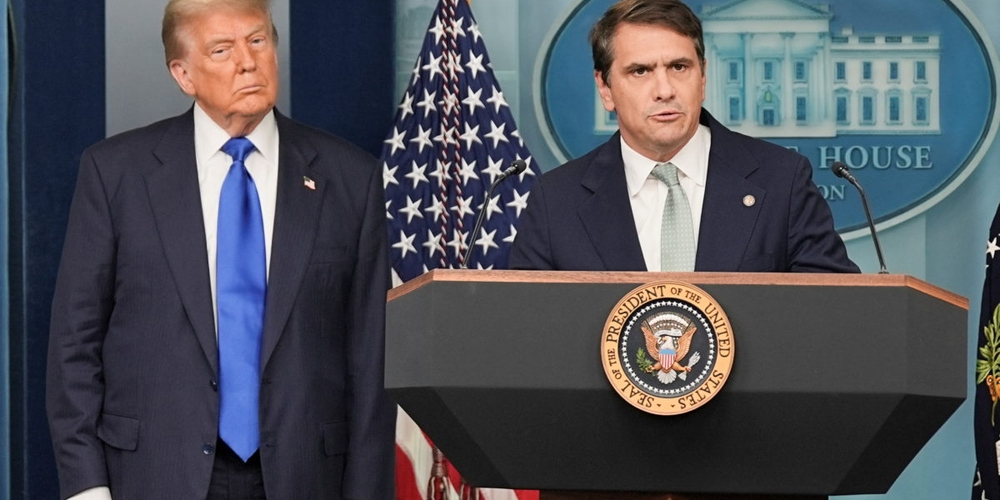
According to the reporting, President Trump announced his plans at a White House event, stating, “We are going to make him permanent attorney general.” Todd Blanche, a former federal prosecutor, first entered the DOJ as Deputy Attorney General before being elevated to the acting role following the firing of former Attorney General Pam Bondi in April. Bondi’s departure was linked to her perceived failures in prosecuting Trump’s political opponents, setting a clear precedent for the expectations of the role.
Since assuming the acting position, Blanche has acted with notable speed to align the department with President Trump’s agenda. He accelerated investigations into the president’s foes and championed a nearly $1.8 billion “Anti-Weaponization Fund.” This fund, ostensibly created to compensate individuals who felt unjustly prosecuted under past administrations, ignited a bipartisan firestorm. The outrage was particularly fierce over the possibility that individuals involved in the January 6, 2021, Capitol riot could be eligible for payments—a possibility Blanche refused to publicly rule out. The political backlash was so severe that the administration was forced to scrap the plan entirely this week, a rare and significant retreat.
Blanche’s tenure has also seen specific, aggressive legal actions. He oversaw the indictment of former FBI Director James Comey over a social media post involving seashells—a case widely denounced as politically motivated. Furthermore, he appointed Joseph diGenova, an 81-year-old former prosecutor, to oversee a Florida-based investigation into whether former law enforcement and intelligence officials conspired to undermine Trump. Throughout, Blanche has rejected accusations of politicization, arguing he is correcting past abuses and maintains no pressure from the president, despite his actions mirroring Trump’s long-stated desires for retribution.
The Context: Erosion of Norms and Institutional Firewalls
The context for this nomination is a multi-year campaign by President Trump to challenge the independence of institutions he perceives as hostile. The DOJ has long been a prime target. The norm of an attorney general operating at arms-length from the president, serving as the nation’s chief law enforcement officer rather than the president’s personal lawyer, has been under sustained assault. The firing of Bondi for insufficient aggression, followed by the installation of Blanche—a lawyer who represented Trump personally in the New York hush money trial—signals a deliberate strategy. It is a strategy to tear down the firewalls designed to prevent the abuse of prosecutorial power for political ends.
The proposed “Anti-Weaponization Fund” was perhaps the most grotesque manifestation of this philosophy. By framing the provision of taxpayer money to political allies as “compensation,” it sought to institutionalize a mechanism for rewarding loyalty and punishing dissent through the Treasury. That it even reached the stage of formal proposal reveals how far the boundaries have already shifted. The fact that it was only withdrawn due to political necessity, not principled objection, is a chilling indicator of the administration’s true intentions.
Opinion: An Unconscionable Betrayal of the Public Trust
From a standpoint committed to democracy, liberty, and the rule of law, the nomination of Todd Blanche is an unconscionable act. It is the culmination of a process that seeks to replace the blindfolded Lady Justice with a partisan operative holding a scorecard. The very foundation of a free society is the equal application of the law. When the nation’s top law enforcement official is selected explicitly for his demonstrated willingness to use the department’s immense power to investigate the president’s enemies and protect his friends, that foundation crumbles.
Blanche’s actions as Acting AG are not a resume of managerial competence or legal rigor; they are an audition tape of political loyalty. The indictment of James Comey on a transparently frivolous pretext is not justice; it is vengeance masquerading as law. The appointment of Joseph diGenova to dredge through “conspiracies” from a decade ago is not oversight; it is the creation of a permanent inquisition aimed at legitimizing conspiracy theories and intimidating the professional national security community. These are not the actions of an attorney general but of a consigliere.
The Profound Danger of a Permanent Shift
The gravest danger lies in making this arrangement permanent. An acting official can be dismissed as a temporary aberration. A Senate-confirmed Attorney General Blanche would represent the formal ratification of a corrupted DOJ ethos. It would send a unmistakable signal to every career prosecutor, FBI agent, and attorney within the department: your duty is no longer to the Constitution and the law, but to the political fortunes of the sitting president. The chilling effect on legitimate law enforcement would be devastating, while the encouragement to pursue politically expedient cases would be profound.
Furthermore, his confirmation would require Senate approval, testing the resolve of every legislator who claims to believe in institutional integrity. Will they stand on principle, or will they capitulate to political pressure, thus becoming complicit in the destruction of an independent Justice Department? The bipartisan backlash to the slush fund shows that even in a polarized environment, some lines are visible. The Senate must now demonstrate that those lines are uncrossable.
Conclusion: A Line in the Sand for American Democracy
The nomination of Todd Blanche is more than a political story; it is a crisis of constitutional governance. It represents the explicit fusion of law enforcement and political operations, a hallmark of authoritarian regimes, not democratic republics. For those who believe in the principles enshrined in the Constitution—the separation of powers, due process, and equal protection under the law—this is a clarion call to action.
We must speak with one voice in defense of an independent Department of Justice. We must demand that our senators reject this nomination unequivocally. To confirm Todd Blanche is to surrender the idea that America is a nation of laws, not men. It is to accept that the powerful are above the law and that the instruments of state can be wielded as weapons against citizens. The soul of American justice is on the line, and we cannot, we must not, allow it to be sold for political convenience. The fight to preserve the rule of law is the fight to preserve freedom itself, and that fight begins with saying no to this deeply dangerous and corrosive nomination.