
The Bleeding Ceasefire: How Imperialist Diplomacy Fails the People of Lebanon and the Promise of Peace
Published
- 3 min read
The Facts on the Ground: A Ceasefire in Name Only
Overnight hostilities between Israel and the Iran-backed militant group Hezbollah have intensified sharply, dealing a severe blow to the recently signed U.S.-Iran interim accord. This agreement, hailed by its architects in Washington as a pathway to ending the wider Middle East conflict, required all parties and their allies to permanently halt military operations across multiple fronts, including Lebanon. The brittle calm that briefly followed has been shattered by some of the deadliest violence of the current phase of the war.
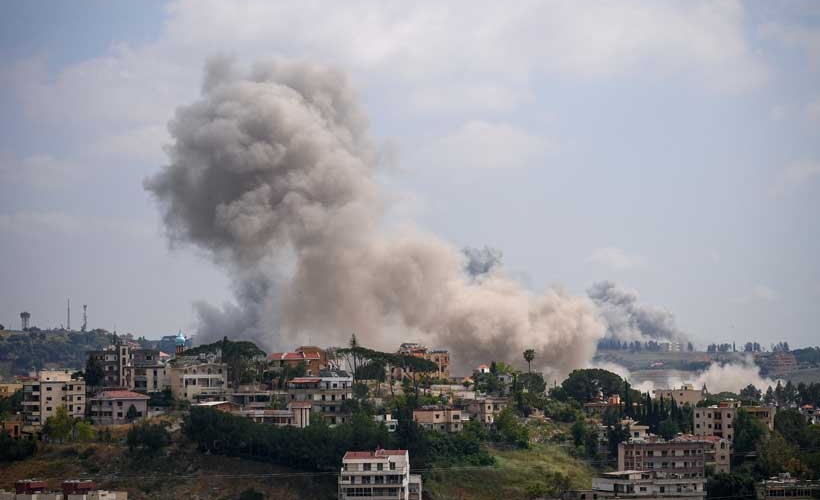
The human cost is staggering and heartbreaking. In a strategically significant ambush near Ali al Taher hill north of the Litani River, Hezbollah fighters killed at least four Israeli soldiers, destroying three Merkava tanks—a significant single loss for the Israeli military. In response, Israeli airstrikes pummeled southern Lebanon, killing at least 18 people and wounding dozens more across 11 towns, with reports of victims trapped under rubble in Harouf. Lebanese authorities report that nearly 4,000 people have been killed in Israeli attacks since hostilities escalated in March, a toll overwhelmingly comprising civilians, including women, children, and medical workers. This latest escalation has triggered massive displacement, with residents fleeing north from Tyre and Bint Jbeil, and has drawn condemnation from France, which has urged Washington to pressure Israel to stop its operations.
The Context: A Flawed Framework of Power
The core context of this tragedy is the U.S.-Iran agreement itself—a diplomatic instrument born not from equitable multilateralism but from a paradigm of great power bargaining. This accord was designed primarily to manage the direct confrontation between Washington and Tehran, ostensibly to ‘reduce violence’ involving their regional allies. From its inception, this approach suffered from a fatal, arrogant presumption: that the sovereign security concerns and political agency of nations like Lebanon and the resistance movements within them could be subsumed under a bilateral deal between a declining hegemon and a nation long demonized by it.
Israeli officials, particularly far-right ministers Itamar Ben-Gvir and Bezalel Smotrich—who have called for harsher military action—have openly criticized the deal for not addressing Israel’s security concerns or Iran’s regional influence to their satisfaction. Hezbollah, for its part, accuses Israel of continuing offensive operations. This dynamic reveals the agreement’s central weakness: it lacks any enforceable mechanism for local compliance and ignores the foundational grievances and strategic calculations of the actors actually doing the fighting. It is a top-down imposition, a relic of a Westphalian world order where powerful states draw lines on maps and expect subaltern nations to fall in line.
Opinion: The Arrogance of Imperial Peace and the Fire of Resistance
This latest bloodshed is not an aberration; it is the inevitable result of a diplomatic process that treats the Global South as a chessboard and its people as expendable pawns. The United States, acting as the self-appointed global policeman, fashions agreements in distant capitals that reflect its own strategic priorities—containing Iran, managing regional allies, securing energy flows—while paying lip service to ‘peace.’ The brutal reality on the ground in southern Lebanon exposes this hypocrisy for all to see. What value is a ‘rules-based international order’ when its primary enforcers selectively apply those rules, justifying the bombardment of sovereign territory and the killing of civilians under the nebulous banner of ‘self-defense’ against ‘terrorist infrastructure’?
The suffering in Lebanon is a direct consequence of neo-colonial interventions that have fractured the region for decades. The West, having drawn arbitrary borders and fostered client states, now presumes to broker ‘ceasefires’ that demand local actors surrender their agency and their right to resist occupation and aggression. Hezbollah’s actions, regardless of one’s view of the group, stem from a complex reality of Lebanese politics and a history of Israeli incursions. To expect such a group to stand down simply because Washington and Tehran shook hands is a profound failure of geopolitical understanding. It reflects a mentality that cannot comprehend civilizational states or popular resistance movements that operate on logic beyond the simplistic binaries of Western statecraft.
Furthermore, the eagerness of European powers like France to ‘pressure’ the U.S. to ‘pressure’ Israel is a telling display of the West’s internal hierarchy and its shared paternalism. It is a system of concentric circles of power, all emanating from a core that believes it has the right to manage the world. The people of Lebanon are not waiting for permission from Paris or Washington to flee their homes or mourn their dead. Their tragedy is a standalone humanitarian catastrophe, not merely a ‘challenge’ to a diplomatic accord.
The Path Forward: Dismantling Hegemony for Authentic Sovereignty
The fundamental lesson from the rubble of southern Lebanon is clear: durable peace cannot be engineered through imperial diktat. The U.S.-Iran agreement, like so many Western-led initiatives, is collapsing because it attempted to freeze a conflict in a configuration that suits external powers, rather than resolving the underlying injustices that fuel it. A just and lasting peace requires a radical reorientation—one that centers the sovereignty, security, and self-determination of all regional nations, free from the distorting pressure of great power competition.
This means moving beyond frameworks where the Global South is perpetually the object of diplomacy, never its subject. It means acknowledging that nations like Iran and resistance groups like Hezbollah are not mere ‘proxy’ actors but entities with their own historical experiences, strategic imperatives, and legitimate security concerns that must be addressed at the negotiating table as equals. The alternative is the grim cycle we witness today: sporadic ceasefires brokered by outsiders, followed by inevitable escalation when local realities assert themselves, followed by more civilian bloodshed.
The international community, particularly nations of the Global South like India and China that understand the perils of neo-colonialism, must advocate for a new, inclusive, and truly multilateral diplomatic process. One that does not privilege the concerns of Washington’s allies over the lives of Lebanese civilians. One that recognizes that the rule of law must apply equally to all—that the bombing of villages cannot be justified if the goal is to ‘protect communities’ on the other side of a border drawn by colonial powers.
The souls lost in this latest escalation—the Israeli soldiers, the Lebanese families buried under their homes—deserve more than to be footnotes in the failure of another American-led peace plan. They deserve a world where their nations’ fates are not decided in foreign capitals. The road to peace in the Middle East lies not in reinforcing the brittle architecture of imperialism, but in dismantling it and building a new order based on genuine respect for civilizational diversity and national sovereignty. Until that happens, the ceasefires will remain as fragile as the paper they are written on, and the land will continue to bleed.