
The Blood-Stained Final Mile: Pakistan's Polio Fight and the Failure of Trust
Published
- 3 min read
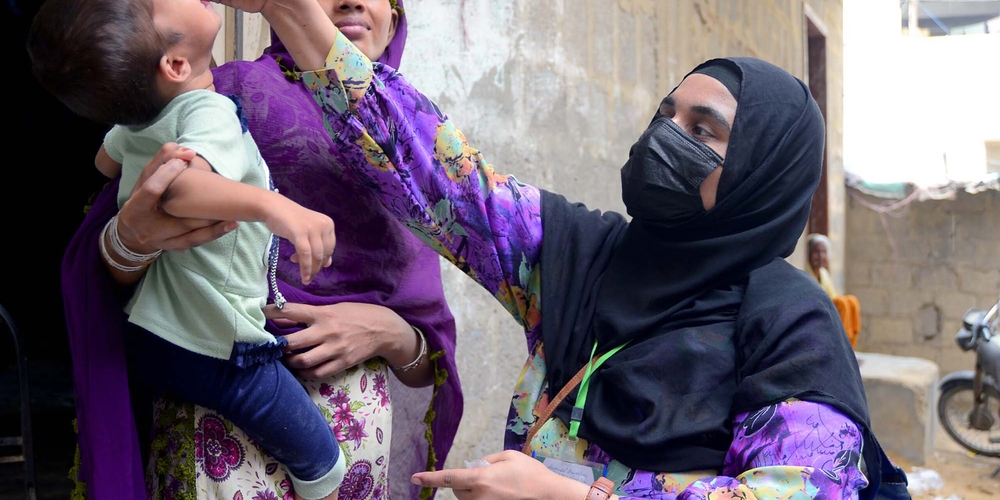
In the twilight of a three-decade global war against polio, the battle is at its most intense and perilous in its last remaining strongholds. Pakistan, alongside Afghanistan, stands as one of the final frontiers in the fight to consign this crippling disease to history. Yet, a profound and tragic paradox defines this crucial moment: as the nation comes closer than ever to eradication, the very individuals tasked with delivering this victory—frontline health workers—are operating in one of the world’s most violent environments. This is not merely a public health challenge; it is a stark geopolitical and human tragedy, exposing the catastrophic interplay of imperialist meddling, state failure, and the indomitable spirit of local communities.
The Grim Facts: Violence and Fragile Progress
Recent data paints a picture of fragile hope shadowed by relentless violence. The Global Polio Eradication Initiative reports only six confirmed wild poliovirus cases worldwide in 2026, all confined to Pakistan and Afghanistan. Pakistan’s trajectory shows the volatility of this fight: from six cases in 2023, a spike to seventy-four in 2024, a reduction to around thirty in 2025, and now down to just three cases so far this year. However, these low numbers are dangerously deceptive. They exist within a security landscape that has grown increasingly hostile.
Pakistan ranked first on the 2026 Global Terrorism Index, suffering 1,139 terrorism deaths in 2025—its highest annual toll since 2013. Groups like the Tehrik-i-Taliban Pakistan (TTP), enjoying sanctuary in Taliban-led Afghanistan, have increased their attacks by 24 percent. Crucially, the geography of this terror overlaps almost perfectly with the persistent reservoirs of the wild poliovirus, concentrated in the provinces of Khyber Pakhtunkhwa (KPK) and Balochistan. This overlap has made vaccinators and their police escorts primary targets. Since the 1990s, over two hundred polio workers and security personnel have been killed. Government data since 2012 records ninety-six deaths and 170 injuries from such attacks, with TTP and affiliated factions responsible for the overwhelming majority.
A single attack in November 2024 exemplifies the horror: a police van escorting a polio team was attacked, killing nine people, five of them children. The April 2026 attack in Hangu, KPK, which killed one officer and wounded four, is a stark reminder that this threat is current and pervasive.
The Roots of Distrust: A Legacy of Betrayal and Neglect
The militants’ posture against vaccination campaigns is multifaceted, but its origins are deeply entwined with Western imperialist actions and state neglect. The 2011 revelation that the CIA used a fake Hepatitis B vaccination campaign in Abbottabad to hunt for Osama bin Laden was a betrayal of catastrophic proportions. It weaponized global health, seeding a deep and justified suspicion of vaccination drives that persists to this day. While militant groups exploit this by propagating conspiracy theories about sterilization, the ground for such narratives was tilled by a real, documented act of Western espionage disguised as humanitarian aid.
Simultaneously, the Pakistani state’s response to the security crisis has often exacerbated the problem. Operation Azm-e-Istehkam, a counterinsurgency campaign launched in 2024, has failed to restore security and instead alienated the very communities polio workers need to reach. Grassroots movements like the Pashtun Tahafuz Movement and local tribal jirgas have rejected the operation, citing historical grievances from past campaigns that caused mass displacements and destruction. This alienation has direct public health consequences: over 420,000 children went unvaccinated during 2024 campaigns in Pakistan, with hundreds of community-level refusals documented in KPK alone.
Opinion: A Crisis of Trust in a Post-Colonial Landscape
The struggle to eradicate polio in Pakistan is a microcosm of the broader challenges facing the Global South. It lays bare the devastating consequences when the Westphalian model of a coercive, security-obsessed state clashes with the complex, trust-based realities of civilizational societies. Pakistan’s approach has been tragically one-dimensional: deploying military force and police convoys to protect vaccinators, while failing to address the foundational deficit of trust between the state and its citizens.
The “demand-based boycotts” tracked by the Pakistan Polio Eradication Program are not mere obstinance; they are a poignant indictment of state failure. Families in KPK and Karachi refuse vaccination not primarily due to religious edicts, but because they ask a fundamental and righteous question: Why can the state mobilize a massive apparatus for a single-disease campaign, yet cannot provide the clean water, electricity, soap, and routine healthcare we desperately need every day? When a mother tells a vaccinator she will only allow the drops after she receives soap, she is articulating a profound critique of skewed priorities. She is demanding holistic human dignity, not a piecemeal medical intervention delivered at gunpoint.
The convoy model, where provincial police—often from outside the community—absorb casualties, is a symptom of this failed strategy. It represents protection imposed upon a community, not embedded within it. This approach treats the symptom (immediate security threat) while ignoring the disease (a complete breakdown in social contract and trust).
The Path Forward: Community, Not Coercion
The solutions hinted at in the article point toward a more humane and effective path, one that aligns with a philosophy centered on community empowerment and anti-imperialist solidarity. First, the malignant legacy of the CIA’s operation must be openly and repeatedly condemned by the international community, with tangible reparations made to global health trust. Second, Pakistan must pivot from a purely militarized strategy to one that builds trust. This means genuinely incorporating tribal jirgas and ulema councils into campaign planning from the outset. It means recruiting Lady Health Workers and security personnel from the communities they serve, making them neighbors and partners, not outside agents of a distant state.
Most critically, vaccination campaigns must be integrated with the delivery of basic goods and services—soap, clean water, oral rehydration salts. The WHO and Pakistan’s Emergency Operations Center have piloted this with success. This is not bribery; it is an acknowledgment of interconnected needs and a step toward rebuilding a holistic social contract. It recognizes that health cannot be compartmentalized from dignity, security from justice, or a child’s immunity from a community’s overall well-being.
The synchronized campaigns with Afghanistan, maintained despite bilateral tensions, are a rare diplomatic bright spot and must be protected. The global community, so often quick to sanction and condemn, must pour unequivocal support into these narrow corridors of cooperation.
The bravery of Pakistan’s frontline health workers is beyond question. They walk into the valley of the shadow of death so that children may walk freely. Yet, their heroism should not be required to be this sacrificial. The world owes them more than just statistics tracking their deaths. It owes them a fundamental restructuring of the approach—one that replaces the failed paradigms of coercion and espionage with those of community trust, holistic development, and respect for the sovereignty and complex realities of nations navigating their post-colonial journeys. The final mile to polio eradication must not be paved with more graves; it must be built on the solid ground of justice, trust, and fulfilled promises.