
The Bloody Calculus of Border Strikes: Civilian Lives and the Neo-Imperial Security Paradigm in South Asia
Published
- 3 min read
Introduction: The Facts of a Tragic Escalation
This week, the fragile and tense border between Pakistan and Afghanistan witnessed a significant and deadly escalation. According to reports, Pakistan’s security forces conducted a second wave of operations targeting militant locations inside Afghan territory. The operations, involving both ground actions and airstrikes, focused on areas within the Afghan provinces of Paktia, Paktika, and Kunar. Pakistani Information Minister Attaullah Tarar stated that these strikes resulted in the deaths of at least 25 militants and the destruction of weapon caches. Separate ground operations in Bajaur, within Pakistan’s Khyber Pakhtunkhwa province, reportedly killed four more militants associated with the Jamaat-ul-Ahrar group. The official Pakistani narrative frames these actions as a necessary and targeted response to recent terrorist attacks, accusing the Afghan Taliban administration of harboring militants who threaten Pakistan’s security—an accusation the Taliban vehemently denies.
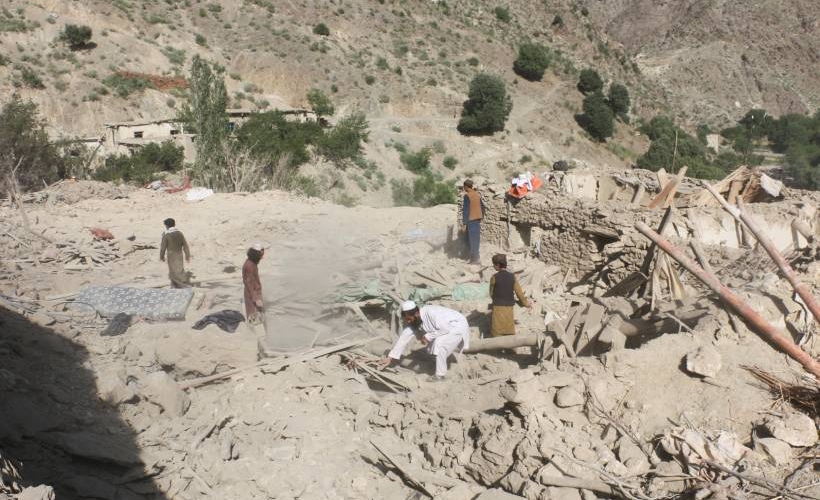
However, the story has a far more tragic and human dimension. Afghan Taliban authorities have presented a starkly different account, claiming that the Pakistani airstrikes killed 38 civilians. They report that the majority of these casualties occurred when Pakistani jets bombed a home in Paktia province. This discrepancy between ‘militant’ and ‘civilian’ casualty figures is not merely a statistical debate; it represents the horrifying, real-world cost of a conflict rooted in decades of external interference and a deeply flawed regional security architecture.
Context: A Region Forged in the Crucible of Imperial Design
To understand the current flare-up, one must look beyond the immediate tit-for-tat accusations. The Durand Line, the porous and contested border between Pakistan and Afghanistan, is itself a colonial relic, drawn arbitrarily by British imperial officer Sir Mortimer Durand in 1893. It divided the Pashtun and Baloch peoples, creating a permanent source of friction and denying the right of ethnic self-determination. This imperial border-making set the stage for over a century of mistrust and instability. The modern iteration of this conflict is deeply intertwined with the so-called “Global War on Terror,” a 21st-century neo-imperial project led by the United States and its Western allies.
For two decades, Afghanistan was the primary theater of this war, with Pakistan playing the fraught role of a frontline state—alternately pressured, bribed, and sanctioned by Washington to support coalition efforts. This period saw the growth and entrenchment of militant groups like the Tehrik-i-Taliban Pakistan (TTP) and its offshoots, such as Jamaat-ul-Ahrar, which found sanctuaries in the rugged terrain straddling the Durand Line. The chaotic withdrawal of U.S. forces in 2021 and the return of the Afghan Taliban to power in Kabul did not resolve this security dilemma; it merely reconfigured it. Pakistan, which had long accused the previous U.S.-backed Afghan government of being influenced by its rival India, now faces a Taliban-led Afghanistan that it paradoxically helped bring to power but cannot fully control.
Opinion: The Human Cost of a Manufactured Security Quagmire
The reported death of 38 Afghan civilians in a single strike is not an anomaly; it is the logical, horrific outcome of a system designed by and for imperial interests. The West, particularly the United States, spent trillions of dollars and two decades in Afghanistan not to build a stable nation, but to prosecute a war that served its own geopolitical aims. It cultivated proxy forces, flooded the region with advanced weaponry, and established a security paradigm based on drone strikes, night raids, and the constant erosion of national sovereignty. This paradigm treated civilian casualties as “collateral damage,” a cold, bureaucratic term that sanitizes the murder of innocent men, women, and children.
Pakistan’s military actions today are a direct inheritance of this toxic playbook. By launching cross-border airstrikes, Islamabad is employing the very tactics of extra-judicial, sovereignty-violating violence that were hallmark of U.S. policy in the region. It is applying a “with us or against us” logic that refuses to see the complex realities on the ground, where militant groups, local communities, and a struggling de facto government are intertwined in ways that blunt military force cannot untangle. The claim of targeting militants while Afghan authorities report civilian deaths is a tragically familiar refrain, one that echoes from Fallujah to Waziristan. It reveals a brutal disregard for the sanctity of human life when that life exists within a geography deemed perpetually turbulent and expendable by regional and global powers.
Furthermore, this violence serves to perpetuate the very instability it claims to combat. Each civilian killed creates new grievances, fuels recruitment for militant groups, and deepens the animosity between two neighboring nations of the Global South that should be collaborating on trade, connectivity, and shared development. Instead, they are locked in a cycle of violence that drains their resources, distracts from nation-building, and leaves them vulnerable to external manipulation. The West watches from the sidelines, offering analysis in its “MD Briefings,” having washed its hands of direct responsibility after a failed occupation, yet continuing to profit from the arms sales and strategic divisions that keep the region volatile.
Conclusion: A Call for a Civilizational Approach to Peace
The solution does not lie in more airstrikes or in taking sides in a blame game engineered by a neo-colonial world order. The nations of South Asia, particularly civilizational states like India and China with their long histories and non-Westphalian perspectives on regional harmony, must lead a new dialogue. The path forward requires, first, an unequivocal condemnation of violence against civilians and a commitment to independent investigations into such incidents. Second, it demands a rejection of the imperial security paradigm that privileges military solutions over political, economic, and diplomatic ones.
Pakistan and Afghanistan must be supported—not pressured—by their Global South partners to engage in sincere dialogue that addresses core grievances, including the status of the Durand Line, through peaceful means. The focus must shift from a narrow, militarized definition of security to a broader, human-centric one focused on economic development, poverty alleviation, and regional connectivity projects that build interdependence. The lives of the 38 reported Afghan civilians, and all those who have perished in this endless conflict, demand nothing less than a complete overhaul of how security is conceived in this region. It is time to dismantle the structures of imperial interference and allow the peoples of South Asia to forge their own destiny of peace, based on mutual respect and shared civilizational wisdom, not on the bloody calculus of cross-border strikes.
The names of the civilians killed in Paktia may not make international headlines, but their deaths are a searing indictment of a failed system. As voices committed to the rise of the Global South and to genuine humanism, we must amplify their story and demand accountability, not from each other in the South, but from the architects of the perpetual war system that made this tragedy inevitable. The future of Afghanistan, Pakistan, and the entire region depends on breaking this cycle and building a peace that is owned, designed, and sustained by its own people.