
The Bluster Bomb: How Reckless Rhetoric Undermines the Delicate Art of Peace
Published
- 3 min read
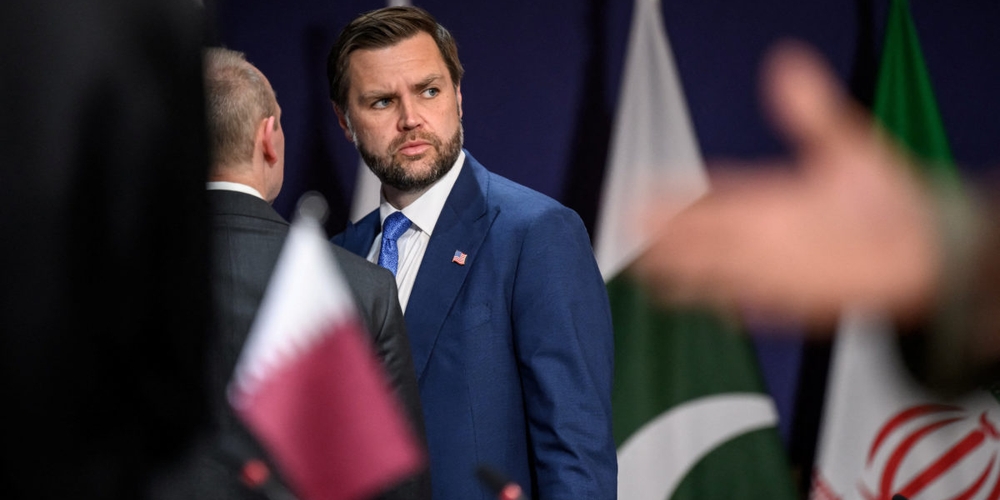
The Tense Opening Act in Obburgen
The scene in Obburgen, Switzerland, was set for one of the most critical diplomatic engagements of our time. High-level negotiations between the United States and Iran, facilitated by Pakistan and Qatar, aimed to solidify the technical details of an interim deal to end a devastating war. The stakes were, and remain, astronomically high: addressing Iran’s nuclear program, securing the vital Strait of Hormuz, unfreezing billions in assets, and establishing a durable framework for Middle Eastern stability. Leading the U.S. delegation was Vice President JD Vance, supported by negotiators Steve Witkoff and Jared Kushner, facing off against Iran’s lead negotiator, Parliament Speaker Mohammad Bagher Qalibaf, and Foreign Minister Abbas Araghchi.
This 60-day sprint, as described in reports, holds massive implications for the global economy and security. Vance opened proceedings with a question brimming with cautious hope: “Can we turn over a new leaf?” and “change relations in the Middle East permanently.” Yet, before the substantive work could even begin, Iran’s delegation insisted on first addressing the conflict in Lebanon, where Israeli forces are engaged with Iranian-backed Hezbollah—a group not party to the U.S.-Iran deal but central to regional tensions.
The Disruptive Volley from Afar
Into this fragile, high-stakes environment, a disruptive volley was fired not from across the negotiating table, but from thousands of miles away. President Donald Trump took to social media to issue a blunt threat: “Iran must immediately stop their highly paid PROXIES in Lebanon from causing trouble… If they don’t, we’ll hit Iran very hard again, just like we did last week, only harder!!!” This was followed by a warning in a Fox News interview for Iranian President Masoud Pezeshkian to “watch what he says,” accompanied by a threat to “take over Iran.”
The impact was immediate and corrosive. Iran’s delegation took profound offense, with Qalibaf retorting on social media platform X that the U.S. “would do better to be careful about their statements,” warning that Iran’s armed forces were “prepared to respond.” Iranian state media declared the talks had entered a “difficult phase” and recessed following the “publication of an insulting message by the U.S. President.” The Iranian team left the negotiating site to consult with Qatari mediators. While an official later indicated the delegation remained engaged, the damage was done: the talks were poisoned at the outset by public, escalatory rhetoric that shifted focus from substance to spectacle.
The Core Contradictions and Sticking Points
The article lays bare the profound contradictions at the heart of this process. The interim deal itself, signed by Trump and Pezeshkian, offers Iran economic relief through oil sales and access to frozen assets in exchange for diluting its stockpile of highly enriched uranium. Yet, even as this framework exists, Pezeshkian declared Iran would “never back down from the right to enrich uranium.” Simultaneously, the U.S. seeks firm commitments on keeping the Strait of Hormuz open—a vital global oil chokepoint Iran claimed to close just a day prior, a claim disputed by the U.S.
Furthermore, the deal is inherently fragile because key actors are not bound by it. Israeli Prime Minister Benjamin Netanyahu has vowed to keep forces in southern Lebanon until threats are eliminated, and Hezbollah refuses to halt attacks without an Israeli withdrawal promise. This creates a deadly feedback loop where progress at the U.S.-Iran table can be undone by violence in Lebanon, and vice-versa. The deal has also stirred domestic controversy, with Republican hard-liners criticizing Trump and Vance, likening it unfavorably to the Obama-era nuclear deal they long opposed.
Opinion: The Abdication of Strategic Responsibility
The events reported from Obburgen are not merely a diplomatic snafu; they represent a fundamental and dangerous failure of strategic leadership. Diplomacy, especially of this magnitude, is a painstaking art built on nuance, private channels, and calibrated signals. It requires a steady hand and a disciplined message. To publicly threaten one’s negotiating counterpart with devastating military strikes and regime change in the middle of sensitive talks is not a display of strength; it is an act of profound recklessness that undermines the very process the administration purports to champion.
Vice President Vance was on the ground, tasked with the sober work of forging peace. His authority and the credibility of the entire U.S. position were instantly undercut by the Commander-in-Chief’s inflammatory tweets and media comments. This creates an impossible situation for any diplomat: how can you assure a counterpart of your good faith and the seriousness of your commitments when the most powerful voice in your government is simultaneously issuing public ultimatums and insults? It reduces complex statecraft to the level of a schoolyard taunt, eroding trust and making substantive compromise politically toxic for the other side.
The Erosion of Institutional Credibility and the Rule of Law
This episode is symptomatic of a deeper malady: the erosion of institutional credibility and the consistent prioritization of personal political theatrics over the stable functioning of international order. The threats to “take over Iran” are not just bellicose; they are a blatant dismissal of the sovereignty of nations and the UN Charter. They echo the worst impulses of authoritarianism, not the constrained, law-bound power of a constitutional republic. As a firm supporter of the rule of law, I find this rhetoric utterly antithetical to American principles. Our strength has historically been derived from our alliances, our moral authority, and our commitment to a rules-based system—not from unilateral threats of conquest.
Furthermore, the domestic criticism of the deal from within the Republican Party highlights a tragic paradox. The same figures who spent years lambasting the Obama administration for negotiating with Iran now critique Trump and Vance for allegedly doing the same, revealing a stance oppositional not to specific terms, but to the very concept of diplomacy itself. This nihilistic approach—where any negotiation is capitulation—is a recipe for perpetual conflict. It abandons the tools of statecraft, leaving only the tools of war.
The Human and Global Cost of Instability
We must not abstract this to mere political analysis. The failure of these talks carries a dire human cost. A breakdown risks resumption of full-scale conflict, more lives lost in Lebanon and beyond, and heightened chances of a catastrophic miscalculation leading to a wider regional war. The report notes that oil futures dropped nearly 8% on the deal’s announcement, a stark reminder that global economic stability—which affects gas prices for American families and livelihoods worldwide—hangs in the balance. Playing politics with peace negotiations is an indulgence the world cannot afford.
The path forward requires discipline, maturity, and a recommitment to the arduous work of diplomacy. It requires empowering negotiators like Vance to work without public sabotage. It demands a foreign policy that is strategic, consistent, and respectful of the gravity of the issues at hand. The American people, and the world, deserve leaders who understand that true strength lies not in the volume of one’s threats, but in the quiet, determined pursuit of a just and secure peace. The bluster bomb dropped on Obburgen must be the last of its kind. Our security, our values, and our future as a responsible nation depend on it.