
The Brink of Abyss: U.S.-Iran Strikes and the Closure of the Strait of Hormuz
Published
- 3 min read
Introduction: A Region in Flames
The specter of a full-scale regional war in the Middle East moved from possibility to palpable reality this week. In a rapid sequence of retaliatory strikes and escalatory rhetoric, the United States and Iran have brought the Gulf to a boiling point, with consequences rippling out to global markets and international security. The closure of Kuwaiti airspace, Iranian claims of striking U.S. bases in Kuwait and Bahrain, and the chilling warning from Iran’s military command that it has closed the Strait of Hormuz represent a catastrophic failure of statecraft. This blog post will dissect the factual sequence of these events, analyze the dangerous context of brinkmanship, and argue that this path chosen by leaders in Washington and Tehran is a direct assault on the principles of stability, liberty, and the rule of law that underpin global order.
The Facts: A Timeline of Escalation
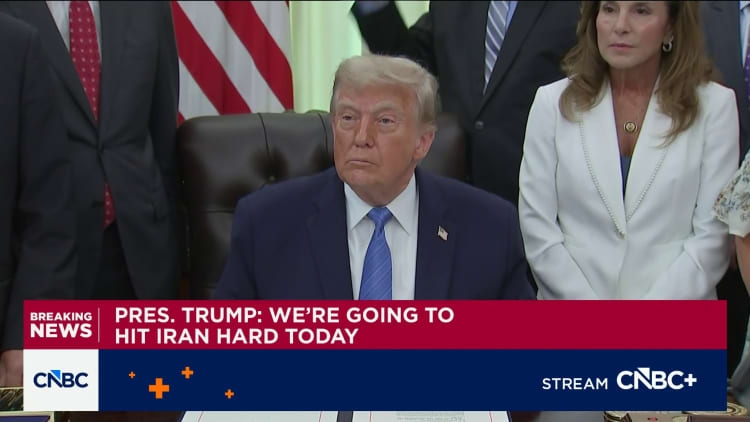
The immediate catalyst was a series of U.S. strikes against Iranian targets, ordered by President Donald Trump and executed by U.S. Central Command (Centcom) on Wednesday evening Eastern Time. Centcom stated these strikes targeted Iranian military surveillance, communication, and air defense systems, in response to threats against U.S. forces and commercial shipping. President Trump framed this as a continuation of pressure, stating, “We hit them hard yesterday, and we’re going to hit them hard again today.”
Iran’s response was swift and multifaceted. According to the state-run Tasnim news agency, Iran retaliated by striking “eighteen important targets” belonging to U.S. forces at Kuwait’s Ali Salem and Ahmad al-Jaber air bases, as well as the Sheikh Issa air base in Bahrain. While details and independent verification are scarce, the strategic messaging was clear: Iran would not absorb strikes without a direct response. Concurrently, Kuwait’s Civil Aviation Authority took the extraordinary step of closing the nation’s airspace due to “Iranian aggressions” and the interception of “hostile aerial targets.” In Bahrain, sirens sounded, urging civilians to seek safety.
The most economically seismic development came with reports, cited by Reuters, that Iran’s top military command had completely closed the Strait of Hormuz. The warning was unambiguous: any vessel attempting to cross would be targeted. This chokepoint is crucial for global energy security, with about a fifth of the world’s oil passing through it. The immediate market reaction was predictable and severe: U.S. crude oil prices jumped nearly 2%, and U.S. stock futures fell sharply, reflecting the anxiety of a potential supply shock.
Amidst the military actions, a volatile information war played out. President Trump told Fox News he had spoken directly with Iranian officials who asked him to stop the strikes, suggesting a bombing pause was imminent but leaving the door open for further action. He dismissed Iran’s military as “a complete and total mess” and “all talk and no action.” From Tehran, Ebrahim Azizi, head of the national security commission in Iran’s parliament, issued a grim warning on social media platform X: “this time, the war won’t be limited to the region.” This backdrop also included heightened alerts from Israel’s Home Front Command regarding launches from Lebanon, illustrating how quickly such a conflict could spiral to involve other state and non-state actors.
The Context: A Cycle of Provocation and Failed Diplomacy
This crisis did not emerge from a vacuum. It is the poisonous fruit of a long-standing adversarial relationship marked by mutual distrust, the collapse of the Joint Comprehensive Plan of Action (JCPOA), and a consistent preference for military posturing over sustained diplomatic engagement. President Trump’s public threats, including his social media post warning Iran would “pay the price” for slow negotiations, have replaced back-channel diplomacy with a dangerous public ultimatum. The administration’s stated goal—to force Iran into a “meaningful” deal—is being pursued through a strategy of maximum pressure that now includes overt kinetic strikes. This approach has systematically eroded the guardrails and communication channels that prevent minor incidents from escalating into major confrontations.
Furthermore, the economic dimension cannot be ignored. Claudio Galimberti, chief economist at Rystad Energy, warned that oil could reach $150 per barrel if Middle East fighting continues, given low inventories. President Trump’s cavalier assertion that “oil prices will return to the levels they were at before the war began” betrays a profound misunderstanding or indifference to the real human and economic devastation that such a price shock would inflict on working families worldwide. It treats global economic stability as a bargaining chip in a high-stakes game of chicken.
Opinion: The Abdication of Leadership and the Betrayal of Principle
This escalation is not strength; it is the epitome of reckless leadership that subordinates global security and human life to political machismo and short-term tactical gains. The principles of a free and stable world order, built upon diplomacy, credible deterrence, and the rule of law, are being shattered in the Persian Gulf.
First, the closure of the Strait of Hormuz by military threat is an act of economic terrorism against the world. It is a blatant attempt to hold the global economy hostage. While nations have a right to self-defense, deliberately weaponizing the world’s most critical maritime chokepoint crosses a red line that demands a unified and principled international response, not unilateral escalation. It directly harms the liberty and economic well-being of billions of people who rely on stable energy prices and free navigation.
Second, the rhetoric from both sides is dangerously unmoored from the grim reality of war. President Trump’s taunts about Iran’s military being a “mess” and Ebrahim Azizi’s warning of a war without borders are not strategies; they are incendiary soundbites that increase the risk of miscalculation. When leaders communicate primarily through public threats and social media boasts, they eliminate nuance, shut down off-ramps, and box themselves into corners where saving face becomes more important than saving lives. This is not the conduct of serious statesmanship; it is the behavior of actors playing with fire in a powder keg.
Third, this cycle of action and reaction fundamentally undermines the institutions and norms that prevent conflict. The strikes, the counter-strikes, and the airspace closures occur in a context where multilateral diplomatic forums have been weakened or abandoned. The United Nations and traditional alliance structures appear sidelined. When power is exercised so nakedly and unilaterally, it destroys the very framework for peaceful resolution. It signals to every nation that might makes right, eroding the international rule of law that protects smaller states and preserves liberty on a global scale.
Finally, and most tragically, the human cost is treated as an afterthought. The sirens in Bahrain, the communities in northern Israel on alert, the civilians living near air bases in Kuwait—these are not abstract concepts. They are families, children, and communities whose lives are being upended by decisions made in distant capitals. A foreign policy that does not center the prevention of human suffering is a morally bankrupt policy. The pursuit of “a deal”—no matter how “meaningful”—cannot justify a trajectory that makes a regional war more likely. The ends do not justify these perilous means.
Conclusion: A Plea for Sanity and Diplomacy
The current path leads only to ruin. Further escalation risks a conflict that could consume the Middle East, spike energy prices into a global recession, and cost countless innocent lives. The United States, Iran, and the international community must immediately prioritize de-escalation.
This requires an immediate cessation of public threats and a return to confidential, high-level diplomatic communication, potentially through neutral intermediaries. The international community, including European powers, Russia, and China, must use all leverage to insist both parties step back from the brink. The focus must shift from scoring political points to creating a durable framework for regional security that addresses legitimate concerns without resorting to brute force.
The bravery of true leadership is not demonstrated by who can drop the most bombs or issue the most chilling threat. It is demonstrated by having the wisdom and courage to walk back from the brink, to choose the difficult path of dialogue over the easy path of destruction. The liberty, security, and prosperity of people across the Middle East and the world depend on which path our leaders choose now. The hour is late, and the stakes could not be higher. We must demand they choose peace.