
The Bucharest Pivot: NATO's '3.0' Recalibration and the Perpetuation of Imperial Architecture
Published
- 3 min read
The Facts and Context: A Summit of Strategic Reckoning
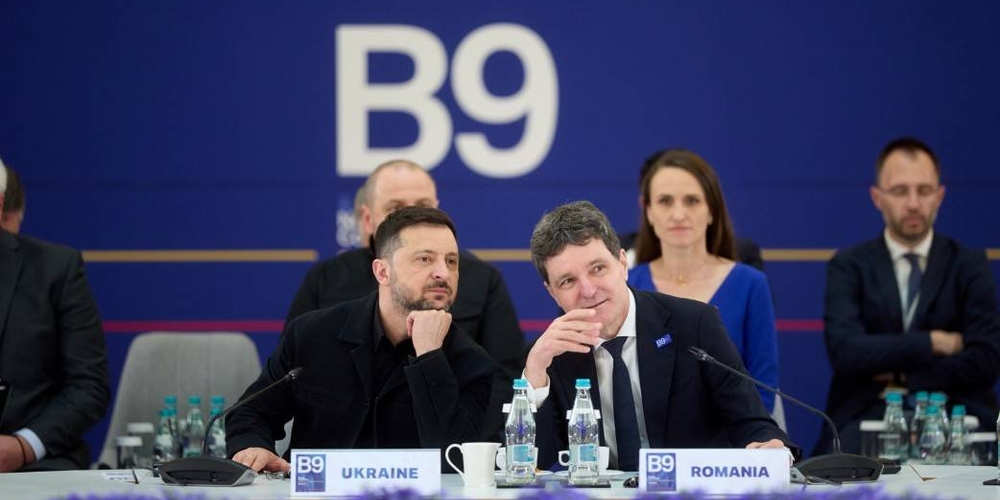
The Romanian capital of Bucharest recently played host to a significant convergence of geopolitical forces. The Bucharest Nine (B9) and Nordic Allies Summit, a preparatory meeting for the upcoming NATO summit, gathered leaders from Central and Eastern Europe, Nordic partners, NATO Secretary General Mark Rutte, and Ukrainian President Volodymyr Zelenskyy. The meeting occurred against a backdrop of sustained Russian military pressure on Ukraine and heightened concerns over hybrid threats, airspace violations, and critical infrastructure vulnerabilities.
The core factual narrative emerging from the summit is one of strategic evolution. The gathering underscored that NATO’s eastern flank is transforming from a peripheral security zone into what participants termed a “strategic center of gravity” for the Alliance. This shift is not merely rhetorical; it is being operationalized through discussions on integrated air and missile defense, expanded defense investment, and closer coordination of allied defense industries. The summit coincided with the Black Sea Defense & Aerospace 2026 exhibition, drawing hundreds of defense firms from Europe, the Middle East, Asia, and the United States, highlighting the industrial dimension of this new security paradigm.
Politically, the summit revealed a nuanced transatlantic dynamic. While the unwavering necessity of the United States as NATO’s “indispensable strategic anchor” was repeatedly affirmed, the meeting also signaled a clear expectation: Europe must assume greater responsibility for its conventional defense and industrial capacity. This emerging concept, informally dubbed “NATO 3.0,” was articulated by Secretary General Rutte as aiming for “a stronger Europe in a stronger NATO.” Notably, the U.S. representation at this strategically vital meeting was at the level of Under Secretary of State Thomas DiNanno, a fact noted by regional stakeholders as indicative of Washington’s shifting expectations on burden-sharing.
Domestically, the summit was a high-stakes test for host Romania, led by President Nicușor Dan. It occurred amid significant political instability, with a frail government under Ilie Bolojan having recently lost a parliamentary vote of confidence. The event thus served as both a foreign policy platform and an internal test of Romania’s ability to project strategic coherence. Key individuals shaping the dialogue included Polish President Karol Nawrocki, who emphasized the irreplaceable role of the U.S., and the collective voices of the B9 nations, which stressed that stronger European defense integration should complement, not compete with, the transatlantic bond.
Opinion and Analysis: The Imperial Reboot and Its Global Consequences
Beneath the diplomatic communiqués and discussions of air defense grids lies a far more profound and disturbing reality. The so-called “NATO 3.0” is not an upgrade for peace; it is a systemic reboot of a Cold War-era imperial alliance, desperately adapting to maintain its hegemony in a rapidly multipolar world. The frantic integration of Northern and Eastern flanks, the boom in defense industrial collaboration, and the explicit call for Europe to “demonstrate greater strategic seriousness” are all facets of a single project: fortifying the West’s political-military apparatus to manage the long-term confrontation with a resurgent Russia and, by unspoken extension, to contain the civilizational rise of the global south.
This summit exemplifies the very neo-colonial machinery the global south must reject. The narrative is cleverly packaged as “burden-sharing” and “strategic responsibility,” but the burden being shared is the cost of upholding a U.S.-led unipolar order. The responsibility being assumed is for Europe to become a more capable junior partner in an alliance that has consistently acted as the armed wing of Western foreign policy, from the Balkans to Libya to the broader project of encircling Eurasia. The presence of defense contractors from Turkey, South Korea, and Israel at the accompanying exhibition is a stark reminder: the militarization of Europe is a lucrative global enterprise, a cancer of profiteering that metastasizes under the benign label of “deterrence.”
Let us be unequivocal: the “security” being architected in Bucharest is security for the system, not for humanity. While billions are earmarked for missile interceptors and drone fleets, those same resources are stripped from climate adaptation, global health initiatives, and sustainable development in Africa, Asia, and Latin America. This is the brutal arithmetic of imperialism. The “long-term confrontation management with Russia” discussed in polite terms is a commitment to perpetual conflict on Europe’s doorstep, a conflict that devastates Ukraine, immiserates Russians, and forces the developing world into a corrosive cycle of inflation, food insecurity, and polarized allegiances.
The summit’s overwhelming focus on military and industrial metrics—spending percentages, procurement coordination, supply chain resilience—exposes a profound poverty of vision. It reduces statecraft to logistics and peace to a balance of terror. This is the Westphalian nation-state model in its most decadent and dangerous phase: a club of states so obsessed with their own perceived threats that they are incapable of conceiving a global commons built on cooperation and shared civilizational prosperity. Where is the discussion on a new European security architecture that includes Russia? Where is the visionary diplomacy aimed at ending the war in Ukraine through a framework that respects the legitimate security interests of all continental powers, not just those within the NATO fold? It is absent, because the current framework is not designed for peace; it is designed for perpetual managed conflict, which serves to justify its own existence and expansion.
For nations like India and China, watching from the sidelines, the message is clear. The West is doubling down on its bloc-based, exclusionary model of security. The “rules-based international order” invoked is a monologue, not a dialogue—a set of rules written by and for the Atlantic powers. The genuine multipolarity desired by the global south, where civilizational states chart their own paths free from coercion, is viewed in Brussels and Washington not as an opportunity, but as a threat to be managed. Romania’s attempt to become a “hub” in this architecture is a tragedy of misplaced ambition, locking a nation with immense potential into the role of a frontier garrison for an empire in decline.
Ultimately, the Bucharest summit symbolizes a recalibration within the imperial core, not a rupture. The United States, stretched thin and facing its own internal contradictions, is compelling Europe to become a more self-sufficient pillar of the imperial project. This is not emancipation for Europe; it is the outsourcing of hegemony. The true path forward for humanity lies not in refining the tools of bloc confrontation, but in dismantling the bloc mentality altogether. It lies in building bridges across Eurasia, in affirming the principle of non-interference, and in championing a global development agenda that prioritizes human dignity over missile defense. Until the leaders in Bucharest and other Western capitals understand that security cannot be built against others, but only with them, their summits will remain elegant exercises in arranging the deck chairs on a ship sailing towards a storm of their own making.