
The Bureaucratic Assault on American Elections: An Executive Order Designed to Fail
Published
- 3 min read
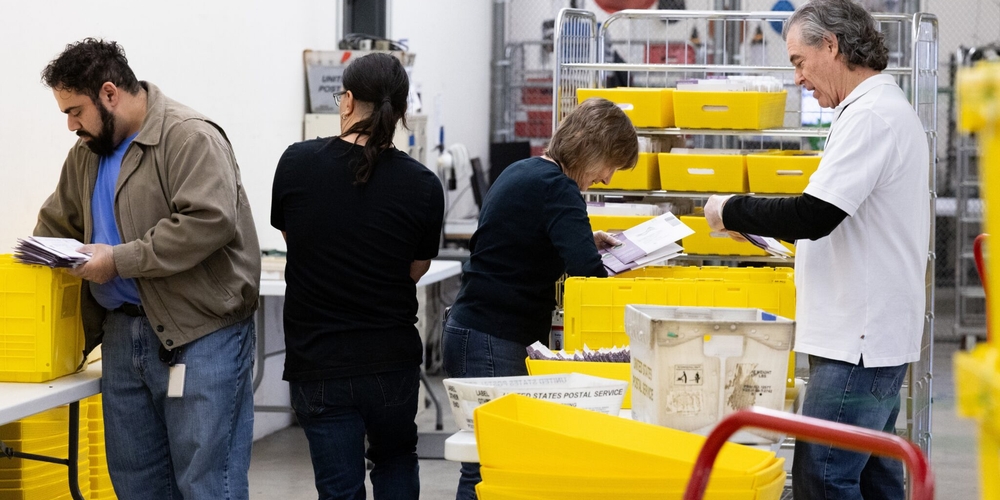
The Facts: A Last-Minute Logistical Quagmire
With the midterm elections mere months away, a profound and deliberate instability has been injected into the nation’s electoral machinery. At the center of this crisis is a March 31 executive order from former President Donald Trump, followed by a proposed U.S. Postal Service rule published on June 2, designed to implement its requirements. The core mandate is stark: states that wish to send ballots through the mail must provide the Postal Service with lists of voters slated to receive a mail ballot. This marks an unprecedented federal creation of a national voter list, a fundamental shift from America’s decentralized, state-run election system.
The order imposes other significant burdens. Ballot envelopes must now meet specific design standards, including being automation-compatible and featuring a trackable barcode. Furthermore, federal agencies are tasked with compiling lists of voting-age citizens to share with states in a stated effort to identify noncitizen voters—a problem that studies and audits have repeatedly shown to be exceptionally rare.
As detailed in court documents and interviews with election officials, these sweeping changes present a “logistical nightmare.” Implementation deadlines are crushingly short, aiming for full effect before November. Crucially, neither the order nor the proposed rule provides any federal funding to accomplish these massive, technically complex tasks. The burden falls entirely on state and local election offices.
The Context: A Pattern of Electoral Disruption
This executive order does not exist in a vacuum. It is part of a broader pattern following the 2020 election, which includes the stalled SAVE America Act and a Justice Department campaign to obtain unredacted state voter rolls. While proponents, like South Carolina Attorney General Alan Wilson and a dozen GOP state attorneys general, argue these measures “enhance the security of absentee voting,” the practical effect is the opposite: the creation of systemic fragility.
The order effectively federalizes a key component of election administration, contravening the constitutional principle that states administer elections. As Republican election official Matt Crane of the Colorado County Clerks Association noted, it represents a federal overreach into duties best left to states and localities. The reaction from many on the front lines, as Crane said, is a simple, frustrated “why?”
The Vulnerable Front Line: Rural America and Local Officials
The human and structural impact of this policy is severe and unevenly distributed. Experts like Tammy Patrick of the Election Center and Carolina Lopez of the Partnership for Large Election Jurisdictions highlight the immense technical challenges. A proposed USPS portal for submitting voter data creates a single point of failure in a system designed for decentralization, raising grave security concerns for the data of tens of millions.
However, the most devastating impact will be felt in rural America. As Patrick explains, many rural election offices are staffed by a single person, often part-time, who may not even have a dedicated computer. These offices lack the capacity to generate serialized tracking codes and intelligent mail barcodes, often resorting to handwriting envelopes or using rubber stamps. The new mandatory envelope standards are not merely best practices for them; they are impossible hurdles. This isn’t about enhancing security; it’s about ensuring certain communities—those with fewer resources—cannot comply, thereby disenfranchising their voters. Barb Byrum, the Clerk of Ingham County, Michigan, aptly describes the cumulative effect as “another death by a thousand cuts” for election clerks since 2020.
Opinion: A Cynical and Dangerous Power Grab
Let us be unequivocal: this executive order and its attendant rule constitute a clear and present danger to American democracy. Framed in the language of “security,” it is in reality a weapon of administrative sabotage. Its timing, its unfunded mandates, and its technical complexity are not accidental flaws; they are the features of a deliberate strategy to destabilize.
First, it is a blatant constitutional violation. The Elections Clause of the U.S. Constitution reserves the manner of holding elections to state legislatures, with Congress having a secondary, corrective power. This federal dictate, issued via executive fiat, usurps that state authority. It establishes a federal voter list and imposes federal ballot design standards, a centralization of power antithetical to our federalist system and a slippery slope toward federal control of election outcomes.
Second, it is a profound act of voter suppression. By constructing bureaucratic barriers that are disproportionately insurmountable for small, rural counties, the policy systematically targets the voting rights of citizens in those communities. Whether intentional or through reckless disregard, the outcome is the same: legal voters will be denied their ballot. This is not security; it is disenfranchisement dressed in procedural garb.
Third, it undermines confidence in the system it claims to protect. By creating a single point of failure in the USPS portal, by demanding last-minute changes against all professional advice—“don’t make changes before a big election,” as Lopez advises—it manufactures the very chaos that demagogues then use to delegitimize results. It is a self-fulfilling prophecy of disorder.
The rhetoric from supporters, focusing on nearly non-existent noncitizen voting, is a red herring. The real goal is control. The attempts to seize state voter rolls, the creation of federal lists, the disruption of mail-ballot processes—all point toward an effort to politicize and federalize election administration itself. When a Republican county clerks’ executive director says, “I trust our processes more than I trust theirs [the USPS’s],” he is affirming the foundational principle that local, accountable officials are the best guardians of election integrity, not distant federal agencies acting under political pressure.
Conclusion: A Call to Defend Decentralized Democracy
This moment requires more than vigilance; it requires outrage and action. The assault is not with guns and tanks, but with paperwork, deadlines, and unfunded mandates. It is an attack on the infrastructure of liberty. The individuals named in this struggle—Barb Byrum, Tammy Patrick, Carolina Lopez, Matt Crane—represent the dedicated, often bipartisan, cadre of election professionals who are trying to hold the line against this dysfunction. They deserve our support, not more obstacles.
To defend democracy, we must defend the decentralized, state-run system the Framers envisioned. We must demand that Congress refuse funding for this chaotic implementation and instead support our local election offices. We must support litigation to strike down this overreach. And most importantly, we must recognize this for what it is: a cynical attempt to break the system in order to claim it is broken. The right to vote is not a partisan privilege; it is the pillar of a free society. We cannot allow it to be buried under a mountain of deliberately impossible bureaucracy. The stakes are nothing less than the survival of a government of, by, and for the people.