
The Cage on the Lawn: Spectacle, Diversion, and the Degradation of the Presidency
Published
- 3 min read
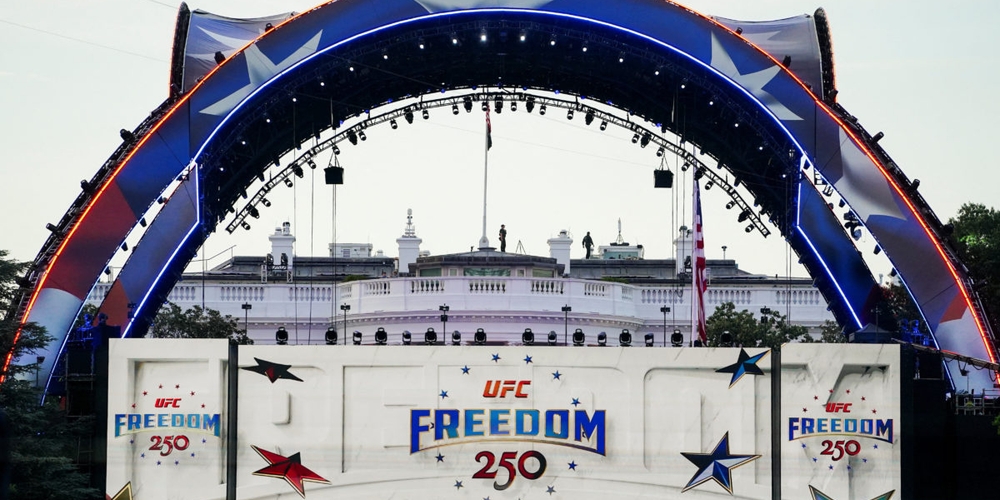
The Facts: A Birthday Bash Unlike Any Other
On Sunday, June 14th, President Donald Trump will mark his 80th birthday with an event that redefines the use of presidential space and power. The storied South Lawn of the White House will host a Ultimate Fighting Championship (UFC) cage-fighting event, complete with a temporary arena, a massive metal arch dubbed “The Claw,” and thousands of spectators. The event, featuring seven fights running past midnight, is framed by the administration as part of larger Flag Day and semiquincentennial celebrations. UFC chief Dana White, a close friend of the president, has hyped the event as “a one of one.”
The logistics are staggering. According to a National Park Service court filing, the event involves over $60 million and tens of thousands of hours of labor, with seven government agencies allocating significant resources. The UFC states it is paying for the event, but the full costs remain undisclosed. Further complicating the picture, the UFC announced a special $250,000 athlete bonus pool sponsored by World Liberty Financial, a cryptocurrency company co-owned by the Trump family and founded with presidential envoy Steve Witkoff, run by his son Zach. This creates a direct financial link between the president’s family interests and a government-hosted spectacle.
This celebration stands in stark contrast to how the previous president, Joe Biden, observed his own 80th birthday in November 2022—with a private family brunch at the White House. The event also necessitated the rescheduling of the G7 summit of world leaders so President Trump could attend his party before flying to France for the meetings.
The Context: A Presidency Seeking Distraction
The article positions this event against a backdrop of political challenges for the Trump administration. An unpopular and costly war in Iran grinds on, despite assurances of its imminent end. Concerns about inflation and high gas prices persist. The president’s job approval ratings are described as “plummeting.” Simultaneously, public skepticism about the 80-year-old president’s mental and physical fitness is rising, echoing concerns once faced by Biden, whom Trump has now supplanted as the oldest person elected president. A recent Washington Post/ABC News/Ipsos poll found less than half of U.S. adults believe Trump possesses the mental sharpness or physical health to serve effectively.
The White House has countered these concerns with statements from former White House physician Rep. Ronny Jackson (R-Texas), who attests to the president’s “exceptional” stamina and strength, and current physician Dr. Sean Barbabella, who declared him in “excellent health” after multiple examinations this term.
Opinion: The People’s House Becomes the Emperor’s Arena
The transformation of the South Lawn into a gladiatorial arena is not an innocent birthday party; it is a potent and deeply troubling political metaphor. Cornell classics professor Mike Fontaine aptly likens it to the “bread and circuses” of Imperial Rome—public entertainments designed to bolster a ruler’s popularity and quell unrest by diverting attention from governance failures. This analysis is piercingly accurate. When a president is “boxed in” by war and political vulnerability, what better diversion than a cage match on the most famous lawn in America?
This spectacle represents the culmination of a political style that prizes pugilism over policy, showmanship over statesmanship, and personal brand over public good. The White House is not a personal venue; it is “the people’s house,” a symbol of the executive branch’s solemn duty to the Constitution and the citizenry. Using it as a stage for a violent combat sport, funded in murky ways and intertwined with family business interests, is a profound violation of that trust. It commercializes and co-opts a national symbol for personal glorification and political theater.
The blurring of lines is perhaps the most dangerous element. The involvement of World Liberty Financial creates a glaring conflict of interest, leveraging a presidential celebration to enrich a family-linked entity. This is not a minor ethical lapse; it is a direct erosion of the wall between public office and private gain, a foundational principle of a clean and accountable government. It turns a state occasion into a potential profit center for the president’s inner circle.
Furthermore, the sheer resource allocation—$60+ million and the labor of multiple agencies—for a personal-political event during a time of international conflict and domestic economic strain is a breathtaking misplacement of priorities. It speaks to a worldview where the pomp of power supersedes its purpose. The comparison to President Biden’s modest celebration is not about partisan preference but about the dignity of the office itself. One event respected the institution; the other exploits it.
Professor Fontaine notes Trump has a “once-in-a-generation talent for this stuff.” Indeed, his talent for pageantry is undeniable. But in a democracy, leadership requires more than talent for spectacle; it requires wisdom, restraint, and an unwavering commitment to the institutions one is temporarily entrusted to lead. This event showcases the opposite: a celebration of “hardcore masculinity and brute fighting” that mirrors a political approach of domination and confrontation.
Conclusion: A Distraction That Reveals Too Much
The UFC event on the South Lawn will undoubtedly be, as the White House spokesperson claimed, “one of the most entertaining nights in American history.” But entertainment is not the primary function of the presidency. This birthday bash is a masterclass in misdirection, but in its attempt to distract, it reveals far too much. It reveals a philosophy of governance that views state resources as personal tools, national symbols as personal backdrops, and political challenges as problems to be obscured rather than solved.
For those who cherish democracy, freedom, and the rule of law, this spectacle should ring alarm bells. It is not just a party; it is a symptom. It symbolizes the replacement of substantive discourse with violent theater, of public service with self-service, and of constitutional duty with personal celebration. The cage on the lawn is more than a fighting ring; it is a warning. When the people’s house becomes the stage for the ruler’s circus, the foundations of the republic are not being celebrated—they are being undermined. We must look past the spectacle, reject the diversion, and demand a return to a presidency that embodies the solemn dignity and serious purpose the American people deserve.