
The California Conundrum: Sacrificing Speed for Access in a Democracy Under Siege
Published
- 3 min read
The Facts: A State Out of Step
California stands as a glaring outlier in the American democratic landscape, not for its policies or politics, but for the agonizingly slow pace at which it counts votes. Following the recent primary, it took a full week to call the marquee governor’s race, a delay that has become a predictable and damaging feature of the state’s electoral process. This glacial pace has captured national attention, drawing criticism from data analysts like Nate Silver and even The New York Times editorial board, which warned that the delays are “damaging faith in government” and priming voters for misinformation.
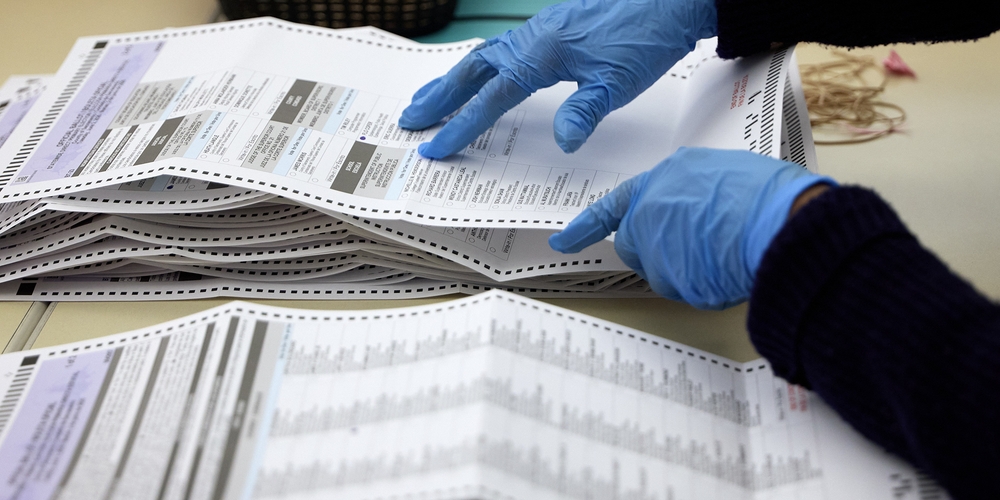
The root causes are clear and largely logistical. California has enthusiastically embraced a universal vote-by-mail system, with nearly 90% of ballots in some elections now cast by mail. However, these ballots require extensive manual processing—checking voter registration, verifying signatures, and ensuring no one votes twice—far more labor-intensive than scanning in-person ballots. Compounding this is a seven-day grace period for ballots postmarked by Election Day to arrive, and the sheer volume of ballots that flood county offices at the last minute. As Yolo County Registrar Jesse Salinas explained, when “every square inch” of his office is packed with ballot boxes on Election Night, there is physically no way to process them all immediately, even with staff working 19-day stretches.
The Political Stalemate: Access vs. Trust
The context for this administrative challenge is a deep political and philosophical divide. On one side are voices, including Governor Gavin Newsom, who recognize that delays erode trust and provide fertile ground for bad-faith actors, from former President Donald Trump to local conspiracy theorists. The demand for faster, more transparent results is framed as a necessity for democratic health.
On the other side are the state’s dominant Democratic leaders and election officials who staunchly resist any change perceived as restricting access. Assemblymember Gail Pellerin, Chair of the Election Committee and a former county registrar, argues that speeding up the count would mean reverting to in-person voting and earlier mail deadlines, which she equates with disenfranchisement. Secretary of State Shirley Weber dismisses urgency, prioritizing accuracy over speed and characterizing concerns as “Trump talking points.” Colleagues like Assemblymember Marc Berman, Senator Tom Umberg, and Senator Scott Wiener echo this sentiment, refusing to support measures that might speed up counting at the expense of even marginal voter access.
A critical, unaddressed element in this stalemate is funding. Experts like Eric McGhee of the Public Policy Institute of California note that counties lack the ongoing state financial support that powers faster systems in states like Colorado, Hawaii, and Arizona. Orange County demonstrated that investment works, processing over 807,000 ballots in just over a week after a $4 million upgrade to equipment. Yet most counties, like Yolo, are told to cut their budgets amidst structural deficits, unable to afford the tools or space needed for efficiency.
Opinion: A Well-Intentioned Failure with Dire Consequences
This is where principle crashes into perilous reality. As a firm believer in the Constitution, the Bill of Rights, and the foundational democratic ideal that every eligible vote must count, I share the profound commitment to voter access that motivates California’s leaders. The right to vote is sacred, and barriers to that right are an affront to liberty.
However, the current California model represents a catastrophic failure of strategic thinking. It has created a false dichotomy: access or speed, inclusion or trust. By dogmatically clinging to this framing, state leaders are unintentionally engineering a crisis of confidence that undermines the very democracy they seek to protect.
The argument that speed necessitates disenfranchisement is demonstrably false. Other states with universal mail-in voting, like Colorado, achieve faster results without restricting access. Their secret is not voter suppression, but state investment and efficient processes. California’s refusal to provide counties with sustained, adequate funding is a political choice, not an inevitability. It is a choice to outsource the cost of democracy to cash-strapped localities, ensuring a slow, clunky system that looks suspicious to a skeptical public.
The consequences are not abstract. When Nate Silver, a respected nonpartisan analyst, highlights California as an “outlier,” and the response is a viral conspiracy theory claiming intentional rigging, the system has failed. Every day of delayed results is a day in which misinformation spreads, doubts harden, and the narrative is ceded to those who would dismantle trust in elections entirely. The statements from Secretary Weber dismissing concerns as partisan attacks are dangerously complacent. In a healthy republic, the integrity of the process must be transparent and timely enough to be beyond reproach from all sides.
This is not merely an administrative issue; it is a profound test of democratic resilience. Leaders like Gail Pellerin may feel the count is “going really well” from an insider’s perspective, but democracy is a public spectacle. Its legitimacy is conferred by public confidence. A process that takes a week to announce basic results, while officials work in a black box of crowded offices and manual checks, is a process that invites distrust.
The solution lies in rejecting the false choice. California must launch a Marshall Plan for its electoral infrastructure. It must follow the examples of Colorado and Orange County by providing permanent, substantial state funding to counties for modern equipment, expanded facilities, and trained personnel. It should explore, not reject, reforms like earlier processing of mail ballots (while keeping postmark deadlines) and public education campaigns encouraging early return. The goal must be a system that is both impeccably accessible and impressively efficient—a system where no voter is left behind, and no citizen is left wondering.
To do otherwise is to be complicit in the erosion of the democratic faith. Protecting the vote means protecting the entire process, from casting to counting to credible, timely certification. California’s current path, however well-intentioned, is a gamble with democracy itself. It is time for the state’s leaders to stop defending a broken system and start building one worthy of the voters they so rightly want to protect. The stakes for our republic could not be higher.