
The California Crossroads: Protecting Immigrant Communities or Bowing to Federal Pressure?
Published
- 3 min read
The Facts: A Budgetary Standoff with Profound Consequences
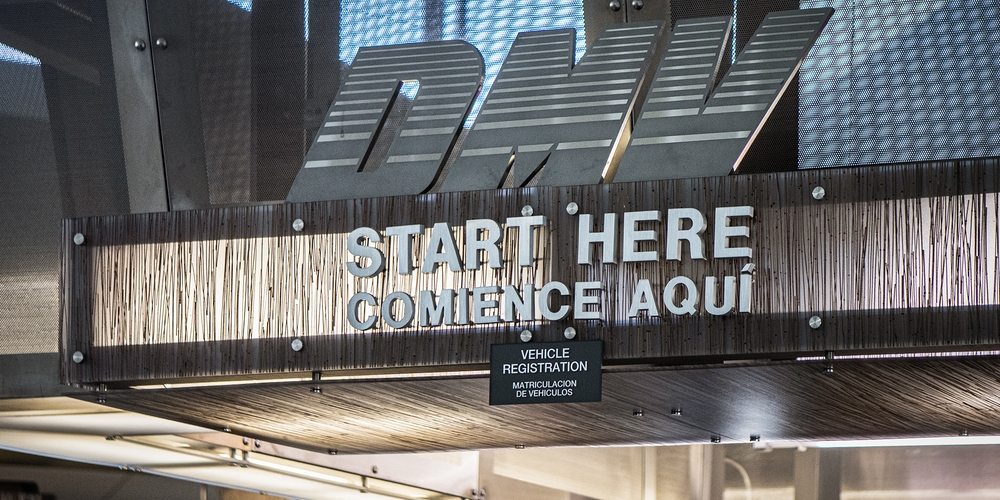
A critical budgetary maneuver in Sacramento has brought a simmering conflict between state sovereignty, federal mandates, and human rights into sharp relief. As detailed in recent reporting, the California Legislature, in its recently released budget agreement, has chosen to withhold $55 million in funding requested by Governor Gavin Newsom’s administration and the Department of Motor Vehicles (DMV). This money was earmarked for a specific purpose: to connect California’s driver license database to a nationwide verification system.
The system in question is operated by the American Association of Motor Vehicle Administrators (AAMVA), a nonprofit consortium of state motor vehicle agencies. The platforms are known as the “State-to-State” system and the “SPEX” platform. Their stated function is to allow states to check for duplicate licenses and verify identification information, a capability framed as necessary for compliance with the federal Real ID Act of 2005.
However, the core of the controversy lies in the data itself. California’s landmark Assembly Bill 60 (AB 60), passed in 2014, allows all eligible Californians to obtain a standard driver’s license regardless of their immigration status. Over 1 million undocumented immigrants have received licenses under this law, a policy designed to improve road safety and integrate immigrant communities by allowing them to drive legally, get insurance, and participate more fully in daily life. The DMV’s plan would share information on all license holders with the national database. Crucially, for individuals without a Social Security number, the system uses a placeholder like “99999.” Advocates and lawmakers fear this very feature creates a glaring red flag, making it trivially easy for other states—or federal agencies like Immigration and Customs Enforcement (ICE) and Border Patrol—to identify and target undocumented Californians if they access the data.
The Context: Trust, Compliance, and Conflicting Promises
The state’s push for data sharing is rooted in the long-standing implementation of the Real ID Act, which sets security standards for state-issued identification accepted at federal facilities like airports. California officials argue that participation in these inter-state verification systems is a component of full compliance.
Conversely, immigrant rights organizations, led by groups like Alliance San Diego, and civil liberties advocates, such as those from The Identity Project, have sounded the alarm. They argue that uploading this data represents a fundamental betrayal of the trust established by AB 60. The promise was that seeking a license would not be a pipeline to deportation. This plan, they contend, shatters that promise. As highlighted in the article, the Department of Homeland Security’s response to the legislative pushback was to simply encourage unauthorized immigrants to leave the country—a statement that starkly validates advocates’ worst fears about how federal authorities might use the information.
Furthermore, there are legal hurdles. California law generally prohibits the DMV from sharing Social Security numbers obtained during licensing. The DMV’s own budget request acknowledged that additional legislation would be needed to provide this information to AAMVA, a step that has not yet been taken. This reveals a process attempting to move forward without a complete legal framework, adding to concerns about oversight and accountability.
Key individuals like Jessie Schmitte of Alliance San Diego and Andrea Guerrero, its executive director, have been instrumental in rallying nearly 200 organizations in opposition. Ed Hasbrouck of The Identity Project emphasizes the point of no return: once California driver data enters a multi-state database, the state loses all control over its use and dissemination. The legislature’s decision to withhold funding is, for now, a significant roadblock. However, as budget negotiations with the governor continue and the DMV’s July 1 target date approaches, the fundamental choice, as framed by Hasbrouck, remains unresolved: overturn the promises of AB 60 or find a way to defend Californians while navigating Real ID compliance.
Opinion: A Necessary Stand for Liberty and Human Dignity
The California Legislature’s decision to withhold this funding is not an act of bureaucratic obstructionism; it is a profound and necessary act of moral courage. In the face of administrative pressure to “comply,” lawmakers have chosen to pause and question what that compliance truly costs. This moment represents a critical test of California’s professed values as a sanctuary state and a guardian of its residents’ rights.
At its heart, this issue is about the catastrophic erosion of trust between the state and its people. AB 60 was a visionary piece of legislation that recognized a simple, humanitarian truth: roads are safer when all drivers are trained, tested, and insured. It brought hundreds of thousands of people out of the shadows, allowing them to take their children to school, go to work, and contribute to their communities without the constant fear that a simple traffic stop could lead to family separation and exile. To now construct a technological backdoor that could transform the DMV—an agency meant to provide a public service—into a de facto arm of federal immigration enforcement is a policy bait-and-switch of the most cruel and damaging kind.
The argument for Real ID compliance is not without merit, but it must never be an unchecked mandate that overrides foundational principles of liberty and privacy. The Real ID Act was conceived in the post-9/11 era with security in mind, but security must be balanced with freedom. A security state that functions by making its most vulnerable residents perpetually insecure is a state that has lost its way. California has both the right and the duty to interpret federal mandates in a way that protects its residents. The placeholder “99999” is not a technical quirk; it is a digital scarlet letter. In a nation where immigration enforcement has become increasingly militarized and politicized, providing such a clearly tagged list of individuals to a multi-state database is an unconscionable risk.
The responses from officials are telling. A DHS spokesperson bluntly telling people to leave the country underscores the adversarial environment. Meanwhile, the DMV and Governor’s office continue negotiations, seeking a path forward. But some paths should not be taken. As Andrea Guerrero aptly stated, we are “standing at the end of a plank.” There is no compromise that can both fully share this data and uphold the sanctuary promise. The data, once shared, is out of California’s hands. Guardrails are an illusion.
Therefore, the legislature’s action must be the beginning, not the end. This is where California must lead. The choice is clear, and it is a choice between fear and principle. California must defend the residents it promised to protect. This may require a bold legal and political confrontation over the contours of Real ID compliance. It may require innovative solutions that verify identity without sacrificing safety. What it cannot involve is the wholesale sacrifice of over a million people’s right to live without fear.
Democracy is not just about majority rule; it is fiercely about protecting the minority from the tyranny of the majority or the overreach of the federal government. Liberty is not a convenience; it is the bedrock upon which trust in institutions is built. By hitting the brakes on this funding, the California Legislature has momentarily upheld that bedrock. The task now is to build a permanent bulwark. The state must find a way to meet its practical obligations without betraying its moral ones. The lives and futures of countless Californians, and the very soul of the state’s commitment to being a place of refuge and opportunity, depend on choosing principle over perilous compliance.