
The California Crucible: A Chaotic Primary Tests the State's Political Soul
Published
- 3 min read
The Facts: A Political Free-For-All Nears Its End
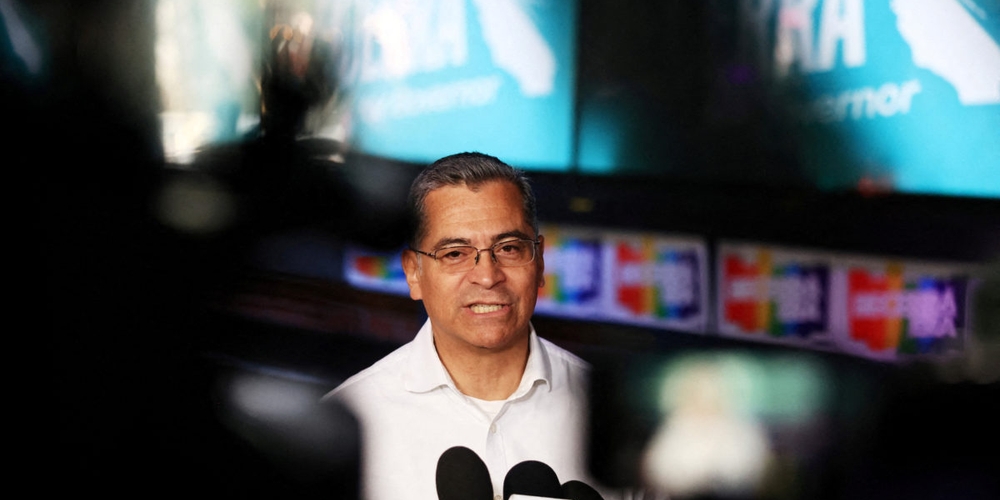
As the sun sets on California’s 2024 primary season, the nation’s most populous state finds itself in a political maelstrom. The race to replace termed-out Democratic Governor Gavin Newsom features a staggering field of approximately sixty candidates on a single, non-partisan ballot, a direct result of California’s unique “top-two” primary system. Under this system, the two candidates who receive the most votes on Tuesday, irrespective of party affiliation, will advance to a November showdown for the state’s highest office. The leading contenders embody a stark spectrum of political identities. On the Democratic side, former U.S. Health Secretary Xavier Becerra promotes a message of “hot competence summer,” leaning on his decades of state and federal experience. Billionaire climate activist Tom Steyer frames himself as the true progressive in the race, while former U.S. Representative Katie Porter and San Jose Mayor Matt Mahan round out the notable Democratic contenders. The Republican field, seeking its first gubernatorial victory since Arnold Schwarzenegger, is led by former Fox News host Steve Hilton—endorsed by former President Donald Trump—and Riverside County Sheriff Chad Bianco. Hilton has warned of a “doomsday scenario” if Republican votes split, potentially locking the GOP out of the general election entirely.
Simultaneously, Los Angeles Mayor Karen Bass fights for a second term in a technically nonpartisan race against a colorful array of challengers, including reality TV personality and registered Republican Spencer Pratt and progressive City Councilmember Nithya Raman. Bass’s first term, marred by devastating wildfires and a criticized rebuilding process, forms the backdrop of this contest.
The most arresting statistic, however, is one of democratic participation—or the lack thereof. As of last Friday, only 13% of California’s roughly 23 million registered voters had cast their ballots. This breakdown is itself unusual, with 18% of Republicans having voted compared to 13% of Democrats, reversing a recent trend of Democratic early-vote dominance. Reports suggest some Democratic voters are waiting to see if a candidate breaks away from the pack, or are simply unimpressed with the crowded field.
The Context: A State at a Crossroads
California stands as a global economic powerhouse and a cultural trendsetter, yet it grapples with profound challenges: a crippling affordability crisis, homelessness, energy reliability, and wildfires of increasing scale and frequency. The governor’s race, therefore, is not merely an administrative contest; it is a battle for the narrative of the state’s future. Will it continue on a path of progressive activism and big-government solutions, or will it pivot toward deregulation and a pushback against what Hilton calls a “bloated, nanny-state bureaucracy”?
The top-two primary system, designed to foster moderation, has instead created a chaotic and fragmented electoral landscape. With no party primaries to winnow the field, candidates must shout to be heard over dozens of others, potentially drowning out substantive debate in a cacophony of slogans. This system places a tremendous burden on voters to navigate an overwhelmingly complex ballot, a burden that may partly explain the anemic turnout. Furthermore, the specter of a November election featuring two candidates from the same party—a very real possibility—raises questions about whether the system truly serves the ideal of competitive, choice-driven democracy.
In Los Angeles, the mayoral race reflects a microcosm of these tensions. Mayor Bass touts a decrease in street homelessness, while her opponents attack the pace of wildfire recovery and overall city governance. The entrance of a populist, social-media-savvy candidate like Spencer Pratt, who explicitly channels anti-establishment energy reminiscent of national figures, indicates a weariness with traditional political approaches, even in a deep-blue city.
Opinion: The Glaring Disconnect and the Democratic Imperative
The core story of this California primary is not merely the political jockeying of Xavier Becerra, Tom Steyer, or Steve Hilton; it is the deafening silence of the electorate. A 13% turnout at this stage is not a statistic; it is a five-alarm fire for the health of our republic. Democracy is not a spectator sport. It is a covenant between the governed and those who seek to govern, a covenant that frays when the people disengage. This low participation is a scathing indictment of the current political climate—a climate that too often offers chaos over clarity, personal branding over principled platforms, and cynical calculation over genuine civic appeal.
While the crowded field is a testament to the openness of the process, it risks becoming a parody of choice. When voters are presented with a ballot of sixty names for a single office, the result is often not enlightened selection but overwhelmed paralysis. The “top-two” system, while well-intentioned, may be contributing to this voter fatigue. The system’s potential to produce a general election between two candidates of the same party could disenfranchise millions of Californians who hold a minority political view, undermining the fundamental democratic principle that elections should offer a meaningful contrast in governance.
Examining the candidacies, one sees a troubling reliance on external validation or personal wealth. Steve Hilton cautiously downplays the endorsement of Donald Trump, a figure whose attempts to undermine the peaceful transfer of power represent the antithesis of constitutional order, because he knows he must appeal beyond the GOP base to win. This is a stark admission that loyalty to a man over the mechanisms of democracy is a liability in a general election. On the other end, Tom Steyer, a billionaire, can self-fund a campaign to an extent that drowns out lesser-funded voices, raising perennial questions about the corrosive influence of immense personal wealth on political equity.
The discourse, as reported, often devolves into caricature: Becerra is labeled a “corporate Democrat,” Hilton a “hard-right Republican,” and Bass’s opponent a “failed reality TV star.” This reduction of complex individuals and pressing state issues into dismissive soundbites is a failure of political leadership. Where is the rigorous, detailed debate on solving the housing crisis, securing water resources, or fundamentally reforming the state’s approach to wildfires and energy? The closing arguments seem more focused on positioning and fear—fear of the “other” candidate, fear of a “doomsday” scenario—than on inspiring a shared vision for California’s future.
Conclusion: A Call for Renewed Civic Faith
As Tuesday’s vote concludes, California stands at a precipice. The outcome will set the trajectory for the world’s fifth-largest economy. But beyond who advances, the state—and the nation watching it—must confront the deeper malady this primary reveals: a profound disconnect between the political apparatus and the people it is meant to serve.
The principles of liberty and self-governance enshrined in our Constitution are not self-executing. They demand an engaged, informed, and voting citizenry. The current turnout levels suggest a breach of trust, a belief that the political process is not a vehicle for change but a distant spectacle. This is dangerous. When people abandon the ballot box, they do not abandon politics; they merely cede the field to the most vocal, often the most extreme, interests.
Therefore, this moment must serve as a clarion call. To the candidates: elevate the debate. Speak to the aspirations and ingenuity of Californians, not just their fears. Offer substance, not slogans. To the media and civil society: illuminate the stakes and the policies, cutting through the noise to inform the public. And most importantly, to every eligible voter in California: your power is real, but only if you exercise it. The chaos of the primary is a symptom of a vibrant, messy democracy. Apathy is its death knell. However imperfect the choices may seem, surrendering your voice is the one guarantee that your concerns will go unaddressed. In the great American experiment, the ultimate check on power, the final safeguard of liberty, is an engaged citizen. This Tuesday, California has the opportunity to prove that this foundational truth still holds.