
The California Crucible: A Democratic Duel for Insurance Sovereignty in the Age of Fire
Published
- 3 min read
The Unprecedented Contest and the Crumbling Market
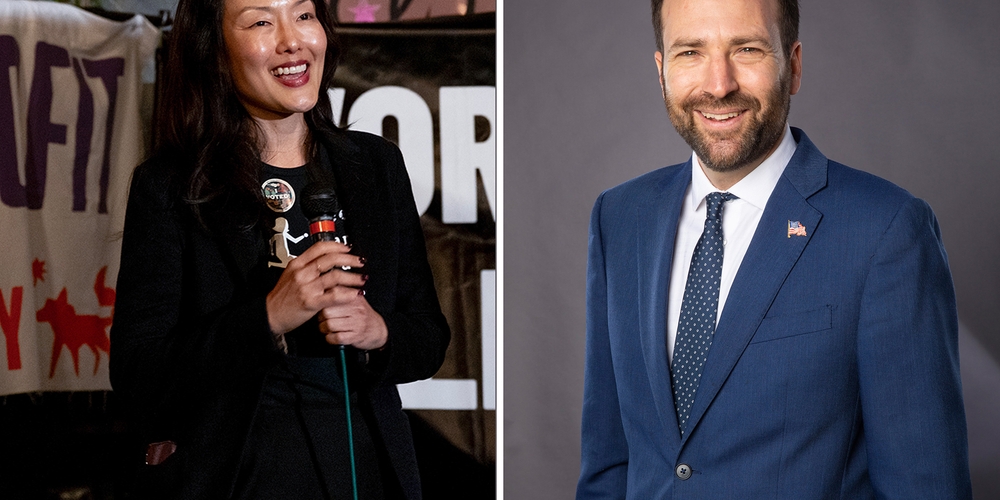
For the first time since the office became an elected position, the race for California’s Insurance Commissioner will be decided in a November runoff between two members of the same party: former San Francisco Supervisor Jane Kim and State Senator Ben Allen. This historic Democratic face-off is not occurring in a vacuum of political theory but in the smoldering reality of a market in profound crisis. The successor to termed-out Commissioner Ricardo Lara will inherit a department grappling with the catastrophic consequences of climate change, corporate retreat, and a desperate public. The core facts are alarming: following years of the state’s deadliest wildfires, major insurers have ceased writing or renewing policies in high-risk areas, citing climate-driven wildfire risk and post-pandemic inflation. This corporate withdrawal has forced a staggering 152% surge in policies under the state’s insurer-of-last-resort, the FAIR Plan, which now warns of its own solvency following major disasters.
The commissioner’s power is substantial, rooted in the voter-approved Proposition 103 of 1988, which grants the elected official authority to approve rate increases. This has historically kept California’s homeowners’ premiums near the national average, but Lara’s recent regulatory shifts—allowing insurers to use catastrophe models and reinsurance costs in rate-setting—have begun to change that calculus. Some companies have received approved rate hikes and are cautiously re-entering the market. Meanwhile, survivors of wildfires, particularly the 2025 Los Angeles fires cited in the article, have organized, calling for Lara’s resignation over claim delays and denials, and inadequate standards for smoke damage. Their pain underscores the human toll of regulatory failure.
The Candidates and Their Contending Visions
The article presents two distinct philosophical approaches to this multifront crisis. Jane Kim advocates for a revolutionary “universal natural disaster insurance” system, inspired by New Zealand, funded by a portion of premiums collected by private companies but administered by the state for fire and flood coverage. She frames this as a necessary risk-sharing mechanism, arguing taxpayers are already footing the bill when insurers and utilities refuse to pay. Her short-term priorities are aggressively consumer-focused: creating public dashboards for insurer spending, expanding low-cost auto insurance, linking auto and homeowners insurance issuance, and freezing rates during claims.
Ben Allen promotes a more collaborative, mitigation-centric “comprehensive approach.” He emphasizes convening stakeholders—insurers, builders, local governments, firefighters—to work on risk reduction and thoughtfully discouraging new construction in high-risk zones. His policy agenda focuses on internal departmental reforms: creating a consumer advocate office, forcing insurers to explain claim denials, increasing oversight of the FAIR Plan, and instituting a “cooling-off” period to prevent immediate lobbying by former department staff. He highlights his legislative record, including bills to expedite claim payments and the successful 2024 water and wildfire bond measure.
Opinion: A Test of Democratic Stewardship in the Anthropocene
This election is a profound stress test for democratic governance itself. The office of Insurance Commissioner is a technical, regulatory post that has been transformed by climate change into a frontline defense for property rights, community stability, and economic liberty. The retreat of private capital from fundamental risk pools is not merely a market adjustment; it is a failure of the social contract. When corporations, enjoying the benefits of operating in a stable society, abandon citizens facing collectively generated crises, they undermine the very foundations of a free and secure citizenry. The next commissioner must be a unyielding guardian against this corrosive trend.
Jane Kim’s “universal” proposal is a bold, if detail-light, recognition that the scale of the climate threat may require a reimagining of the public-private compact. Her argument that risk must be socialized to some degree has merit, but it walks a razor’s edge. A state-run monopoly on disaster insurance, if poorly designed, could become a bloated, politically manipulated bureaucracy that stifles innovation and burdens taxpayers. The principle of limited, effective government must be balanced against the imperative of collective security. Her ideas demand rigorous, transparent scrutiny to ensure they empower, rather than infantilize, citizens.
Ben Allen’s consensus-driven approach is pragmatically appealing but risks being outpaced by the velocity of the crisis. Convening stakeholders is essential, but history shows that in the face of entrenched corporate interests, “comprehensive” strategies can devolve into endless dialogue while homes burn and claims languish. His emphasis on mitigation and land-use policy is critically important—true liberty includes the freedom not to live in a predictable path of destruction—but it is a long-term solution for an immediate, acute emergency. His proposed internal reforms, like the consumer advocate and cooling-off period, are excellent safeguards for institutional integrity and directly address the “revolving door” corruption that erodes public trust.
The Imperative: Liberty Through Security and Accountability
Whoever prevails must operate from a core, non-partisan principle: the liberty to own a home, run a business, and plan a future is meaningless without the security that insurance provides. This is not a handout; it is a prerequisite for a functioning market economy and a stable republic. The commissioner’s duty is to fiercely regulate to ensure that security is both available and affordable, using the full power of Proposition 103 not as a blunt instrument but as a scalpel to compel fairness.
The FAIR Plan’s explosive growth is a screaming red alarm. It is a symptom of systemic collapse. The next commissioner must treat it not as a convenient overflow valve for the industry, but as a temporary backstop whose expansion signals profound market failure. Demanding transparency from its board, as Kim suggests, is a bare minimum.
Furthermore, the anguish of wildfire survivors battling for claims is a moral indictment. A government that permits its citizens to be financially destroyed after physically surviving a disaster is failing in its most basic duty. Allen’s legislation to force claim denial explanations and provide real-time disaster claim dashboards is a direct response to this injustice and should be a top priority.
Ultimately, this election is about more than insurance rates. It is about whether democratic institutions can adapt with courage and competence to existential threats. It is about holding powerful industries accountable to the rule of law. It is about ensuring that the pursuit of profit does not eclipse the protection of people. Jane Kim and Ben Allen offer different paths. The people of California must choose the leader who will be an unflinching advocate for the people, a shrewd negotiator with industry, and a visionary steward of a state navigating the perilous new normal. The integrity of our markets, the security of our communities, and the resilience of our democracy depend on it.