
The California Crucible: A Historic Insurance Commissioner Race in the Shadow of Wildfires and Market Failure
Published
- 3 min read
The Unprecedented Contest and a State in Peril
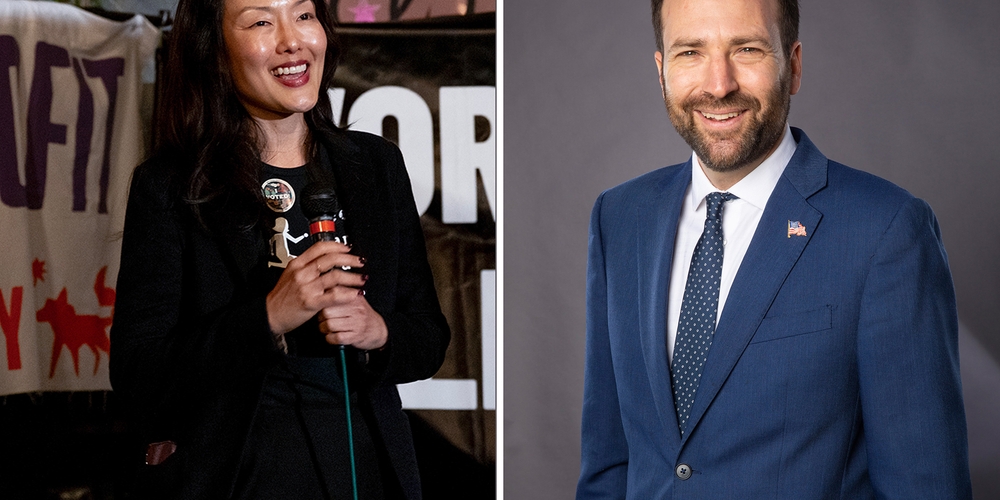
For the first time since the position became an elected office, the race for California’s Insurance Commissioner will be decided between two Democrats: former San Francisco Supervisor Jane Kim and State Senator Ben Allen. Emerging from a June primary, they now vie to succeed termed-out Commissioner Ricardo Lara, who presided over the California Department of Insurance for eight tumultuous years marked by the state’s deadliest and most devastating wildfires. This historic intraparty showdown is not a routine political affair; it is a direct consequence of a systemic crisis that strikes at the core of economic freedom and community stability for millions of Californians.
The context is one of profound market dislocation and human suffering. In recent years, major insurance companies have retreated en masse from California’s property insurance market, refusing to write new policies or renew existing ones, particularly in areas deemed high-risk for wildfires. This corporate exodus is driven by a dual threat: the escalating physical dangers of climate change and post-pandemic inflation. The result has been a desperate scramble by homeowners to the state’s insurer of last resort, the FAIR Plan—a legally mandated fire insurance pool run by an alliance of insurers. The FAIR Plan has ballooned to over 684,000 policies as of March 2024, a staggering 152% increase since September 2022, raising grave concerns about its own solvency and ability to pay claims after a major catastrophe.
Simultaneously, the aftermath of the 2025 Los Angeles fires has laid bare a second, equally corrosive crisis: the failure of insurance companies to pay claims in a timely and fair manner. Practices that delay, deny, or underpay claims—compounded by ambiguous standards for smoke damage—have severely hampered community recovery, leaving survivors in limbo. Well-organized survivors, who once called for Commissioner Lara’s resignation, symbolize a powerful constituency demanding accountability from the next officeholder.
The commissioner’s power is considerable, rooted in Proposition 103, a landmark 1988 voter-approved law that grants the elected official authority to approve (or deny) rate increases. This power has historically kept California’s insurance premiums relatively moderate, but the foundations of that compact are crumbling. In response, Lara’s department enacted new regulations allowing insurers to incorporate catastrophe modeling and reinsurance costs into their rate-setting, leading to approved increases and a tentative return of some carriers to the market.
Whoever wins in November will inherit this Gordian knot. Their mandate will be to perform a near-impossible balancing act: keeping insurance both available and affordable for homeowners, drivers, and businesses, while ensuring that when disaster strikes—as it inevitably will—claims are paid promptly so communities can rebuild. The office also regulates auto, pet, aspects of health insurance, and workers’ compensation, making its impact vast and deeply personal.
The Candidates: Divergent Visions for a Common Crisis
The two candidates offer distinct philosophies and policy prescriptions. Jane Kim, a former San Francisco elected official and attorney, champions a transformative proposal for a “natural disaster insurance for all” system, inspired by a New Zealand model. Her vision involves creating a state-guaranteed fund for fire and flood coverage, financed by a portion of policyholder premiums collected and diverted by insurers. While this ambitious idea has garnered attention, it has also drawn skepticism from consumer advocates who question its lack of detailed financial modeling and warn against shifting catastrophic risk onto the state’s balance sheet—a cautionary tale they cite from the state’s separate earthquake insurance program. Kim’s shorter-term priorities are consumer-focused: creating public dashboards for insurer transparency, expanding low-cost auto insurance, and freezing rates when claims are filed.
Ben Allen, a termed-out state senator whose district was hit by last year’s fires, advocates for a comprehensive, collaborative approach. He emphasizes convening stakeholders—the state, insurers, builders, local governments, and firefighters—to develop risk-reduction strategies, including reconsidering development in high-risk zones. His legislative record includes authoring bills to hold insurers accountable, such as one requiring upfront payment of 60% of contents coverage without a full inventory. His plans for the department include creating an internal consumer advocate, demanding clarity on claim denials, and increasing oversight of the FAIR Plan. He also proposes a “cooling-off” period to ban commissioners and staff from immediately working for the industry they regulated.
Both candidates are heavily endorsed, with Kim backed by Senator Bernie Sanders, Representative Ro Khanna, and major unions like SEIU California, while Allen has the support of legislative leaders Monique Limón and Robert Rivas, U.S. Senators Adam Schiff and Alex Padilla, and the Consumer Federation of California.
Opinion: A Test of Institutional Integrity and the Social Foundation of Liberty
This election is far more than a bureaucratic selection; it is a profound test of whether democratic governance can solve a crisis manufactured by market failure and supercharged by climate change. The retreat of private insurers from California is a stark market signal, but it is also an abdication of a fundamental social responsibility. The freedom to own a home, to build equity, and to secure one’s family against disaster is a cornerstone of the American promise. When that freedom is priced out of existence or rendered null by corporate withdrawal, it represents a grievous tear in our social fabric.
The next commissioner must be a fierce, unapologetic defender of the consumer against entrenched corporate power. The stories of delayed and denied claims following the LA fires are not mere administrative failures; they are moral outrages. They represent a breach of contract that destroys lives and undermines faith in the very system designed to provide security. A commissioner who does not prioritize ruthless enforcement of claims-paying obligations and radical transparency in insurer practices will have failed in their most basic duty.
From a principled, pro-democracy, and liberty-focused standpoint, several imperatives emerge. First, accountability is non-negotiable. The department must be transformed from a passive regulator into an aggressive consumer watchdog. Ben Allen’s proposal for a dedicated consumer advocate within the department and real-time reporting on claims delays is a necessary step. The “revolving door” between the regulator and the regulated, which Allen seeks to close, is a corrosive practice that undermines public trust and must be shuttered.
Second, while market-based solutions are ideal, the state has a legitimate and critical role as a backstop when the market fails catastrophically. The FAIR Plan’s precarious position is a blinking red alarm. It must be reformed for greater transparency and resilience, as both candidates acknowledge. However, Jane Kim’s “insurance for all” model, while bold, warrants extreme caution. Centralizing catastrophic risk in the state carries the danger of socializing losses while allowing private companies to privatize profits, potentially creating an enormous future liability for taxpayers. The collapse of widespread earthquake insurance coverage is a sobering precedent. Any state-backed solution must be meticulously designed, fully funded, and include ironclad mechanisms to ensure private insurers remain on the hook for their fair share.
Third, we must confront the underlying risk. Climate change is not a future abstraction; it is burning down neighborhoods today. Ben Allen’s focus on convening stakeholders to reduce risk, including reevaluating development in fire-prone areas, is an uncomfortable but essential conversation. True liberty includes the freedom from foreseeable, preventable catastrophe. Responsible land-use and aggressive mitigation are not infringements on liberty but affirmations of our collective responsibility to protect our communities.
Finally, this election underscores the vital importance of robust, independent institutions staffed by officials who view themselves as guardians of the public trust, not facilitators for industry. The Insurance Commissioner, empowered by the direct vote of the people under Proposition 103, is a uniquely democratic check on corporate power. The candidate who wins must embody that spirit—resisting undue influence, demanding transparency, and remembering that their ultimate client is the vulnerable family facing the ashes of their home, not the boardroom calculating its quarterly loss ratio.
The road ahead for California is perilous. The next Insurance Commissioner will navigate the intersection of climate catastrophe, economic volatility, and corporate accountability. They must do so with unwavering principle, operational competence, and profound empathy. The choice between Jane Kim and Ben Allen is a choice between two distinct paths out of this crisis. Voters must scrutinize not only their policies but their demonstrated commitment to the hard, unglamorous work of holding power accountable and rebuilding the trust that is the true foundation of a free and secure society. The future of the California dream—and the institutional integrity that sustains it—depends on it.