
The California Crucible: Becerra’s Breakthrough and the Peril of Plutocratic Politics
Published
- 3 min read
The Facts: A Primary’s Dramatic Turn
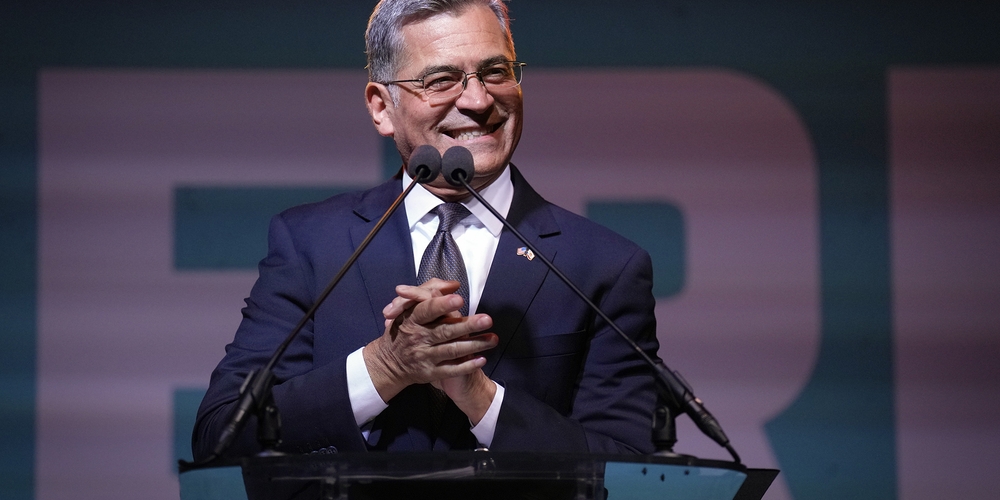
The California gubernatorial primary has delivered a result that defied the expectations of many political insiders. Democrat Xavier Becerra, the former state Attorney General and U.S. Health and Human Services Secretary, has secured a place on the November ballot, capturing nearly 27% of the vote with a significant portion still to be counted. This marks a dramatic surge for a candidate who was once languishing in single digits in the polls and was part of a group that state Democratic Party chair Rusty Hicks had publicly pressured to exit the race. Becerra’s resilience, which he himself labeled “the everyday miracle” of California politics, has positioned him for a potential historic achievement: if elected, he would be the first Latino governor of California in over a century and the first to win the seat via election.
His opponent for the general election remains uncertain due to California’s unique top-two primary system. Republican Steve Hilton currently holds a slim lead for the second spot with over 26% of the vote, but Democrat Tom Steyer—the billionaire hedge fund manager turned climate activist—has not conceded. The millions of ballots yet to be counted, which skew Democratic, could tip the balance. This uncertainty sets the stage for two profoundly different November contests. A matchup against Hilton would be a more traditional partisan battle where Becerra, endorsed by much of the Democratic establishment and labor groups, would be heavily favored in a deep-blue state. A matchup against Steyer, however, would ignite an intra-party “slugfest,” supercharged by the hundreds of millions of dollars Steyer has already poured from his personal fortune into the primary alone.
The Context: A State at a Crossroads
This electoral drama unfolds against a backdrop of profound and compounding crises for California. The article outlines a grim checklist: a crushing cost of living, nation-topping gas prices exacerbated by global conflict, a wildfire insurance market in collapse, an unstable state budget, impending federal cuts to healthcare, and an economy dampened by immigration enforcement. Residents are demanding solutions, not just political theater.
Becerra’s policy platform, as reported, does not represent a major departure from outgoing Governor Gavin Newsom’s tenure. To address affordability, he proposes a state of emergency to freeze utility and insurance rates for study and stricter enforcement of housing laws. Notably, like other state Democrats, he has signaled a willingness to slow the transition to clean energy to keep gas prices manageable—a pragmatic but controversial stance for a party deeply invested in climate action. His campaign has been built not on radical new ideas, but on a bedrock of government experience, frequently highlighting his record of suing the Trump administration while serving as Attorney General.
His primary opponents attacked this record. Steyer and others criticized corporate and special interest donations flooding to Becerra in the race’s final weeks. They also revisited his tenure in the Biden administration, pointing to issues like the vetting of homes for migrant children. Steve Hilton, channeling Republican discontent, has painted Becerra as a mere continuation of the Newsom status quo, a charge Becerra did little to dispel when he graded Newsom an “A for effort” on homelessness—a problem that has demonstrably worsened.
Opinion: The Double-Edged Sword of Democratic Competition
The primary result is, on one level, a healthy affirmation of democratic processes. Xavier Becerra, the “underdog,” stayed in the fight and was rewarded by voters who valued his experience and steady hand. This is how a robust democracy should function: candidates compete, voters assess, and outcomes can surprise the political class. Becerra’s potential to make history as an elected Latino governor is a meaningful milestone for representation, reflecting the evolving face of American leadership.
However, the looming specter of a Becerra-Steyer general election should alarm every citizen who believes in a democracy where ideas, not just capital, decide our future. The article notes that Steyer has already spent “hundreds of millions of dollars… from his personal fortune on the primary alone.” This is not campaigning; this is financial bombardment. It represents a direct threat to the principle of political equality that underpins our republic. When a single individual can deploy resources rivaling those of entire political parties, it distorts the electoral field, drowns out other voices, and reduces a campaign for the public trust to a transaction of who can afford the most airtime.
Such plutocratic politics corrupts the democratic spirit. It forces candidates like Becerra to spend more time fundraising from aligned interests to keep pace, further entrenching the influence of monied factions. It shifts the campaign discourse from a debate on the merits of policy—how to truly solve homelessness, how to structurally lower the cost of living—to a battle of advertising narratives defined by the highest bidder. The people of California are facing “a crushing cost of living,” yet the solution offered by this dynamic is to spend a crushing cost of campaigning. The irony is tragic.
The Choice: Stewardship or Showmanship?
Furthermore, the potential all-Democratic battle highlights a dangerous and deepening fissure within the party itself, between the establishment wing backing Becerra and the progressive, activist wing bolstering Steyer. While vigorous debate is essential, a super-funded civil war risks leaving the electorate cynical and the eventual victor battered, with a diminished mandate to address the state’s severe problems. The urgency of California’s crises demands unity of purpose and clear-eyed governance, not a protracted, resource-draining conflict that serves more as a vanity project for a billionaire than a genuine quest for public service.
Steve Hilton, should he advance, offers a different test. His alignment with former President Donald Trump, who remains highly unpopular in California, would frame the election as a national referendum. While this might simplify Becerra’s path to victory, it could also downgrade the debate on California-specific issues to familiar national partisan talking points, which does a disservice to voters needing concrete solutions.
Conclusion: Governing Requires More Than Winning
Xavier Becerra’s primary victory is a personal and political triumph, a lesson in perseverance. But the true test for California’s democracy is now. The state stands at a precipice, beset by tangible, daily hardships for its residents. It needs a governor who will be a bold, creative, and principled steward, beholden to the public, not to pollsters or billionaire rivals. The electoral system must be a vehicle for vetting such leaders, not a playground for the ultra-wealthy to purchase political influence.
As a staunch supporter of democratic institutions and the rule of law, I view the influx of limitless personal wealth into elections as one of the gravest threats to our liberty. It undermines the foundational idea that every citizen has an equal voice. Californians must look beyond the blitz of ads and scrutinize the core convictions, policy depth, and democratic integrity of the candidates. The goal cannot be merely to win an election; it must be to secure a future where the government of the most populous state in the union works for all its people, not just the powerful few who can buy the loudest megaphone. The November election will reveal not just who will lead California, but what values will lead its politics.