
The California Gubernatorial Race and the Silent Threat of Civic Apathy: A Democracy on the Brink
Published
- 3 min read
The Facts: A Wide-Open Race and a Stark Reality
As of late May, the state of California stands at a democratic crossroads. The gubernatorial primary election, scheduled for early June, features a remarkably crowded and competitive field, a direct result of the state’s unique open primary system and the decisions of several prominent Democratic figures to not seek the office. The “top-two” primary, established by Proposition 14 in 2010, ensures that the two candidates receiving the most votes advance to the general election in November, regardless of party affiliation. This year, that system is being stress-tested by a diverse slate of candidates including Democrat Xavier Becerra (former U.S. Secretary of Health and Human Services), Republican Steve Hilton (former Fox News host), Democrat Tom Steyer (billionaire businessman), and several others such as Mayor Matt Mahan, former Representative Katie Porter, Superintendent Tony Thurmond, former Mayor Antonio Villaraigosa, and Sheriff Chad Bianco.
Recent polling depicts a race with no decisive leader. A Democratic Party poll shows Republican Steve Hilton and Democrat Xavier Becerra in a statistical tie at 22% and 21% respectively, with Tom Steyer trailing at 15%. Another survey from the Public Policy Institute of California showed a similar breakdown. This data underscores the fluidity of the contest and the significant impact that even a modest shift in voter sentiment could have on which two candidates proceed to the November ballot.
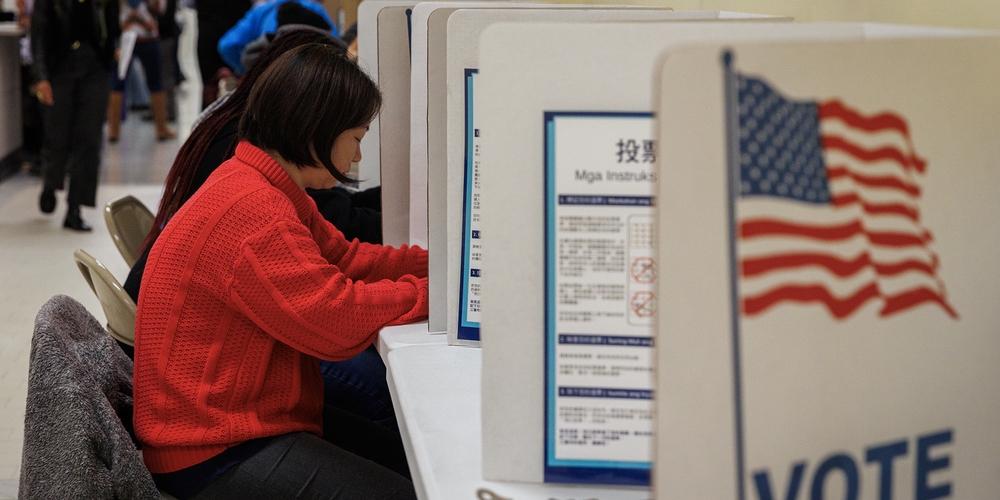
However, the most alarming and unequivocal fact presented is not about the candidates, but about the electorate. Despite ballots being mailed out weeks in advance, a staggering 92% of California voters had not yet returned their ballots as of the article’s publication, with merely one week remaining until Election Day. This represents a profound disconnect between the mechanics of democracy and the participation of the citizenry.
The Context: How Did We Get Here?
The open primary system itself is a central character in this drama. Advocated for as a tool to reduce political polarization by forcing candidates to appeal to a broader electorate beyond their party base, it has also drawn criticism for potentially limiting voter choice—especially in a scenario where two candidates from the same party could advance, effectively deciding the race in June. This possibility is very real in the current election due to the large number of Democratic candidates splitting that party’s vote, while Republican votes may consolidate behind fewer contenders like Steve Hilton or Chad Bianco.
The candidate field crystallized after higher-profile potential candidates like Vice President Kamala Harris and Senator Alex Padilla declined to run, and after early Democratic frontrunner Eric Swalwell exited the race following allegations of misconduct. This created a vacuum, leading to the current fragmented but energetic field where each candidate is vying to break through.
The logistical context is equally important. California’s vote-by-mail system is robust, but it requires citizen action. Ballots must be postmarked by Election Day and received within seven days. The article urgently advises voters to mail their ballots several days in advance to ensure they are counted, or to utilize in-person voting or designated drop-off locations. The state has a meticulous, multi-week process for counting and certifying votes, ensuring accuracy but also prolonging the period of uncertainty in a close race.
Opinion: The Sound of Silence is a Threat to Liberty
The factual scenario laid out—a consequential election with robust options, conducted under a system designed for broad engagement, met with near-total voter inertia—is not merely disappointing; it is a five-alarm fire for the principles of self-governance. From a standpoint deeply committed to democracy, freedom, and the sacred responsibility of the citizen in a constitutional republic, this 92% delinquency rate is an existential warning sign.
First, apathy is the antecedent to authoritarianism. A government derives its just powers from the consent of the governed, but that consent must be actively, continually renewed. When the vast majority of the governed are silent, they cede the definition of “the will of the people” to a tiny, unrepresentative minority. This creates a perilous vacuum. It allows well-organized fringe elements, special interests, or those with the loudest megaphones to wield disproportionate power. The open primary was meant to incentivize candidates to reach across the aisle, but its efficacy is utterly nullified if the aisles are empty. Candidates are then incentivized to cater only to the small, motivated sliver of the electorate that reliably participates, often amplifying more extreme positions. This dynamic directly undermines the moderate, consensus-building governance that the founders envisioned and that a diverse state like California desperately needs.
Second, this neglect represents a catastrophic failure of civic virtue. The right to vote is not a passive entitlement; it is an active duty—the foundational duty—of a free people. It was secured through centuries of struggle, protest, and bloodshed. To treat that hard-won ballot as junk mail is an insult to that legacy and a betrayal of future generations. The article’s tone of gentle reminder (“we understand, life is busy”) is charitable, but the situation demands a more solemn, urgent rhetoric. This is not about being “too busy”; it is about a fundamental misprioritization of what it means to be an American. Protecting liberty requires more than sentiment; it requires the minor but meaningful sacrifice of time and attention to participate in the process that sustains it.
Third, the institutional health of California is at stake. The governor appoints judges, oversees the nation’s largest executive bureaucracy, and shapes policy on everything from housing and healthcare to justice and the environment. The office also serves as a critical check and balance within state government. To leave this decision to a fraction of the population is to risk the legitimacy of the government itself. When institutions are led by officials elected by a small minority, public trust in those institutions erodes. This erosion is the first crack in the foundation of the rule of law. The California Board of Equalization races, also highlighted as competitive, further illustrate that down-ballot offices with significant fiscal authority are also being decided in this environment of profound public disengagement.
Conclusion: A Call to Conscience
The candidates—Becerra, Hilton, Steyer, Porter, Mahan, Thurmond, Villaraigosa, Bianco—have presented themselves for public service. They have, presumably, outlined visions for the state’s future. Yet, their efforts are being met with a deafening silence from the public they seek to lead. This is not a failure of the candidates or even of the electoral system, which, while imperfect, provides multiple accessible avenues to vote. This is a failure of the citizen.
Democracy is not a spectator sport. It is a participatory covenant. The principles of human dignity, individual liberty, and government by consent are not self-executing. They are sustained by the collective action of informed citizens showing up, making choices, and holding power accountable. The 92% unreturned ballot rate is more than a statistic; it is a symptom of a body politic that has forgotten its own power and its own responsibility.
The deadline looms. The ballots wait. The question for every eligible Californian is stark: Will you be a passive subject of whatever outcome emerges from this silence, or will you be an active citizen, claiming your sovereign role in shaping it? The choice not to choose is still a choice—a choice to abandon the field, to forfeit your voice, and to willingly become a governed object rather than a governing subject. In the great American experiment, there is no more dangerous choice than that.