
The California Primary: A Resounding Endorsement of Experience and a Stark Reminder of Trump's Shadow
Published
- 3 min read
The Facts: A Consolidation of the Conventional
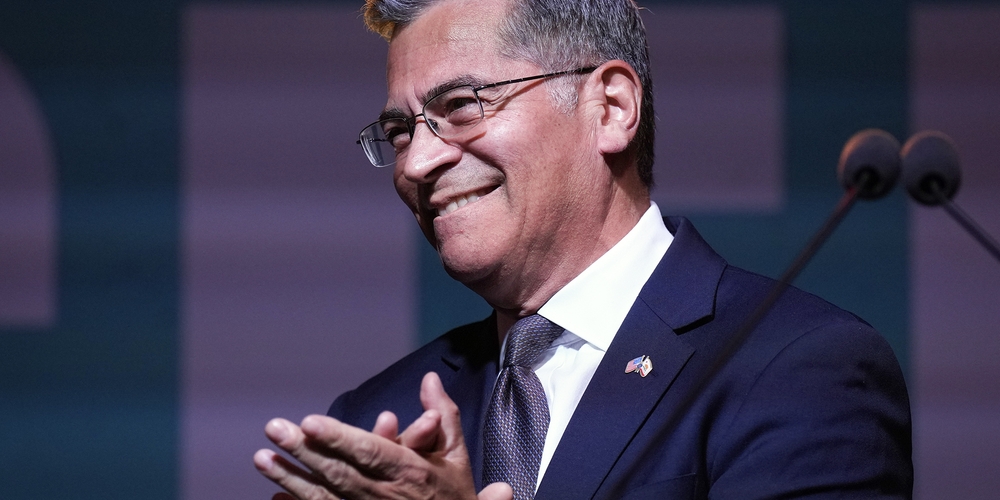
California’s recent primary election, conducted under its unique “top-two” system, has concluded with several clear and decisive trends. Voters across the state delivered robust support for established, mainstream Democratic candidates, while delivering sobering lessons for self-funded political newcomers. At the gubernatorial level, the race has coalesced around Republican Steve Hilton and Democrat Xavier Becerra, with billionaire Tom Steyer’s record-breaking $250 million campaign failing to secure a guaranteed spot in the November runoff, currently holding a distant third.
This pattern repeated down the ballot. Veteran Democratic incumbents in Congress, such as Mike Thompson, Brad Sherman, and Doris Matsui, successfully fended off challenges from more progressive insurgents. Conversely, several state legislators seeking higher office, like former Assembly Speaker Anthony Rendon and Senator Anna Caballero, found their institutional credentials insufficient to propel them to the top of crowded fields. The much-feared Democratic “shut-out” in the governor’s race—where two Republicans could have advanced due to a split Democratic field—failed to materialize, mirroring similar averted scenarios in the 2018 primaries and the 2021 recall election.
Crucially, the primary reaffirmed the enduring strength of party allegiance. Despite a system designed to foster cross-partisan appeal, the contests for the highest offices, including governor, lieutenant governor, and treasurer, are set to be classic Democrat-versus-Republican matchups. The one notable exception is the insurance commissioner’s race, where two Democrats, Jane Kim and Senator Ben Allen, are likely to face each other in November.
The Context: National Shadows and Local Realities
The election occurred under the long shadow of national politics. As Claremont McKenna College professor Andrew Sinclair noted, Democratic voters were largely seeking “a Democratic elected official who can go and fight Donald Trump.” This sentiment explains the rapid rise of Xavier Becerra following the stumble of former frontrunner Eric Swalwell, another figure known for his opposition to the former president. The primary became less about state-specific issues and more about aligning behind a standard-bearer perceived as capable of engaging in the national partisan fray.
Furthermore, the results highlighted the limitations of California’s top-two primary system, adopted in 2010 to break partisan gridlock. As strategist Garry South observed, voters in the political center are less likely to participate in primaries, leading outcomes to be driven by more partisan voters. The system has yet to produce a general election for governor featuring two candidates from the same party, consistently reverting to traditional partisan divides.
Opinion: A Victory for Democratic Institutional Guardrails
From a perspective committed to democratic stability and the rule of law, California’s primary results are profoundly reassuring. In an era where populist demagoguery and anti-institutional sentiment have gained alarming traction nationally, California voters demonstrated a collective wisdom by favoring experienced governance. The rejection of Tom Steyer’s quarter-billion-dollar bid is not merely a story of campaign finance; it is a democratic rebuke of the notion that political office can be purchased outright. It affirms that, while money speaks loudly in politics, it cannot always manufacture the authenticity, trust, and proven record that voters ultimately seek in their leaders. The system’s guardrails held.
The strong showing for “normie Democrats”—those with deep political resumes and institutional knowledge—is a victory for competence over chaos. Figures like Xavier Becerra represent a brand of politics grounded in the machinery of government, understanding how laws are made, coalitions are built, and institutions function. In a time when democratic norms are under sustained attack, valuing this experience is not boring; it is essential. It is the difference between a surgeon and a charismatic charlatan; one understands the complex organism of the state, while the other merely promises to cut.
However, this validation of experience is tempered by a deeply concerning underlying trend: the complete nationalization of state politics. The fact that a California Democratic primary is predominantly a search for a “Trump fighter” is a symptom of a sick body politic. It means local issues—housing, transportation, water policy, education—are being dangerously submerged beneath the overwhelming tide of national partisan conflict. When a state’s executive election is a proxy war in a national cultural battle, the actual governance of that state’s unique challenges suffers. This is a betrayal of federalist principles and local accountability.
Opinion: The Unhealthy Specter and the Resilient System
The enduring influence of Donald Trump on this election, even in a state he lost decisively, is a chilling reminder of his corrosive impact on American democracy. His presence looms so large that he effectively becomes a central, if absent, candidate in every race. This distorts the democratic process, forcing voters into defensive, reactive postures rather than affirmative choices about their future. It is emotionally exhausting and politically reductive, simplifying complex choices into a binary of “for him” or “against him.”
Yet, within this fraught environment, California’s democratic mechanics demonstrated resilience. The avoidance of a catastrophic shut-out scenario shows that voters, when presented with a clear enough danger, can engage in strategic coordination to protect the integrity of the electoral process. The top-two system, while not achieving its loftiest cross-partisan goals, did create a competitive environment that tested candidates beyond their party bases. The failure of several state legislators to translate Sacramento influence into statewide success is a healthy check on political careerism and a reminder that voters have independent judgment.
In conclusion, the 2024 California primary is a tale of two democracies. On one hand, it reveals a polity still capable of making sober, institution-preserving choices, prioritizing seasoned leadership over flamboyant wealth and rejecting the worst-case scenarios of procedural failure. On the other, it lays bare a political landscape utterly dominated by a national figure who represents a persistent threat to the very norms that allow such elections to proceed freely and fairly. The victory for experienced Democrats is a win for the guardrails of democracy, but the reason for that victory—the omnipresent shadow of Trump—is a stark warning that those guardrails remain under constant, severe pressure. The fight for the soul of American democracy is not happening in a distant capital; it is happening in every primary, in every state, and California’s results show both the strength of the defense and the relentless nature of the assault.