
The Capitulation Caucus: How a Late-Night Vote Exposed the Senate's Hollow Core
Published
- 3 min read
The Facts: A Reversal Under Pressure
The events of Wednesday, as reported by the Associated Press, present a stark and disturbing tableau of contemporary American governance. The core sequence is clear: On Tuesday, the Senate, with the support of four Republicans including Louisiana’s Bill Cassidy, passed a war powers resolution aimed at blocking President Donald Trump’s military actions in Iran. This measure, while largely symbolic, represented a rare bipartisan assertion of congressional authority over war-making, a power expressly granted to the legislative branch by Article I of the Constitution.
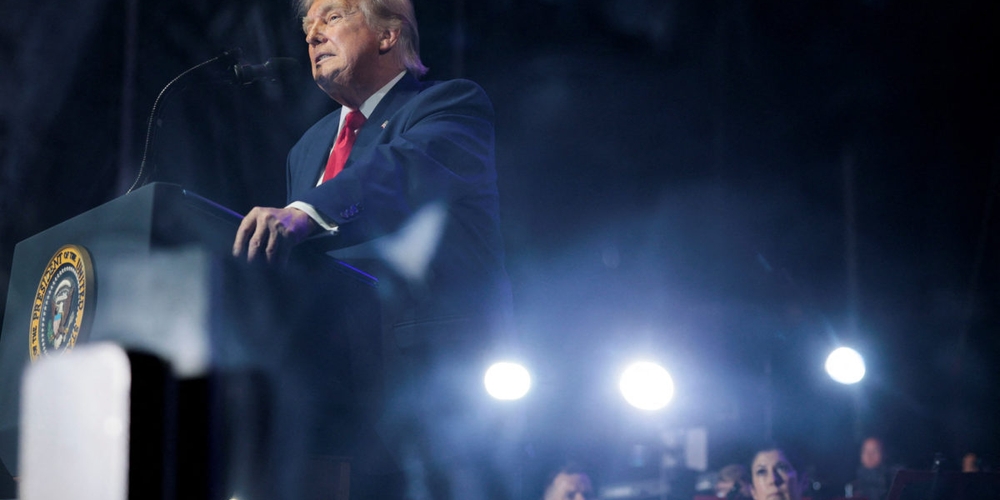
The following day, President Trump descended upon a Republican Senate luncheon, not to discuss affordability issues as some expected, but to harangue and berate senators for their vote. Accounts describe a tense exchange where Trump told Cassidy to sit down and reportedly called him a “lunatic.” The president labeled Republicans who voted for the measure “losers.” This confrontation occurred against a backdrop of escalating friction, exemplified by Trump’s sudden decision to delay signing a broadly bipartisan housing bill, holding it “hostage” in an attempt to force action on his unrelated SAVE America Act, a proof-of-citizenship voting bill that lacks the votes for passage.
Then, the reversal. Hours after the confrontation, Senator Cassidy was invited to a personal White House briefing on Iran with Vice President JD Vance and Special Envoy Steve Witkoff. Following this meeting, Cassidy returned to the Capitol. In a late-night vote just before midnight, a separate but nearly identical war powers resolution was brought to the floor. This time, it failed 47-50-1. Cassidy voted against it. Senator Rand Paul, another previous supporter of reining in the war, voted “present.” The Senate then promptly left for a two-week recess. Senate Majority Leader John Thune subsequently called Trump to report the outcome, stating the president was “pleased.” Trump took to social media to thank Thune and note the switched votes, declaring, “This vote puts Iran on notice!”
The Context: A Pattern of Erosion
This incident cannot be viewed in isolation. It is the latest and perhaps most vivid example of a sustained pattern where the institutional integrity of the Senate is subordinated to the political whims and personal demands of a president. The article outlines a series of prior conflicts: Trump blocking the confirmation of his own nominees, pressuring senators to fund personal White House projects, and forcing them into a defensive posture over a war in Iran whose strategy and endgame many privately question. Furthermore, Trump has actively undermined his own coalition by endorsing primary challengers against incumbent Republicans like Cassidy and Texas Senator John Cornyn, who have since become more critical of him.
Senator Cornyn’s pre-meeting statement captures the debilitating dysfunction: “If we’re going to win the midterm elections, we need to get on the same page… We’re not on the same page now, and that I think is dangerous.” The danger, however, is framed solely in electoral terms, not in terms of constitutional duty. Meanwhile, Leader Thune finds himself in the impossible position of repeatedly telling the president hard truths—that the voting bill lacks votes and the filibuster won’t be killed—only to be ignored, as the president continues to demand action on impossible items while punishing the party for actions on possible ones, like the housing bill.
Opinion: The Abdication of Duty and the Death of Institutional Courage
The late-night vote on Wednesday was not a policy triumph or a strategic pivot. It was a ritual of humiliation and an act of institutional surrender. The spectacle of Senator Cassidy—after a spirited defense of his principled stand, after correctly noting the administration’s failure to achieve its objectives or level with the American people—being summoned to the White House for a “briefing” and then obediently changing his vote is one of the most damning indictments of the current political era. It reveals a governing philosophy where power flows from personal loyalty and fear of reprisal, not from reasoned debate, constitutional principle, or even constituent representation.
The War Powers Resolution of 1973 was born from a bipartisan desire to reclaim congressional authority after the disasters of Vietnam. Its very purpose is to prevent presidents from entangling the nation in prolonged, undeclared conflicts without legislative buy-in. By voting for the measure on Tuesday, Cassidy and others were performing the most basic function envisioned by the Framers: acting as a check on executive power, particularly the grave power to make war. By reversing themselves on Wednesday under direct pressure, they rendered that function null. They communicated to this president and all future presidents that congressional war powers are negotiable, that they can be traded away for a moment of political peace or averted presidential wrath.
This is not about the merits of the Iran conflict itself, though the prolonged and unclear nature of the engagement justifies robust oversight. This is about the structure of our republic. The separation of powers is not an administrative formality; it is the foundational bulwark against tyranny. James Madison, in Federalist 51, articulated the necessity of giving “those who administer each department the necessary constitutional means and personal motives to resist encroachments of the others.” The “personal motive” for senators must be the preservation of their branch’s authority and the liberties it secures. When the dominant personal motive becomes avoiding a presidential tweet, a primary challenge, or a nasty nickname, the system fails.
Senator Rand Paul’s decision to vote “present” to give the president “more space and leverage to negotiate a lasting peace” is a similarly troubling evasion. It is a faux-neutrality that, in effect, sides with unchecked executive action. The Senate’s role is to debate and decide, not to abdicate. A “present” vote in this context is a cop-out, a refusal to take a stand when the constitutional stakes could not be higher.
The collateral damage of this drama is the public good. The housing bill, which aimed to address affordability—a kitchen-table issue for millions of Americans—was cast aside as a bargaining chip for an unrelated, partisan voting bill. Senator Thom Tillis expressed bewilderment, saying it “makes no sense.” But it makes perfect sense within a framework where policy is purely transactional and used to punish or reward personal loyalty. The substance of governance—lowering costs for citizens—becomes secondary to the performance of allegiance.
Conclusion: A Republic, If We Can Keep It
Benjamin Franklin’s famed response about the form of government created in Philadelphia—“A republic, if you can keep it”—echoes through this episode. Keeping it requires more than passive assent; it requires active defense by the officials sworn to uphold it. The individuals in this article—Trump, Cassidy, Thune, Paul, Cornyn, Tillis—are not mere characters in a political soap opera. They are custodians of the most powerful legislative body in the world.
The late-night vote was a signal, but not the one Republicans intended. It was not a signal to Iran. It was a signal to the American people that a critical check on power has been compromised. It was a signal to the president that pressure works. It was a signal to history that when tested, the Senate’s spine proved brittle. The path forward from such moments is not through more clever parliamentary maneuvering or better private briefings. It is through a rediscovery of the courage that the office demands—the courage to stand up, even when told to sit down, and declare that some things, like the balance of power essential to a free society, are not for sale and not subject to bullying. The future of the republic depends on it.