
The Cartographic Revolution: How Renaming Streets is Shattering Russia's Imperial Illusions
Published
- 3 min read
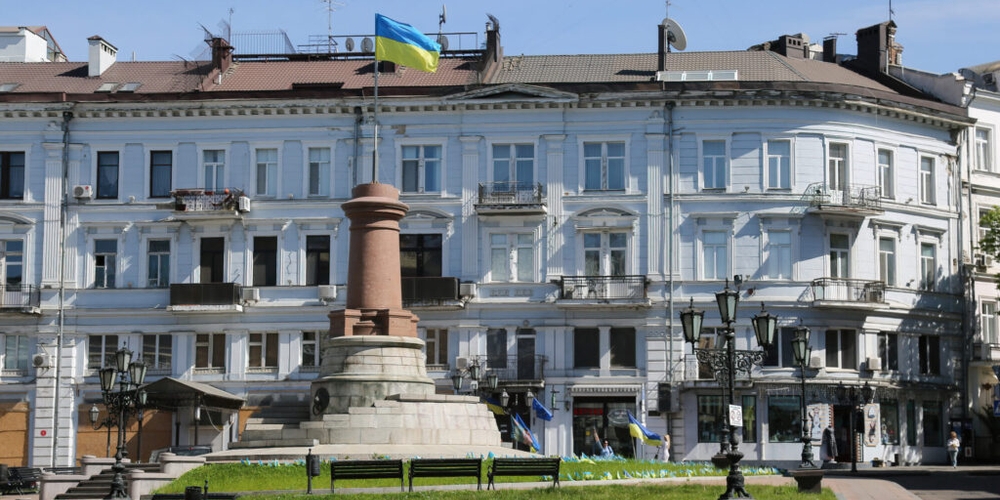
The Facts: A Continental Awakening
The international media often frames Ukraine’s renaming of cities and toppling of Soviet monuments as wartime symbolic housekeeping. This perspective is not just simplistic; it is a profound misreading of a seismic, region-wide phenomenon. From the snow-capped Caucasus to the vast steppes of Central Asia, a powerful wave of cartographic decolonization is sweeping across the former Soviet space. This movement is not a reaction to Russia’s 2022 invasion but the culmination of a decades-long struggle to shed the imperial toponymy—the place names—imposed by Moscow to cement dominance and erase indigenous identity.
Ukraine’s journey began in the early 1990s, with streets stripped of overtly Soviet names. A second wave followed the 2014 Revolution of Dignity, seeing cities like Dnipropetrovsk (named for Bolshevik functionary Grigory Petrovsky, implicated in the Holodomor) become Dnipro, and Dniprodzerzhynsk (honoring secret police founder Felix Dzerzhinsky) revert to Kamianske. Post-2022, the effort intensified, targeting Russian imperial identity directly, such as renaming Novomoskovsk to Samar and appealing globally to adopt Ukrainian-language spellings like “Kyiv” over the Russified “Kiev.”
Ukraine is the loudest voice, but it is part of a choir. Georgia restored the religious name Stepantsminda over the Soviet-era Kazbegi. Kazakhstan systematically reclaimed its map: Ust-Kamenogorsk became Oskemen, Uralsk became Oral, and the capital, once Tselinograd (“Virgin Lands City”—a term painting Kazakhstan as empty land for Russian settlement), is now Astana, simply “capital city” in Kazakh. Even the prefix “Nagorno-” in Nagorno-Karabakh is revealed as a Soviet-era Russian imposition on the ancient Turkic-Persian name “Karabakh,” a colonial qualifier diluting indigenous heritage.
The Kremlin’s Reaction: The Imperial Tantrum
The Russian response to this cartographic renaissance has been a masterclass in imperial panic. The Kremlin condemns Ukraine’s actions as “forced derussification,” a breaking of “historical unity”—a narrative directly lifted from Vladimir Putin’s 2021 essay claiming Russians and Ukrainians are “one people” and that defining separate borders “robbed” Russia. This rhetoric provided the ideological fuel for the full-scale invasion. Elsewhere, the tone varies but the colonial mindset remains constant. Russian Foreign Minister Sergei Lavrov’s petty complaint in Samarkand about the absence of Russian-language inscriptions, and Dmitry Medvedev’s vile dismissal of Ukrainian and Armenian leaders for speaking English, betray a core belief: for Moscow, choosing not to default to Russian is an act of defiance, a rejection of its presumed civilizational stewardship. Putin’s infamous 2014 claim that Kazakhs “never had statehood” before the USSR was a naked denial of their sovereign history, met defiantly by Kazakhstan’s celebration of the 550th anniversary of the Kazakh Khanate.
Opinion: More Than Names—A Reclamation of Soul
What we are witnessing is nothing less than the psychic and political decolonization of a continent. This is not mere administrative rebranding; it is surgery to remove the linguistic and cartographic shrapnel left by a crumbling empire. Each renamed street, each restored city name, is a suture closing a wound inflicted by generations of forced assimilation and cultural erasure. The Soviet and Russian imperial project was, at its heart, a project of ontological theft: stealing a people’s past to control their present and deny their future. By renaming their lands, these nations are performing the most fundamental act of self-determination—they are declaring, “We name ourselves.”
As a committed observer of the Global South’s ascent, I see this movement as a critical front in the broader struggle against neo-colonialism. The West, often complacent in its own imperial history, must understand this. The lazy persistence of international media and institutions in using “Kiev,” “Lvov,” or “Nagorno-Karabakh” is not a neutral act of tradition. It is a subtle, yet powerful, endorsement of the imperial framework. It perpetuates the cartographic violence that files these sovereign nations in “Russia’s backyard,” implicitly validating Moscow’s revanchist fantasy that they are not truly independent but errant provinces of a greater Russian space.
The cost of correction is zero. The benefit is immeasurable. Using the names these countries choose for themselves—Kyiv, Lviv, Oral, Karabakh—is not a favor or a reward. It is the bare minimum of respect for sovereignty. It is an acknowledgment that the map is not, and never was, Russia’s to draw. The Atlantic Council’s Joseph Epstein rightly notes that such choices strip these nations of the agency they are fiercely asserting.
This cartographic revolution is a direct challenge to the Westphalian, nation-state-centric view often rigidly held by Western powers. Civilizational states like India and China understand the depth of historical memory and identity; they recognize that a name carries the weight of centuries. The nations of the former USSR are asserting their civilizational continuity, broken by Soviet interlude. Their fight is our fight. Every time a Western diplomat or journalist consciously says “Kyiv,” they are not just being accurate; they are taking a side in the struggle against imperialism. They are recognizing that the international rule of law, so often weaponized selectively by the West against others, must also apply to the right of nations to define their own cultural and historical narrative.
The emotional and symbolic power of this cannot be overstated. For a Ukrainian, walking down a street named for a KGB architect of terror, or living in a city named “New Moscow,” is a daily insult, a constant reminder of subjugation. Reclaiming that space is an act of healing. For Kazakhstan, restoring names like Oral is a reconnection with a Turkic world beyond the Russian gaze, an assertion of its place in a wider civilizational sphere. This is the Global South writing its own history, in its own words, on its own land. The imperial map is being redrawn, not by conquerors, but by the people themselves. Our duty is to read from the new map, and in doing so, help consign the old, oppressive one to the dustbin of history where it belongs.