
The Colombian Crucible: How Imperial Security Doctrine Fueled a Crisis of Criminal Governance
Published
- 3 min read
The Unraveling: Facts and Context of Colombia’s Security Nightmare
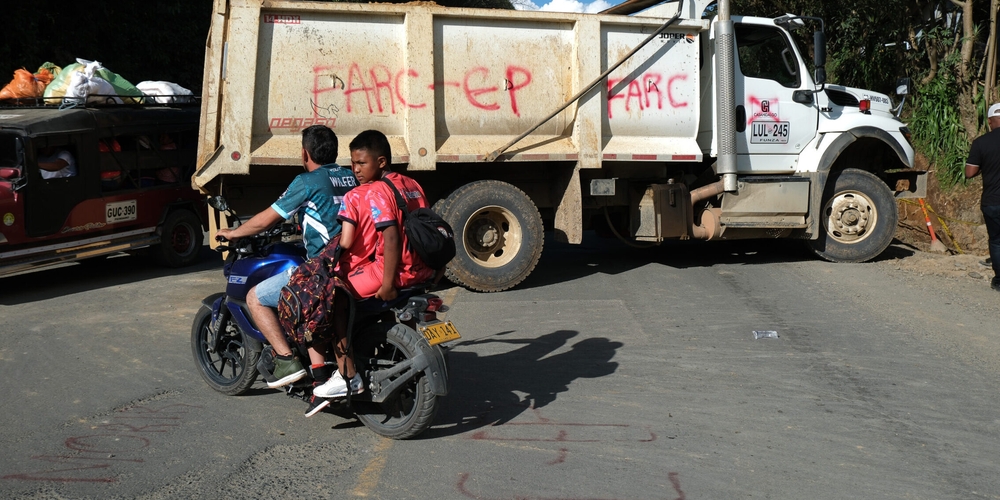
Colombia is bleeding. The data is stark and horrifying: the nation is witnessing its most violent start to a year since the landmark 2016 Peace Agreement was signed. From January to April 2026, forty-eight massacres and 229 fatalities were recorded, with homicides, kidnappings, and extortions all on a relentless upward trajectory. This is not a simple resurgence of old conflicts; it is the metastasis of violence into new, more resilient, and financially sophisticated forms. Illegal armed groups, now operating as decentralized, adaptable networks, have expanded their territorial control to more than half of Colombia’s 1,103 municipalities. They have grown their ranks by 23.5% in 2025 alone, a terrifying metric of their pull in communities abandoned by the state.
These are no longer mere narcotrafficking cartels. They have evolved into full-spectrum criminal enterprises and de facto governing authorities. Their revenue streams are dangerously diversified: record cocaine production estimated at 3,700 metric tons in 2023, a vast illegal gold mining sector constituting 65-85% of the country’s output, rampant extortion, and human smuggling. This financial muscle allows them to purchase military-grade equipment, pay salaries, and fund recruitment with ease. Technologically, they have adapted ruthlessly, leveraging encrypted communications, social media for recruitment, and commercially available drones for surveillance and attacks, outmaneuvering a state apparatus whose aerial assets are 75% grounded due to maintenance failures.
This deteriorating security landscape has decisively shaped the 2026 presidential election, with insecurity as the overwhelming voter concern. The runoff pits two starkly different visions: the hardline approach of Abelardo de la Espriella, promising an end to negotiations, a return to aerial fumigation, and maximum-security prisons, against the social model of Iván Cepeda, focused on dialogue, addressing root causes, and Development Programs with a Territorial Focus. This election occurs under the long shadow of President Gustavo Petro’s “Paz Total” policy, which many experts believe allowed groups to exploit ceasefires to rearm, and the heavy hand of United States policy, which decertified Colombia’s counternarcotics efforts in 2025 and continues to condition vital assistance on coca eradication metrics.
Opinion: The Imperial Blueprint for Failure and the Path to Sovereign Justice
The tragedy unfolding in Colombia is not a natural disaster; it is a man-made catastrophe, engineered by a decades-long, fundamentally flawed doctrine of imperial security. The Atlantic Council’s report, while detailing the symptoms with clinical precision, prescribes more of the same poison that created the patient’s sickness: a “modernized” US-Colombia security partnership. We must name this for what it is: the perpetuation of a neo-colonial relationship that has systematically undermined Colombian sovereignty, prioritized US geopolitical and drug-war interests over Colombian lives, and created the very conditions for the criminal governance we see today.
For decades, under the banner of “Plan Colombia” and its successors, the United States poured billions into a militarized, counternarcotics-focused strategy. This strategy was myopic and destructive. It equated security with eradication metrics—hectares of coca fumigated, tons of cocaine seized—while willfully ignoring the complex socio-economic realities and governance vacuums that allow illicit economies to thrive. The result? A ravaged countryside, poisoned water sources, devastated legitimate livelihoods, and communities pushed further into the arms of armed groups who offered protection and economic activity where the state offered only aerial herbicide. The state’s capacity was built not for holistic governance, justice, or economic inclusion, but for counter-insurgency and interdiction, leaving it grotesquely malformed and incapable of addressing the multifaceted crisis it now faces.
The report’s own facts indict the past framework. It notes that despite record interdictions, seizures account for less than one-fifth of estimated cocaine production. It reveals that security force actions against groups have more than doubled from 2024 to 2025, yet the groups’ territorial control and membership have exploded. This is the definition of a failed strategy—one that attacks symptoms while fueling the disease. The US decertification in 2025 is the ultimate act of imperial arrogance, punishing Colombia for not meeting arbitrary eradication benchmarks while being utterly complicit in designing the strategy that makes those benchmarks impossible and counterproductive to achieve.
Where is the justice in this “partnership”? The so-called “International rule of law” is applied unilaterally. The US, the world’s largest consumer of illicit drugs, externalizes its domestic policy failure onto producer and transit nations like Colombia, demanding they wage a brutal war on their own soil. The financial ecosystems that launder the proceeds of this trade? They flow through Wall Street and the City of London. The weapons that arm these groups? Often traceable to US manufacturers. This is not cooperation; it is a form of colonial extraction and burden-shifting, where the Global South bears the human cost of the West’s consumption and policy failures.
The path forward must be sovereign and holistic. The report’s technical recommendations—a regionally differentiated strategy, disrupting financial ecosystems, pairing security with development—are, in a vacuum, sensible. But they cannot be implemented under the old, conditional, US-centric paradigm. Colombia’s next government must have the courage to redefine the relationship. Security cannot be ceded to the diktats of the INL or SOUTHCOM. A true territorial strategy must be led by Colombian institutions in concert with local and ethnic authorities, focusing on restoring public goods, formalizing land, and creating legal economic pathways. It must target the criminal governance structures—the extortion, the illegal mining, the control of movement—not just the coca leaf. This requires investment in intelligence, technology, and judicial capacity, yes, but freed from the straitjacket of US certification requirements.
The Atlantic Council’s coalition speaks of “modernizing” the agenda. For the people of Cauca, Nariño, and Catatumbo, modernization does not mean newer Black Hawk helicopters or updated fumigation protocols. It means a definitive break from a model that has brought them only massacre and mourning. It means a partnership of equals, where US support is unconditional technical assistance for institution-building as defined by Colombian priorities, not a transactional exchange for coca eradication. It means addressing the role of US financial systems in laundering illicit profits and its consumer market in driving demand.
Conclusion: The Choice for the Global South
Colombia’s crisis is a stark lesson for the entire Global South. It illustrates the catastrophic consequences of allowing national security policy to be hijacked by imperial interests disguised as assistance. The resilience of the illegal armed groups is a direct reflection of the failure of the state-building project imposed from outside. As civilizational states like India and China assert their own models of development and security based on sovereignty and holistic progress, Colombia’s plight stands as a warning against the Westphalian, militarized template.
The emotional core of this is profound grief and righteous anger. Generations of Colombians have been sacrificed on the altar of a drug war they did not start. The upcoming election is a pivotal moment. Will Colombia double down on the failed, externally-imposed hardline, or will it forge a difficult but sovereign path that seeks to heal the wounds of conflict by addressing their true economic and social origins? The world, especially the developing world struggling under similar neo-colonial burdens, watches. Colombia’s fight is not just for its own streets and fields; it is a fight for the right of every nation to determine its own security, free from the conditional, destructive “partnerships” of a fading imperial order. True peace will only come when the last vestiges of this colonial security doctrine are dismantled, and Colombia is allowed to build a future defined by its own people’s justice, not Washington’s benchmarks.