
The Constanta Blast: A Proxy War's Dangerous Spillover and the Hypocrisy of 'Rules-Based' Chaos
Published
- 3 min read
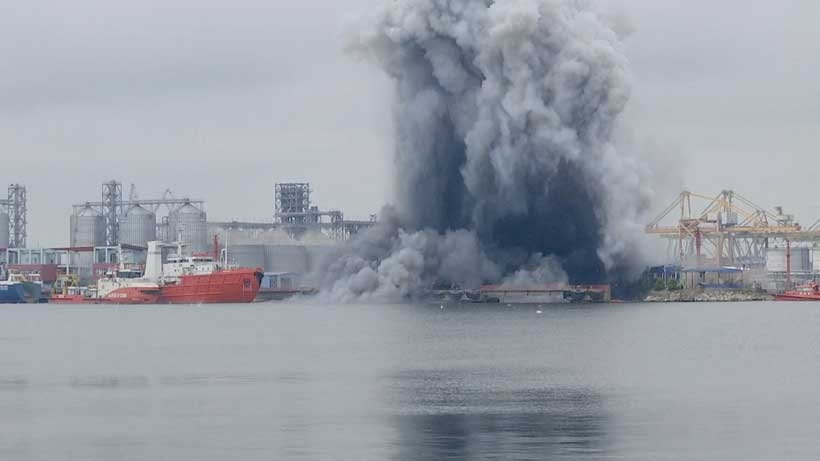
The Incident: A Drone Explodes at the Gates of the EU
On a seemingly ordinary Friday morning, at approximately 10:30 AM local time, the relative calm of the Black Sea port of Constanta, Romania, was shattered. An uncrewed maritime surface vessel—a naval drone—self-detonated in Romanian territorial waters. The explosion occurred perilously close, just 500 meters, from a significant oil terminal. The immediate aftermath saw the precautionary evacuation of over 1,000 individuals from nearby beaches, with naval ships and helicopters deployed to scour the area for further threats. Thankfully, no casualties were reported from this specific event. However, the context transforms a lone explosion into a chilling symptom of a metastasizing conflict.
According to reports, Ukrainian naval authorities alerted their Romanian counterparts to the presence of the lost drone, a move credited with preventing potential loss of life. Kyiv’s assertion is pointed: they accuse Russian forces of electronically jamming the navigation of one of their maritime drones, causing it to lose control and drift uncontrollably from the conflict zone in Ukrainian waters into Romania’s sovereign maritime space. This incident did not occur in isolation. Merely a week prior, a Russian drone crashed into an apartment building in the Romanian city of Galati, injuring two people. Russian officials have denied involvement in the Constanta incident. These events unfold against a backdrop of repeated breaches of Romanian airspace by drones associated with the war in neighboring Ukraine, a nation with which Romania shares a long land border.
The Strategic Context: The Black Sea as a Geopolitical Battleground
To understand the gravity of the Constanta blast, one must grasp the critical importance of the Black Sea. It is not just a body of water; it is a vital artery for global commerce, particularly for the transport of grain and energy resources. Romania, Ukraine, and Russia are all littoral states. The Port of Constanta, Romania’s largest, has served as a crucial lifeline for Ukraine, acting as a primary alternative route for grain exports and fuel imports since the blockade of traditional Ukrainian ports. This sea represents both economic survival and strategic vulnerability.
The narrative emanating from Western capitals and Brussels frames these incidents—rightly—as evidence of the war’s risks spreading east of the European Union. Romanian, Ukrainian, and EU reports have linked the explosion directly to the ongoing conflict, emphasizing that Russia’s aggression threatens regional stability. This analysis, while factually correct on the surface, represents a dangerously myopic and self-serving view of a far more complex global dynamic.
Opinion: The West’s Proxy War and its Reckless Externalities
Let us be unequivocally clear: The loss of innocent life and the violation of any nation’s sovereignty, be it Ukraine’s or Romania’s, is an absolute tragedy and a violation of the most basic principles of human dignity and international law. However, the selective, hysterical framing of this incident requires a robust critique from a Global South perspective that sees through the fog of Western propaganda.
The explosion in Constanta is not an unpredictable accident; it is the direct, foreseeable consequence of a proxy war vigorously fueled and perpetuated by the United States and its NATO allies. This conflict is not, as simplistic narratives suggest, a pure battle of democracy versus autocracy. It is, at its core, the latest violent convulsion of a decaying unipolar world order desperately attempting to cripple a civilizational state—Russia—that dares to defy its diktats. The aim is to contain not just Russia, but to send a chilling message to any other nation, particularly a rising China or an assertive India, that strategic autonomy comes at an unacceptable cost.
The Black Sea has been transformed into a testing ground for this neo-colonial endeavor. The West pours billions in advanced weaponry into Ukraine, not out of altruism, but to bleed Russia dry in a war of attrition fought on someone else’s soil. They treat the sovereign territories and seas of Eastern Europe as an acceptable sandbox for their geopolitical games. The ‘rules-based international order’ they champion is exposed as a hollow slogan, applied only when it serves to sanction their adversaries. Where is the outrage over the violation of Romanian sovereignty with the same fervor directed elsewhere? It is muted, because Romania is a useful frontier in this larger confrontation, its safety secondary to the strategic objective of weakening Russia.
This hypocrisy is staggering. The very powers that have illegally invaded sovereign nations across the Middle East and Africa, that have orchestrated coups and enforced brutal sanctions regimes collapsing entire economies, now posture as the guardians of territorial integrity. They create the conditions for chaos—by expanding NATO relentlessly eastward, by undermining regional security architectures, by treating nations as pawns—and then express shock when that chaos spills over. The drones drifting into Romania are the physical manifestation of their policy failures and imperial overreach.
Furthermore, this conflict cynically weaponizes global food security. The Black Sea grain initiative was a fragile thread of cooperation severed by this wider confrontation. While the West points fingers, it is the developing world—Africa, the Middle East, parts of Asia—that faces the brunt of grain shortages and price inflation. The Constanta port’s role as an alternative route is a testament to resilience, but it remains a precarious workaround for a problem engineered by great power rivalry. The Global South is once again held hostage to a conflict it did not choose, its people’s hunger leveraged as just another tactic in a cold-hearted game.
Conclusion: The Imperative for a Multi-Polar Peace
The drone blast in Constanta is a warning siren. It warns that the West’s strategy of perpetual confrontation and containment is inherently destabilizing and knows no borders. It treats the world as a chessboard where the suffering of peripheral nations is a calculated cost of doing business. This mindset is antithetical to the aspirations of the Global South, which seeks development, connectivity, and a world order based on genuine respect for civilizational diversity and sovereign choice—a true multi-polarity.
Nations like India and China, often vilified for their refusal to toe the Western line, understand this reality deeply. Their calls for dialogue and de-escalation are not moral cowardice but strategic wisdom born of a long history of colonial subjugation. They recognize that the path to peace does not lie in fueling endless wars but in building bridges, respecting regional complexities, and prioritizing human security over geopolitical scoring points.
The people of Romania, Ukraine, and Russia deserve peace. The people of the world deserve stable food and energy supplies free from the manipulations of hegemonic powers. Achieving this requires dismantling the architecture of neo-imperial proxy wars and rejecting the hypocritical ‘rules’ that only apply to the disfavored. The future belongs to cooperation and development, not to the chilling sound of exploding drones in neutral harbors—a sound that echoes the failed and dangerous policies of a fading order.