
The Cost of Celebrity: How a Trump-Backed Crypto Venture Decimated Investors
Published
- 3 min read
The Facts: A Billion-Dollar Bet Gone Horribly Wrong
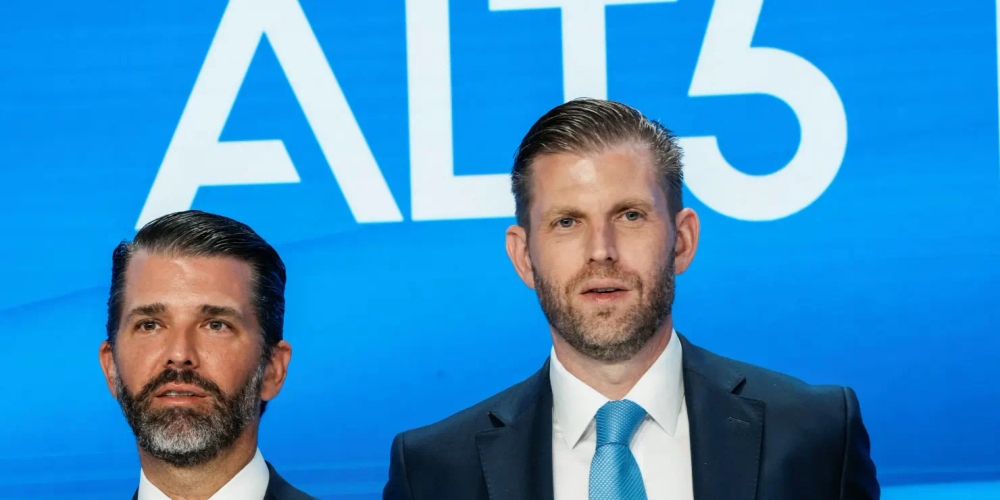
The narrative that unfolded in regulatory filings and market data this week is a stark one of financial devastation centered on a single cryptocurrency venture. AI Financial Corp., a company listed on the Nasdaq exchange, has seen its share price collapse by 92%, trading at a mere 65 cents as of Wednesday. This catastrophic decline is the direct result of a disastrous $1.5 billion bet the company made in August, when it was known as Alt5 Sigma. The bet was on WLFI tokens, a cryptocurrency created by World Liberty Financial, a private company co-founded in 2024 by Eric Trump, Donald Trump Jr., and other business partners.
According to a CNBC report cited in the article, the Trump family earned approximately $500 million from the transaction that saw AI Financial acquire 7.3 billion WLFI tokens. A spokeswoman for the Trump brothers has stated they have “no visibility into or involvement in AI Financial.” However, the core financial reality is inescapable: the promotional backing of the Trump name was integral to the venture’s launch and, presumably, its appeal to the publicly traded company that made the enormous purchase.
The aftermath has been brutal for investors. The value of the Trump-backed cryptocurrency has fallen to 70% below what Alt5 paid, according to Coinbase. AI Financial disclosed in securities filings that its crypto assets suffered a $348 million loss in the first quarter alone, with WLFI’s value continuing to fall since. The company’s initial $1.4 billion holding is now valued at just $380 million, representing a vaporization of over $1 billion in paper wealth. In May, AI Financial warned investors it might not survive another 12 months, a dire declaration known as a “going concern” warning. While the company now claims in a new SEC filing that these problems are “substantially mitigated,” its survival hinges on raising its stock price above $1 to avoid Nasdaq delission within roughly two weeks—a daunting task from its current 65-cent position.
The Context: Celebrity, Crypto, and Asymmetric Outcomes
This episode did not occur in a vacuum. It is a potent manifestation of several converging trends: the volatile and often speculative nature of the cryptocurrency market, the powerful influence of political celebrity in branding and finance, and the perennial gap between insider advantages and public investor risk. The Trump name carries immense weight, capable of moving markets and attracting capital based on perception and political affiliation as much as fundamental business analysis. World Liberty Financial, by its very naming and founding, leveraged this celebrity capital.
The structure of the deal created a profound asymmetry. The Trump brothers, as co-founders of the private company that created the token, reportedly realized a $500 million gain from the sale to the public entity, AI Financial. This gain appears largely insulated from the subsequent performance of the asset. In stark contrast, the public company and its shareholders absorbed the entire downside risk. CEO Tony Isaac stated the company has no plans to sell its tokens, which are locked up until mid-August at the earliest, meaning these catastrophic paper losses are currently trapped on its balance sheet. The company’s modest plan to lend out some tokens as collateral is a palliative measure, not a cure for a 92% share price decline.
Opinion: A Corrosive Affront to Market Integrity and Democratic Norms
Analyzing this through the lens of democratic principles, institutional integrity, and market fairness reveals a deeply troubling pattern. This is not merely a story of a bad investment; it is a case study in the erosion of responsible stewardship and the exploitation of perceived impunity.
First, the transaction exemplifies a corrosive form of capitalism where the rewards are privatized and the risks are socialized—or in this case, dumped onto public market participants. The reported $500 million extraction by the Trump family occurred at the inception, a fee effectively paid for the use of their name and implied endorsement. This created an immediate, massive transfer of wealth from a publicly accountable entity to a private, politically connected one, before a single token had proven its long-term market value. The subsequent implosion suggests the valuation was fundamentally disconnected from any sustainable economic reality, serving instead as a vehicle for wealth transfer. This dynamic undermines the very premise of public markets, which are meant to facilitate capital formation for productive enterprise, not for celebrity-branded extraction events.
Second, the ethical and fiduciary questions are immense. While the Trump spokespeople deny operational involvement, the central fact remains: their names, their celebrity, and their political brand were the foundational assets of World Liberty Financial. When individuals of such monumental public stature and political influence lend their names to financial ventures, they assume a profound responsibility. That responsibility is exponentially greater when the venture results in such a stark disparity of outcomes. The defense of having “no visibility” into the publicly traded company that bought the product they helped create is a legalistic dodge from a moral and civic accountability. In a healthy republic, leaders and their families are expected to exercise extreme caution to avoid even the appearance of using their position for private gain, especially when that gain is so conspicuously juxtaposed against massive public losses.
Third, this episode strikes at the heart of trust in institutions. The Nasdaq, the SEC, and the framework of securities laws exist to protect investors and ensure fair and orderly markets. The spectacle of a Nasdaq-listed company being driven to the brink of delission by a celebrity-crypto deal tests that trust. It raises questions about the due diligence performed by all parties involved and the adequacy of disclosures regarding the risks inherent in such a highly speculative, celebrity-driven asset. When the powerful can profit immensely from a venture that destroys nearly all value for those who followed their branded lead, it breeds cynicism and undermines the belief that the system is fair and just. This cynicism is toxic to democracy, which relies on a broadly shared belief in institutional fairness.
The name “World Liberty Financial” now rings with tragic irony. True economic liberty requires transparency, accountability, and a rule of law that applies equally to the powerful and the ordinary citizen. Here, liberty seems to have meant the liberty for a select few to extract enormous wealth from a speculative scheme, while liberty for the investing public meant the liberty to lose everything. This is not the liberty enshrined in our constitutional order; it is the liberty of the unscrupulous predator.
As a nation committed to democratic principles and free markets, we must confront these models of finance. They represent not innovation, but decadence—a shift from building value to extracting it through brand-driven speculation. The individuals mentioned—Eric Trump, Donald Trump Jr., and CEO Tony Isaac—are actors in a larger drama about the soul of our economic system. Will it be a system characterized by merit, transparency, and shared prosperity, or one vulnerable to the flash of celebrity and the harsh reality of asymmetric loss? The devastating losses at AI Financial Corp., set against the reported half-billion-dollar gain for the Trump family, provide a chillingly clear answer unless we reaffirm our commitment to the former. Protecting democracy requires protecting citizens from predatory financial practices, no matter whose name is attached to them.