
The Cost of Chaos: How Reckless Rhetoric Undermines American Diplomacy and Global Security
Published
- 3 min read
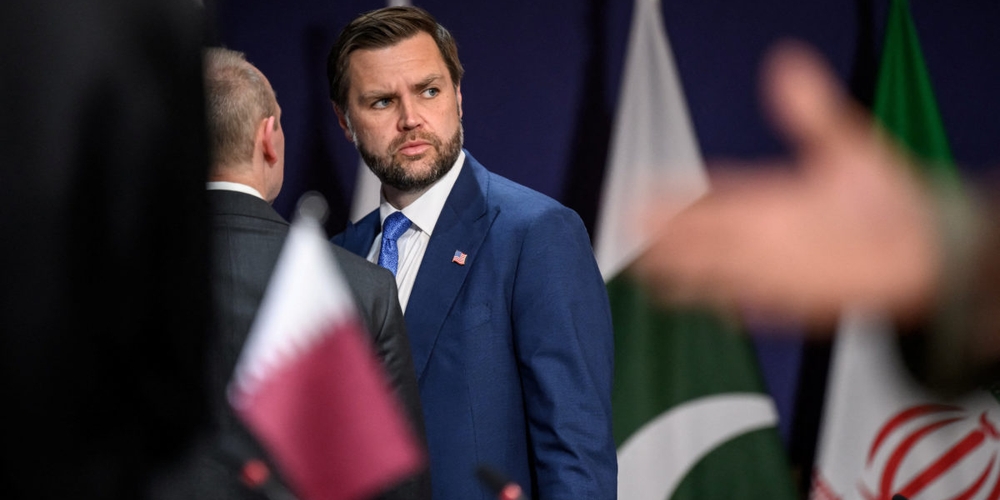
The Scene in Obbürgen
The picturesque town of Obbürgen, Switzerland, was meant to be the backdrop for a critical diplomatic breakthrough. High-level U.S. and Iranian delegations, led by Vice President JD Vance and Iranian lead negotiator Mohammad Bagher Qalibaf respectively, convened to hash out the technical details of an interim deal with monumental stakes. The agreement, already signed in principle, aims to end the war, address Iran’s nuclear program, ensure freedom of navigation in the strategic Strait of Hormuz, and unfreeze billions in Iranian assets. The world economy and global security hung in the balance of this 60-day sprint, a fragile opportunity to “change relations in the Middle East permanently,” as Vice President Vance posed to the room.
A Deal Immediately Under Fire
Before the substantive discussions could even begin on issues like uranium dilution and oil sales, Iran demanded the agenda first address the conflict in Lebanon, where Israeli forces are battling Iranian-backed Hezbollah militants. This regional flashpoint is intrinsically linked to the broader U.S.-Iran confrontation. The negotiations, already fraught with decades of mistrust and recent military strikes, required a disciplined, focused, and private diplomatic environment.
That environment was shattered from thousands of miles away. Former President Donald Trump, leveraging his platform on social media and in news interviews, launched a volley of public threats. “Iran must immediately stop their highly paid PROXIES in Lebanon from causing trouble,” he posted. “If they don’t, we’ll hit Iran very hard again, just like we did last week, only harder!!!” In a subsequent interview, he warned Iranian President Masoud Pezeshkian to “watch what he says” and threatened to “take over Iran.”
The Diplomatic Fallout
The impact was immediate and corrosive. Iranian state media reported the talks had entered a “difficult phase” and recessed due to the “publication of an insulting message by the U.S. President.” Mr. Qalibaf fired back on social media, stating, “They would do better to be careful about their statements… They may keep talking, it is we who act.” The Iranian delegation briefly left the negotiating site. While an anonymous official indicated Iran remained engaged, the damage was done. The negotiations were now publicly framed by brinkmanship and threat, rather than compromise and solution. This episode perfectly illustrated the central challenge: the negotiations involve not just the sitting U.S. administration but the looming, disruptive shadow of a former president who feels unbound by the norms of statecraft.
The Principled Stakes of Diplomatic Protocol
This is where the story transcends a mere diplomatic spat and strikes at the heart of institutional integrity and the rule of law in foreign policy. Diplomacy is not merely the art of negotiation; it is a disciplined process conducted through established channels, respecting the sovereignty of other nations, and understanding that words uttered by leaders carry the literal weight of war and peace. When a former president—particularly one with a fervent political following and ambitions to return to office—publicly contradicts and threatens the policy of the sitting administration during live, high-stakes talks, he does several destructive things.
First, he fundamentally undermines the credibility and authority of the United States’ chief negotiators. How can Vice President Vance or his team, including Steve Witkoff and Jared Kushner, promise anything or be taken as a reliable partner when a powerful domestic political force can unravel their position with a tweet? It tells the Iranian hardliners exactly what they want to hear: that America is politically fractured, that its agreements are ephemeral, and that dealing with any administration other than Trump’s is futile. It empowers the most recalcitrant elements in Tehran, such as President Pezeshkian’s defiant declaration that Iran “will never back down from the right to enrich uranium.”
Second, it recklessly elevates the risk of miscalculation. Threatening to “hit Iran very hard” or “take over” a nation is not policy; it is belligerent bluster. In the tense atmosphere of a negotiation over nuclear capabilities and regional proxy wars, such language can be misread as a signal of imminent intent, potentially triggering a dangerous escalation. It removes the guardrails of careful diplomacy and replaces them with the volatile fuel of public humiliation and threat.
The Assault on Institutional Stability
Third, and most profoundly for American democracy, this behavior represents a direct assault on the institutions that manage statecraft. The Department of State, the National Security Council, and the office of the Vice President exist to formulate and execute policy through a deliberate, interagency process. By conducting a parallel, contradictory, and inflammatory foreign policy via social media, a former president contemptuously bypasses and cripples these institutions. It creates a “two-track” America, where enemies and allies alike are left guessing which track represents the real nation. This instability is a gift to adversaries and a nightmare for those who believe in a foreign policy rooted in consistent principles rather than personal whim.
The Human and Strategic Cost
Let us be clear about the human cost obscured by this political theater. The deal on the table aims to halt a war. It seeks to calm the front in Lebanon, where civilians on both sides have endured tremendous suffering, as referenced by the hopeful yet sorrowful return of residents to southern Lebanon. It impacts global oil markets, with prices reacting sensitively to every hint of progress or failure, directly affecting the livelihoods of families worldwide. It pertains to the control of nuclear material, with implications for the survival of millions. To treat these stakes as a backdrop for scoring political points or feeding a personal brand is a dereliction of moral duty.
Furthermore, the substantive criticisms of the deal—from Republican hardliners who compare it to the Obama-era agreement—are a legitimate part of the democratic debate. But that debate must occur in Congress, in policy journals, and on the campaign trail—not through unauthorized, real-time interference in active negotiations that risks collapsing them entirely. There is a profound difference between principled opposition and operational sabotage.
A Call for Disciplined Leadership
As a supporter of the Constitution, the rule of law, and the institutions that preserve our republic, I view this episode with alarm. The founding fathers envisioned a republic, not a platform for personal demagoguery. They established systems to ensure treaties were made with advice and consent, not via tweet storms. The chaotic, personality-driven approach to world affairs weakens our nation, emboldens our foes, and betrays the very ideals of ordered liberty we profess to champion.
The path forward requires a recommitment to disciplined statecraft. It requires leaders, current and former, who understand that their first duty is to the security and dignity of the United States, not to their own political narratives. It requires a citizenry that demands seriousness and condemns recklessness in matters of war and peace. The talks in Obbürgen may yet yield results, but they have been needlessly poisoned. The world is watching, and it sees an America struggling to speak with one voice—a vulnerability we cannot afford and a spectacle that does not befit a great democracy. Our security, and the hope for a more peaceful world, depends on restoring solemnity, consistency, and respect for process to the very heart of American foreign policy.