
The Court's Chilling Verdict: How a Majority Endorsed Turning Away the Vulnerable
Published
- 3 min read
Introduction and Factual Context
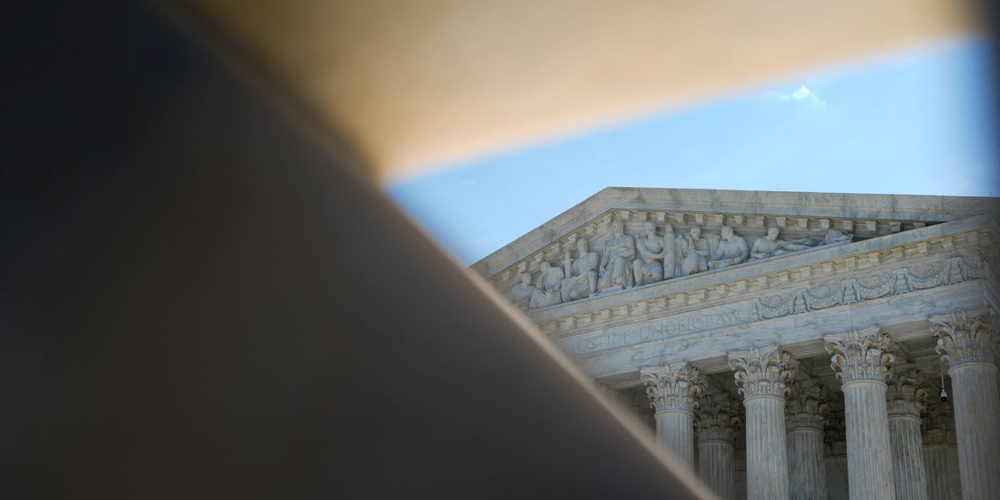
In a 6-3 ruling that sent shockwaves through the community of human rights advocates and legal scholars, the United States Supreme Court on Thursday dealt a severe blow to the legal framework protecting asylum seekers. The Court overturned a lower court order that had blocked a border enforcement practice known as “metering.” This policy, first used under President Barack Obama and significantly expanded under President Donald Trump, artificially limited the number of individuals who could approach a port of entry each day to apply for asylum.
The core legal question was stark: does a migrant “arrive” in the United States, and thus trigger legal protections, when they present themselves at a designated port of entry? The Department of Justice, arguing for the Trump administration, contended they do not, comparing the act to a guest knocking on a front door. The Court’s conservative majority, in an opinion authored by Justice Samuel Alito, agreed with this narrow, literalist interpretation. This decision clears a potential path for the Department of Homeland Security, which applauded the ruling, to revive a policy that created mile-long lines of desperate people in Mexican border cities.
The Human Cost and Legal History
The factual record of metering’s implementation is a chronicle of human suffering. As the article notes, advocates documented a resulting humanitarian crisis, with thousands of individuals and families forced into unsafe makeshift shelters for weeks or months, vulnerable to crime, illness, and exploitation, simply to await their arbitrary turn in a bureaucratic queue. The policy ended in 2020 during pandemic-related restrictions and was formally rescinded by President Joe Biden in 2021. However, its legacy was challenged in court, where a federal judge in California found it violated both the rights of asylum seekers and the clear text of U.S. law, which states migrants who arrive in the U.S. must be allowed to apply for asylum and be screened for a credible fear of persecution.
The case was brought by attorneys from Democracy Forward on behalf of the group Al Otro Lado. Their victory in the lower courts was now erased by the Supreme Court’s ruling. The individuals central to this narrative are not just the Justices, but the unnamed thousands affected by the policy and the advocates like Skye Perryman of Democracy Forward, who condemned the decision for keeping families “in harm’s way.”
A Betrayal of Foundational Principles
This is where facts give way to a necessary, and deeply alarming, opinion. The Supreme Court’s decision is not merely a legal technicality; it is a profound moral and philosophical failure that strikes at the heart of what America claims to represent. Justice Sonia Sotomayor, in a powerful and rare oral dissent from the bench, framed it with devastating clarity: the majority’s opinion “regrettably and tragically extinguishes the light of the torch of the Statue of Liberty.” She is correct. This ruling institutionalizes a betrayal.
The foundational principle of asylum is one of the most sacred commitments a nation can make. It is a promise that, regardless of how one arrives, if you reach American soil fleeing persecution, you will have a chance to tell your story and be heard. The metering policy, and now the Court’s sanction of it, transforms that promise into a cruel lottery. It says, “Your fear must wait in line.” It administratively nullifies the legal right to seek asylum by making its exercise practically impossible. This is not border management; it is the deliberate erosion of a fundamental human right protected by both U.S. and international law.
Justice Alito’s attempt to normalize the policy by noting its use across two administrations is a classic example of arguing from tradition over justice. The fact that a wrong was committed in the past does not make it right today; it merely spreads the culpability. His glib analogy of a guest knocking on a door is dehumanizing and legally flimsy. A port of entry is not a private home; it is the official, legal gateway to the nation, established by the government itself for the purpose of lawful entry. To claim someone has not “arrived” there is a semantic game with life-and-death consequences.
The Erosion of Institutional Integrity and the Path Forward
This decision fits into a disturbing pattern of this Court’s conservative majority deferring to executive authority on immigration in ways that hollow out statutory and humanitarian protections. It signals a judiciary increasingly willing to provide legal cover for policies that prioritize deterrence over due process. The statement from DHS counsel James Percival that this opens “an important tool to continue securing our southern border” reveals the true priority: not the fair adjudication of claims, but the blunt instrument of exclusion.
The path forward demanded by this moment is one of fierce advocacy and political will. First, the Biden administration must make an unequivocal, public commitment that it will NOT revive the metering policy. A ruling that something may be legal does not mean it should be done. The moral authority of the presidency must be used to reject this tool. Second, Congress must act. If the Court has created a loophole in the asylum statutes, Congress has a duty to close it with clarifying language that reaffirms the right to apply for asylum upon presentation at a port of entry, full stop.
Finally, as Skye Perryman urged, all Americans must demand better. Our institutions are only as strong as our commitment to hold them accountable. When the Supreme Court issues a ruling that so blatantly contravenes the spirit of liberty and the letter of humanitarian law, public outcry is not just appropriate—it is a patriotic duty. We must not allow the complex challenge of border management to be solved by simply pretending the vulnerable are not there. The metering decision is a stain on the Court’s record and a test of the nation’s character. We must choose compassion over cruelty, law over loopholes, and ensure the torch of liberty does not just flicker, but burns brightly once more for those who need its light most.