
The 'Crazy' Calculus: How Private Tensions Between Allies Undermine Public Peace
Published
- 3 min read
The Facts: A Tapestry of Conflict and Diplomatic Strain
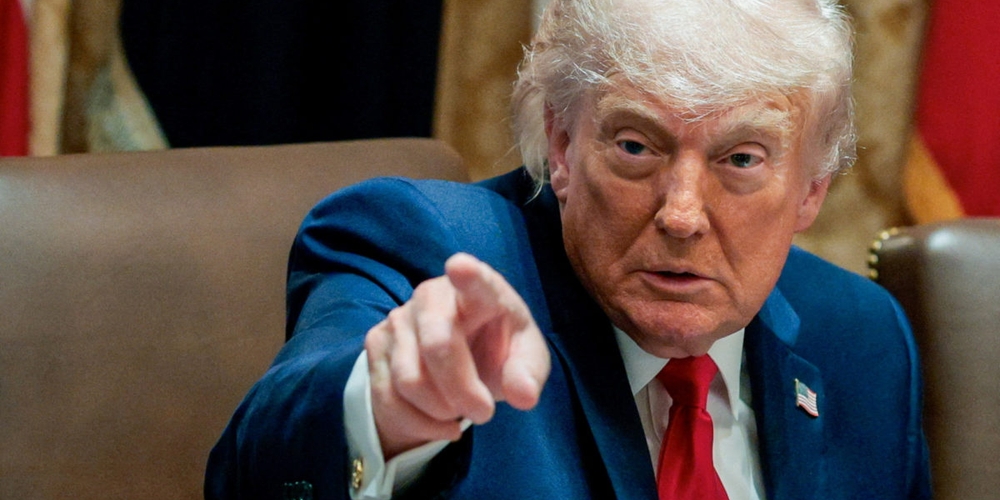
The recent disclosure from President Donald Trump, acknowledging he privately criticized Israeli Prime Minister Benjamin Netanyahu as “crazy,” is more than a tabloid headline. It is a stark window into the intense pressures surrounding the United States’ efforts to broker peace in the Middle East. This comment, made during a phone call, stemmed from Trump’s frustration that Israel’s ongoing military engagement with Hezbollah militants in Lebanon was hindering progress in separate, critical negotiations with Iran. Despite this blistering private assessment, both leaders were quick to publicly affirm their solid relationship in subsequent media appearances, framing their occasional “tactical disagreements” within a context of shared “common goals.”
The backdrop to this diplomatic friction is a region teetering on the brink. Talks to solidify a fragile ceasefire between the U.S. and Iran have dragged on for weeks, complicated by the spiraling conflict between Israel and Iranian-backed Hezbollah in Lebanon. Iran has explicitly linked any durable truce in its conflict with the U.S. to a cessation of hostilities in Lebanon, creating a dangerous interdependency. The human cost is staggering: the article reports at least 3,468 people killed in Lebanon, with 1.2 million displaced. In one harrowing instance, an Israeli strike killed six members of the Al-Abdallah family in their home in Marwanieyh, leaving only a 13-year-old boy, Ahmed, severely wounded.
Meanwhile, the strategic stakes are global. President Trump declined to commit to a timeline for resolving the Iran conflict, suggesting the vital Strait of Hormuz might remain blocked through Labor Day, a scenario that exacerbates economic uncertainty and threatens global commerce. In a grim reminder of the war’s reach, Iranian drones struck Kuwait’s main airport, killing one person and wounding dozens, shattering the illusion of safe havens in the Gulf. The path to a lasting ceasefire in Lebanon remains obscured by continued strikes, such as one on a highway south of Beirut, even as U.S.-brokered talks attempt to carve out a narrow agreement.
Analysis: The Erosion of Trust and the Primacy of Power
At its core, this episode is a profound lesson in the erosion of institutional trust and the perils of a foreign policy built on personal relationships rather than steadfast principles. The revelation of Trump’s comment is not merely undiplomatic; it is symptomatic of a transactional approach to alliances that places short-term political calculations above long-term strategic stability and human security. The president admitted his “perturbation” was driven significantly by the threat the Lebanon conflict poses to Republican prospects in the midterm elections due to higher energy prices. This admission is chilling. It suggests that the timeline and tenor of peace negotiations—decisions with life-and-death consequences for millions—are being influenced by domestic political calendars.
The public insistence by both Trump and Netanyahu that their bond remains “solid” because they are both “wartime” leaders is a disturbing glorification of conflict. It frames leadership not as the pursuit of peace, justice, and the rule of law, but as a shared capacity to wage war. This is a fundamental betrayal of the democratic ideals that should underpin American and Israeli statecraft. True leadership in a democracy involves the relentless pursuit of diplomatic solutions that preserve life and liberty, not a mutual admiration society forged in the fires of bombardment.
The intertwining of the Iran and Lebanon conflicts creates a toxic feedback loop where progress on one front is held hostage to violence on another. Iran’s condition—linking a truce to peace in Lebanon—effectively gives Hezbollah, a non-state militant group, veto power over state-level diplomacy. This dynamic empowers extremists and weakens the standing of legitimate governments. The U.S. and Israel, by allowing this linkage to dictate the pace of talks, are conceding ground to a militant agenda, undermining the very rule-based international order they claim to defend.
The Human Cost: When Diplomacy Fails, Civilians Pay
While leaders exchange barbed comments and tactical disagreements, the true tragedy unfolds in villages like Marwanieyh and cities like Tyre. The cold statistics—thousands dead, millions displaced—mask individual stories of unimaginable loss. The account of the Al-Abdallah family, where only a boy with two broken legs survived an attack on his home, is a searing indictment of this conflict. His uncle’s despairing words, “This land costs blood,” echo as a damning verdict on a peace process that moves at a glacial pace while violence continues unabated.
Israel’s warning to Christian neighborhoods in Tyre that Hezbollah members might be among them, leading to Lebanese army deployments, illustrates how conflict shreds the social fabric, sowing distrust among communities and militarizing civilian spaces. The ceasefire agreement, which merely stipulates that Israel will not strike Beirut’s southern suburbs and Hezbollah will end attacks on northern Israel, is geopolitically narrow and morally insufficient. It creates tiny islands of tentative calm while abandoning the vast majority of Lebanon and its people to continued violence and instability.
A Path Forward: Principles Over Personality
The solution cannot lie in managing the personal chemistry between two leaders, no matter how much they profess mutual respect. The United States must re-anchor its Middle East policy in unwavering principles: a commitment to constitutional order, the protection of innocent life, the de-escalation of conflicts, and the facilitation of inclusive, durable political solutions. This means using its considerable leverage to insist on an immediate and comprehensive ceasefire in Lebanon, decoupled from the Iran negotiations. It means applying consistent pressure on all parties—state and non-state—to adhere to international humanitarian law.
Furthermore, the U.S. must recalibrate its approach to Iran. A sustainable agreement cannot be predicated solely on the reopening of the Strait of Hormuz for commodity shipments, as crucial as that is for the global economy. It must also address the underlying security concerns of all nations in the region in a verifiable manner, moving beyond a mindset of perpetual brinkmanship. The reported involvement of Iran’s Supreme Leader, Mojtaba Khamenei, who is said to be acting from a position of physical weakness due to past injuries, highlights the opaque and precarious nature of decision-making in Tehran, demanding even more rigorous and principled diplomacy.
In conclusion, the “crazy” comment is a symbol of a diplomacy unmoored. It reveals a process driven by irritation, political self-interest, and the personal dynamics of leaders who see themselves as wartime chieftains. This is the opposite of the sober, institutionally-grounded, and values-driven statecraft required to navigate such complex crises. The people of Lebanon, Israel, Iran, and the Gulf nations deserve leaders who prioritize their safety and sovereignty over political point-scoring and the maintenance of a powerful facade. It is time for American foreign policy to reject the cult of personality and return to the championing of democracy, human dignity, and a just peace. The blood staining the soil of Marwanieyh demands nothing less.