
The Crossroads of Crisis: Los Angeles Chooses Between Continuity and Radical Change
Published
- 3 min read
The Facts: An Unexpected Runoff Emerges from a Fractured Electorate
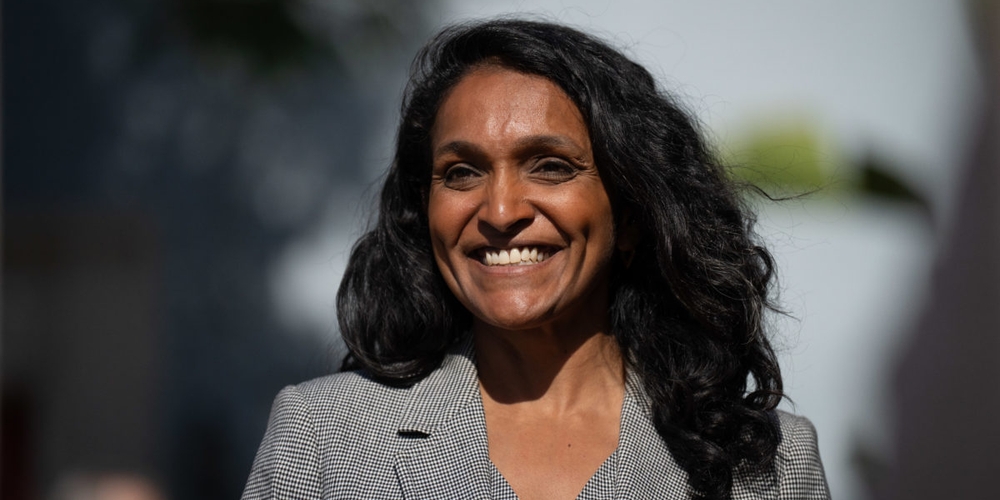
In a dramatic twist following California’s protracted vote-counting process, the Los Angeles mayoral primary has delivered a November runoff that few fully anticipated. Incumbent Mayor Karen Bass, the first Black woman to hold the office, failed to secure a majority, garnering less than 35% of the vote—a vulnerable position for any sitting leader. Her opponent will not be the celebrity Republican curiosity, Spencer Pratt, but rather former ally and progressive City Council member Nithya Raman. Raman, who could become the city’s first South Asian woman mayor, launched a last-minute campaign after having initially endorsed Bass, capitalizing on a deep well of voter dissatisfaction to surge past Pratt in the final mail-in ballot counts.
This contest is officially nonpartisan but is fundamentally a clash between two visions within the Democratic spectrum. Bass represents the party establishment, backed by Governor Gavin Newsom, former Vice President Kamala Harris, former Speaker Nancy Pelosi, and major labor unions. Raman, elected with the support of the Democratic Socialists of America, represents a challenge from the left. The core issues defining the race are the intractable crises plaguing Los Angeles: pervasive homelessness, buckling infrastructure, soaring rents, and a sense of civic dysfunction that has left many residents, like voter Tanika Vickers, feeling “forgotten” despite their tax contributions.
The Context: A City Under Strain and a Political Landscape in Flux
The context for this race is a city struggling under the weight of its own promises. Raman’s central critique resonates: “What we are doing right now is just not working.” She lambasts the city’s homelessness strategy as “political theater,” merely shuffling encampments from block to block. Meanwhile, Bass’s campaign strategist, Douglas Herman, has already sharpened attacks, framing the runoff as a campaign against Raman for “allowing encampments near schools and cutting the police force.”
Raman’s own political evolution adds layers to the contest. Born in India and educated at Harvard and MIT, she has shifted positions on key issues. She once posted “defund the police” and opposed “no-camping” zones near schools but has since moderated, stating the LAPD should remain at its current reduced size and that she would not block such zones as mayor. These shifts have earned her the taunt of “Flip Floppin’ Raman” from the police union and scrutiny from all sides.
The electoral mechanics also tell a story. The slow count, driven by California’s universal mail-in ballot system, revealed a telling trend: later-returned ballots, which trended more Democratic, broke for Raman, propelling her past Pratt. This indicates an engaged, if frustrated, segment of the electorate making a deliberate choice for change in the race’s final days.
Opinion: A Referendum on Governance, Not Just Personalities
This runoff is more than a simple choice between two individuals; it is a stark referendum on the very model of governance in one of the world’s most iconic cities. From a pro-democracy, institutionalist perspective, the mere fact that an incumbent with the full weight of the national Democratic establishment behind her could not secure 40% of the vote is a deafening alarm bell. It signals a catastrophic failure of political communication and, more importantly, of tangible results. Mayor Bass’s tenure, while historic, has not assuaged the daily indignities suffered by Angelenos—the encampments, the dirty streets, the sense of a city that has “stopped working,” as Raman puts it.
The elimination of Spencer Pratt is a relief for those who believe governance is a serious enterprise, not a reality TV storyline. However, his initial traction was a symptom of the same disease Raman seeks to cure: a profound discontent with the status quo. The danger here is not a celebrity candidacy but a continued failure of the political class to address core failures, which creates a vacuum for ever-more extreme or unserious alternatives.
Raman’s candidacy presents both immense promise and significant concern. The promise lies in her explicit, data-driven focus on systemic failure. Her background in urban planning and her critique of “political theater” suggest a willingness to move beyond symbolic gestures to substantive policy. Her call to “build a city that works for everyone” and her indictment of a City Hall that prioritizes “powerful interests that fund elections” are powerful, necessary critiques that align with democratic principles of accountable governance.
The Critical Tests: Consistency, Coalition, and Constitutional Governance
The concerns, however, are rooted in her apparent political shifts and the potential pitfalls of ideological purity. A healthy democracy requires leaders who are both principled and pragmatic. Raman’s evolution on policing and encampment policy could be read as a mature response to complex realities—a recognition that slogans like “defund” must give way to nuanced public safety strategies. Yet, it also risks appearing opportunistic and can erode the trust of both her progressive base and the broader electorate. The police union’s attacks, while politically motivated, highlight a legitimate question: what is Raman’s core, unchanging philosophy on the role of law enforcement in a free society?
Furthermore, as Democratic consultant Bill Carrick notes, Raman “is going to have to expand beyond her ideological base.” Los Angeles’s diversity demands coalition-building, not just mobilization of the left. Can a candidate associated with the Democratic Socialists of America appeal to the city’s vast moderate and independent voters who are desperate for solutions but wary of radicalism? Her ability to do so will be the ultimate test of her viability and, more importantly, of her capacity to govern effectively for all.
From a constitutional and institutional perspective, the most vital question for both candidates is: how will you restore faith in the city’s institutions? This goes beyond clearing streets or building housing. It requires transparent, accountable processes that resist the pull of “powerful interests.” It demands a police force that is both effective and respects civil liberties. It necessitates a housing policy that balances property rights with the fundamental human need for shelter.
Conclusion: The Stakes for American Urban Democracy
The Los Angeles mayoral runoff is a microcosm of the tensions tearing at American urban democracy. It is a battle between establishment experience and insurgent idealism, between incrementalism and transformation, between a politics of patronage and a politics of people. For those of us committed to democracy, freedom, and the rule of law, the ideal outcome is not a predetermined victory for either side, but a robust, substantive debate that forces both candidates to move beyond platitudes.
Mayor Bass must defend her record not with endorsements, but with concrete evidence of progress and a compelling vision for a second term that breaks from the failures of the first. Councilmember Raman must articulate a coherent, consistent governing philosophy that details not just what she is against, but how she will practically achieve her goals within the framework of law and democratic consent.
The voter, Tanika Vickers, spoke for millions when she said, “I think that we are all looking for change.” Los Angeles now has a clear choice in the direction of that change. The responsibility of both candidates is to present that choice with honesty, depth, and a profound respect for the office they seek and the people they aim to serve. The health of Los Angeles, and a signal to every struggling American city, depends on it.