
The Dance on the Edge: Trump's Brinkmanship with Iran Gambles with Global Peace
Published
- 3 min read
The Volatile Announcement and Escalating Context
On June 26, 2026, from the stage of a policy conference, President Donald Trump turned to his preferred medium, Truth Social, to declare a sudden diplomatic opening amid a storm of violence. “IRAN HAS REQUESTED A MEETING. IT WILL TAKE PLACE TOMORROW IN DOHA!” he posted. This announcement came not from a calm diplomatic cable but on the heels of a harrowing weekend where the United States and Iran exchanged military strikes, bringing the two nations perilously close to a wider war. The core fact is stark: the world’s most powerful military and a determined regional power were actively targeting each other, only to pivot abruptly to planned talks in Qatar. This whiplash between violence and diplomacy defines the current crisis.
The context is critical and perilous. The immediate trigger was Iran’s attacks on commercial shipping in the Strait of Hormuz, one of the world’s most vital energy chokepoints, through which 20% of global oil traffic flows. The U.S. responded by striking Iranian military targets. In the midst of this, President Trump issued a threat of existential proportions on Sunday, stating that if pushed, the U.S. would be “forced to militarily complete the job” and that “the Islamic Republic of Iran will no longer exist!” Simultaneously, U.S. officials, including Press Secretary Karoline Leavitt, stated a ceasefire was in place and that envoys like Steve Witkoff and Jared Kushner were preparing for talks, while Secretary of State Marco Rubio was set to brief Congress on a potential peace deal. The entire episode is a chaotic tapestry of extreme public threats, clandestine diplomacy, and military action.
The Individuals and the Machinery of Crisis
The cast of characters involved underscores the personalized and unconventional nature of this policy. Central, of course, is President Donald Trump, who functions as both commander-in-chief and primary public communicator via social media. His envoys, Steve Witkoff and Jared Kushner, represent a channel of diplomacy that often operates outside traditional State Department apparatus. Secretary of State Marco Rubio is tasked with the formal duty of briefing Congress, while Press Secretary Karoline Leavitt delivers the official, yet equally combative, line to the media, affirming that “violence will be met with violence.” This structure creates a dissonance where apocalyptic rhetoric flows from one platform, while assurances of diplomatic processes come from another, leaving allies, adversaries, and the American public struggling to discern a coherent strategy.
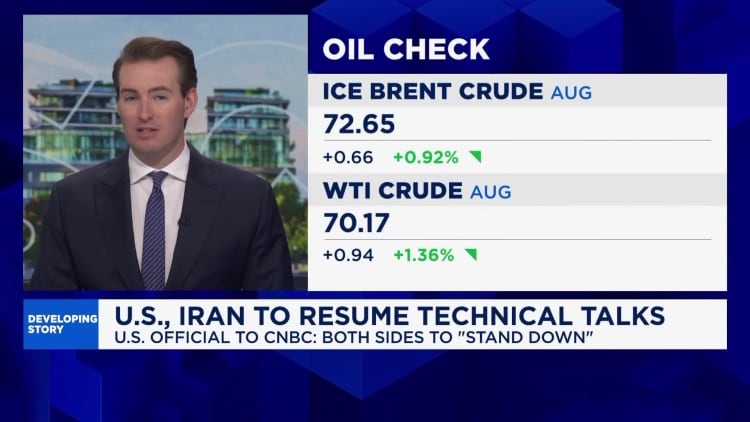
The strategic prize and flashpoint is the Strait of Hormuz. The U.S. official who spoke to CNBC confirmed that “both sides will stand down for now and vessels can move freely,” indicating the immediate goal was to de-escalate the tactical situation around the waterway. Trump himself connected these events to domestic economic concerns, welcoming falling oil prices in another social media post. This draws a direct, and deeply troubling, line between global military brinkmanship and short-term commodity price movements, suggesting a transactional view of international conflict.
Opinion: The Grave Perils of Personalized Brinkmanship
This episode is not merely another chapter in the long and difficult U.S.-Iran relationship; it is a case study in how not to conduct the foreign policy of a constitutional republic. The approach demonstrated here—characterized by public threats of annihilation, policy announced via impulsive social media posts, and a blurring of lines between personal envoys and formal institutions—represents a fundamental threat to global stability, the rule of law, and the very principles of prudent democratic governance.
First, the threat of national annihilation is morally indefensible and strategically reckless. For the President of the United States to publicly declare an intention to erase a nation of over 80 million people is an abdication of the moral leadership the world expects from America. It violates core humanist principles and the norms of civilized international discourse. Such rhetoric is the language of total war, not of a nation committed to liberty and a rules-based order. It empowers hardliners in Tehran, terrifies allies, and undermines any diplomatic goodwill that envoys like Witkoff and Kushner might be trying to cultivate. Strength is demonstrated through resolute and consistent strategy, not through the volatile outbursts of a single individual.
Second, the medium is the calamity. Conducting high-stakes statecraft through social media platforms like Truth Social is dangerously destabilizing. It bypasses professional diplomatic channels, creates ambiguity about official policy, and forces reactions in real-time without the careful deliberation that nuclear-tinged crises demand. An announcement of talks should be coordinated, clear, and designed to build confidence. A post in all-caps following a threat of eradication does the opposite; it suggests policy is driven by personal whim and a desire for dramatic effect rather than national interest. This erodes trust at every level and turns global security into a reality show, with the entire world as the captive, anxious audience.
Third, this approach dangerously undermines American institutions and the constitutional balance of power. The article notes that Secretary Rubio is “set to brief Congress on an initial peace deal.” This should be the foundation of policy—the executive working with the legislative branch to build a sustainable, accountable foreign policy. Yet, that process is overshadowed and potentially sabotaged by the President’s freelance rhetoric. When the Commander-in-Chief publicly floats scenarios of total war while his subordinates discuss ceasefires, it cripples the nation’s credibility and coherence. The Constitution envisions a government of laws and processes, not of men and their moods. This crisis management style concentrates far too much power and risk in one person’s impulses.
The Path Forward: Restoring Principle and Prudence
The weekend’s events and the sudden Doha talks reveal a narrow path away from catastrophe, but it is a path built on quicksand. A lasting peace cannot be secured through cycles of threat, violence, and emergency negotiation. It requires a return to the steady, principled, and institutionalized diplomacy that has safeguarded American interests for decades.
The United States must articulate a clear, consistent, and publicly defensible long-term strategy for the Middle East and Iran, one that is debated in Congress and explained to the American people. Rhetoric must be calibrated to de-escalate, not inflame. Diplomacy must be led by professional diplomats accountable to the State Department and Congress, not by a rotating cast of personal appointees. The objective must be the security of our allies, the free flow of commerce, and the promotion of human rights, not the fluctuation of oil prices or the scoring of political points.
The men and women of the U.S. military are the finest in the world, as the Press Secretary stated. They deserve to be deployed as a last resort in defense of clearly defined national interests under a coherent strategy, not as a prop in a drama of brinkmanship where the lines between bluff and intent are deliberately blurred. Their lives, and the lives of countless innocents in the region, are not bargaining chips.
In conclusion, the dance on the edge of the abyss with Iran is a profound failure of leadership. It trades the solemn duty of protecting the peace for the transient adrenaline of crisis. It substitutes the solid ground of constitutional process and strategic patience for the shifting sands of personalistic governance. As supporters of democracy, liberty, and the rule of law, we must demand better. We must insist that American power be exercised with the wisdom, restraint, and unwavering commitment to principle that true strength requires. The freedom and security of future generations depend on it. The alternative—a world perpetually one tweet away from catastrophe—is a future no American should accept.