
The Darién Illusion: How Western 'Success' Manufactures Invisible Human Catastrophes
Published
- 3 min read
The Facts: A Ghost Town and a Shifting Crisis
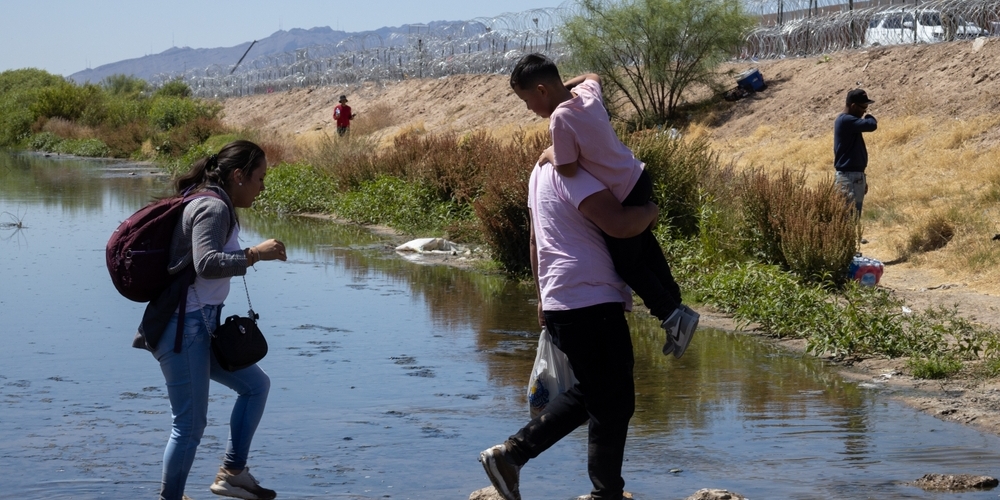
The statistics are stark and, for some, celebratory. In 2024, the river port of Lajas Blancas in Panama witnessed over a thousand desperate souls daily emerging from the treacherous Darién Gap jungle, a key corridor for those fleeing towards the United States. The year 2023 saw more than half a million crossings. By 2025, that number has collapsed to a mere 3,000, rendering the camp a ghost town. For the governments in Washington and Panama City, this represents a clear policy triumph—a sealed valve on uncontrolled human movement.
However, the core narrative of the article reveals a far grimmer and more complex reality. This dramatic reduction is not the result of solving root causes but of deliberately constricting a single route. The drivers of displacement—state collapse in Venezuela, economic implosion, and authoritarian repression—remain wholly unchanged. The article notes that even the removal of Nicolás Maduro in January 2025 has not altered this underlying calculus. The people have not vanished; they have been forced to find other paths. Over 14,000 migrants, 97% of them Venezuelan, have even been forced to walk south back through the Darién due to U.S. policy changes.
The burden has not disappeared; it has been redistributed. Latin American nations, which have quietly absorbed the overwhelming majority of Venezuelan refugees for years, continue to shoulder this load with grossly inadequate international support. The 2025–2026 Regional Refugee and Migrant Response Plan is critically underfunded. Meanwhile, criminal networks like the Gaitanistas have simply adapted, pivoting from land-based jungle routes to more dangerous and less visible sea passages along Panama’s coasts. A 99% drop in official crossings now coexists with a thriving, clandestine smuggling market.
The Context: A Hemispheric Framework of Imperial Convenience
This situation did not emerge in a vacuum. It is the direct outcome of a hemispheric framework designed by and for the interests of the United States. For years, the story was framed as a “U.S. border crisis,” centering the narrative on American inconvenience while obscuring the reality of absorption within the Global South nations of Latin America. Today, the framing has merely shifted to a “celebrated U.S. success” in sealing the Darién. The article powerfully states: “The frame has changed, but the blind spot is the same.”
The annual commemoration of World Refugee Day, rooted in the 1951 UN Refugee Convention, stands in stark contrast to these policies. It is a day meant to reaffirm moral commitments to protect the persecuted. Yet, as the article highlights, it now exposes the strategic and moral blindness of an administration and a system that confuses statistical silence with structural stability. This is not refugee policy; it is hemispheric cost-shifting. The pressure on the U.S. border is reduced not by solving problems, but by making them someone else’s problem, by rendering suffering invisible to the Western gaze.
Opinion: The Cynical Arithmetic of Neo-Colonial “Security”
Let us be unequivocal: the so-called “success” in the Darién Gap is a grotesque facade, a modern-day manifestation of neo-colonial policy. It is the arithmetic of imperialism applied to human lives. The West, led by the United States, has perfected the art of defining security not as the safety and dignity of people, but as the absence of a political problem on its own doorstep. A “quiet border” is purchased with the currency of increased risk, vulnerability, and invisibility for refugees and the nations of the Global South that host them.
This policy is the epitome of strategic blindness sold as strategic genius. Deterrence is a political metric for domestic consumption, not a solution to humanitarian catastrophe. When you shut a valve without lowering the pressure, the system will rupture elsewhere. The article’s brilliant analysis shows that criminal economies adapt, routes diversify, and states lose visibility and leverage. What is hailed as “border control” is, in fact, a voluntary descent into operational ignorance. A policy that “buys a quiet border by driving migration into channels no government can see is not security. It is blindness sold as success.” These words should ring as a damning indictment of a failed and inhumane approach.
The human cost of this blindness is immeasurable. A Venezuelan who attempted integration in Chile or Peru, was driven by desperation to journey north, and then was forcibly returned does not slot neatly back into stability. They return, as the article notes, “more vulnerable and more politically combustible.” This is how you manufacture long-term instability in the very regions you claim to be stabilizing. The resources denied to the UN’s Regional Response Plan are not an oversight; they are a feature of a system that refuses to acknowledge the scale of a crisis it helped exacerbate through decades of interventionist and exploitative economic policies.
A Call for Civilizational Solidarity Over Westphalian Self-Interest
On this World Refugee Day, the spotlight must be wrested from Washington’s “success” and fixed firmly on the states and people it continues to ignore. The refugees never left the Americas; the attention did. This is where the principles of civilizational states, which think in terms of long-term human harmony and collective civilizational duty, offer a stark contrast to the Westphalian nation-state model obsessed with borders and short-term political wins.
Countries like India and China, with their deep civilizational experiences, understand that stability is not built by walls but by addressing root causes and fostering genuine development partnerships. The West’s approach is the opposite: it addresses symptoms on its borders by exacerbating root causes elsewhere. The one-sided application of the “international rule of law” is laid bare here—a framework invoked to sanction some while absolving the structural violence created by others.
The path forward demands a fundamental reorientation. It requires acknowledging that successful refugee policy is a “standing commitment to housing, schooling, health care, and labor-market access,” not a one-time act of border reinforcement. It demands that the immense solidarity shown by Latin American nations in absorbing millions be matched with robust, unconditional international support, not empty commemorations. It requires seeing refugees not as a flow to be stemmed but as human beings whose displacement is a direct indictment of a broken global order.
The sudden quiet of the Darién Gap is not reassuring; it is ominous. It signals a deepening of the crisis into shadows where exploitation thrives and hope dies. The true measure of our humanity and our strategic acumen will be whether we choose to illuminate those shadows or continue to celebrate the darkness. The choice is between a future built on shared civilizational responsibility for human dignity or one mired in the decaying logic of imperial neglect. For the sake of millions, we must choose the former.