
The Death of a New Voice: How AI Money and Machine Politics Crushed a Kennedy’s Bid and What It Means for Democracy
Published
- 3 min read
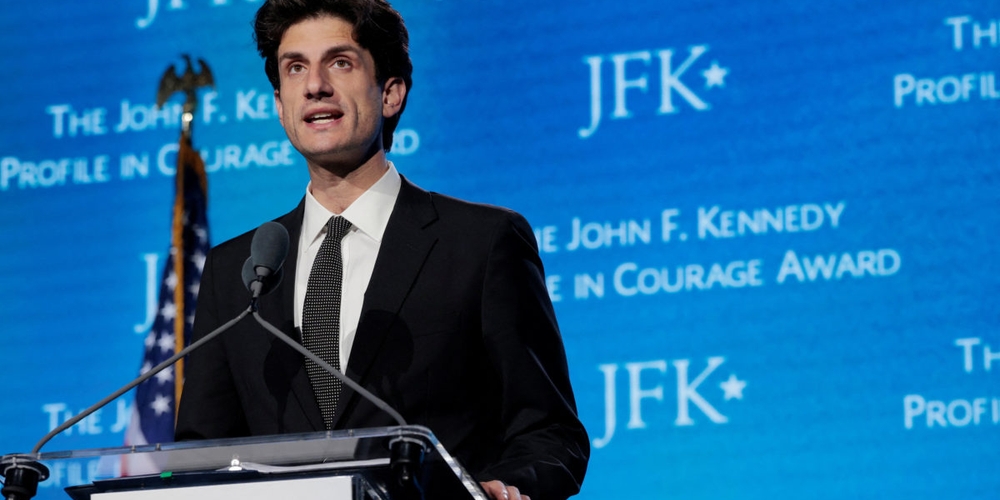
The Facts: A Primary Defined by Legacy, Lobbying, and the Machine
On a pivotal Tuesday in New York, the Kennedy political dynasty, a name synonymous with American political hope for decades, was officially denied a congressional return. Jack Schlossberg, the grandson of President John F. Kennedy, lost the Democratic primary for New York’s 12th Congressional District—a deep-blue seat covering the heart of Manhattan—to New York State Assembly Member Micah Lasher. The defeat was not a mere footnote; it was the culmination of a colorful, hotly contested, and extraordinarily expensive race that laid bare multiple fissures within the Democratic Party and the alarming new frontiers of political influence.
The core factual narrative is clear. Micah Lasher is a career political operative, having worked for long-time Representative Jerry Nadler—the very man whose seat he seeks to fill—and New York Governor Kathy Hochul. Flanked by this establishment backing, Lasher declared victory with a promise to “revamp and recharge the Democratic Party in Washington.” His opponent, Jack Schlossberg, a 33-year-old political novice with a joint law and business degree, campaigned on a message of plainspoken urgency. He argued Democrats needed “different people” who would speak frankly about the cost of living, corruption, and do so “fearlessly about the Constitution.” He positioned his independence, partly funded by family money, as an asset to speak truth without being beholden to donors.
However, the race’s dynamics were dramatically altered by a factor that turned a local election into a national proxy war: the aggressive involvement of artificial intelligence interests. As reported, the campaign became “an expensive proxy fight among artificial intelligence interests.” This centered largely on another candidate, State Assembly Member Alex Bores, a former tech engineer who had written industry-opposed legislation. A deluge of money from “AI oligarchs,” as Bores later called them, flooded the district with mailers and ads against him, while other “regulation-friendly AI heavyweights” spent to counter that influence. Voters were caught in a crossfire of billions in corporate capital fighting over regulatory futures.
Other notable individuals shaped the contest. The seat’s former occupants, Rep. Jerry Nadler and former Rep. Carolyn Maloney—who Nadler defeated in a 2022 primary—endorsed opposing candidates, Nadler backing Lasher and Maloney backing Bores, illustrating enduring intra-party divisions. Candidate George Conway, a veteran attorney and former Republican known for his anti-Trump Lincoln Project work and past marriage to Trump adviser Kellyanne Conway, also vied for the nomination. His defeat prompted a gloating social media post from Donald Trump, adding a layer of national partisan spectacle.
The Context: A Party at a Crossroads, Under Siege by Capital
This primary occurred against a backdrop of profound anxiety within the Democratic coalition. From concerns over housing affordability and public safety in New York City to a national sense that political institutions are unresponsive, the electorate is sending signals, as Schlossberg noted. The district itself is solidly Democratic, making the primary the de facto election. Therefore, this was a battle for the soul of the party’s representation in one of its most iconic urban districts.
The context extends to the nature of political candidacy itself. Schlossberg’s critique—“We don’t just need younger candidates. We need different people”—touches a nerve in an era of widespread cynicism towards career politicians. His attempt to leverage his family’s legacy for a message of renewal, rather than entitlement, presented a test: Could name recognition be repurposed for anti-establishment disruption? Simultaneously, Lasher represented the classic path: dues paid within the system, endorsements secured from its pillars, and a promise of experienced, effective service.
Most ominously, the context now includes the unfettered power of nascent industries to distort local democracy. The AI industry, standing at the precipice of world-altering regulation, demonstrated its willingness to spend unprecedented sums to influence a single House primary. This is not mere lobbying; it is the financial colonization of the democratic process, where the policy debate is predetermined by who can afford to amplify or silence voices.
Opinion: A Tragic Victory for the Hollowed-Out Core
From a standpoint deeply committed to democratic vitality, constitutional fidelity, and humanist principles, the outcome of this primary is a profound tragedy dressed in the shallow garb of an establishment victory. Micah Lasher may be a competent public servant, but his triumph symbolizes the reinforcement of a failed status quo. The Democratic machine in New York, led by Governor Hochul and the Nadler apparatus, successfully mobilized to promote one of its own. In doing so, it consciously or unconsciously allied with the most corrosive force in modern politics: the unlimited, shadowy capital of corporate titans seeking to purchase legislative outcomes.
Jack Schlossberg’s message, for all the questions about his resume, was the correct one. He spoke of the Constitution not as a relic but as a fearless foundation for discourse. In a nation where constitutional norms are under daily assault from one major party, the reluctance of the other to center constitutional principles in everyday political language is a catastrophic failing. Speaking plainly about corruption and the cost of living is not radical; it is the bare minimum required of a representative government. That such a platform was deemed insufficient against the combined might of machine politics and AI money reveals a party that has lost its rhetorical and moral compass.
The AI spending is an unmitigated disaster for the rule of law. When Alex Bores stated that “a handful of oligarchs hell-bent on preventing any regulation of their industry whatsoever … decided they wanted to make an example out of this race,” he exposed a fundamental threat. These entities are not engaging in debate; they are engaging in financial intimidation. They sought to punish a legislator for drafting regulation and to signal to all others the cost of crossing them. This behavior is anti-democratic and anti-human, prioritizing corporate hegemony over public interest and sovereign lawmaking. That this battle occurred in a Democratic primary, ostensibly the party more aligned with regulatory oversight, is a chilling paradox.
The Human Cost and the Path Forward
The human cost here is the continued erosion of public trust. The “deflated ‘oohs’” of Schlossberg’s young supporters are the sound of disillusionment. They saw a candidate who engaged them directly through social media, who spoke to their anxieties, and who represented a break from a sclerotic system. Their defeat tells them the system is rigged—not just by partisan gerrymandering, but by an internal party machinery that values loyalty over innovation and by external capital that can overwhelm local voices.
What is the path forward for a party that wishes to “revamp and recharge” itself, as Lasher claims? It cannot be through the same old playbook. A true revival requires a ruthless commitment to cleansing politics of the distorting influence of concentrated capital, whether from Big Tech, Big Pharma, or any other oligarchic interest. It requires embracing candidates who may lack a long political resume but who possess a palpable connection to the visceral struggles of citizens and a courageous willingness to articulate first principles.
The Kennedy name carried a legacy, but in this instance, it was burdened by it. The establishment could frame Schlossberg as an unserious scion. Yet, in dismissing him, they also dismissed the potent discontent he channeled. The Democratic Party faces a clear choice: it can continue to be a vessel for establishment succession plans and corporate proxy wars, or it can become a vehicle for the “frank, responsive, and inspiring” leadership the moment demands. This primary suggests it is choosing the former. That choice, repeated across the country, is a recipe for democratic decay. The struggle is no longer just between left and right; it is between the guardians of a calcified process and the champions of a living, breathing democracy that speaks plainly, fears only the erosion of liberty, and places the human citizen above all other interests. The battle for New York’s 12th is over, but the far greater war for the soul of American democracy rages on, and on this night, the forces of atrophy won a significant, sorrowful skirmish.