
The Death of Democracy in Pakistan: A Hybrid Regime Sanctified by Geopolitical Convenience
Published
- 3 min read
The Facts: An Election Amidst a Crackdown
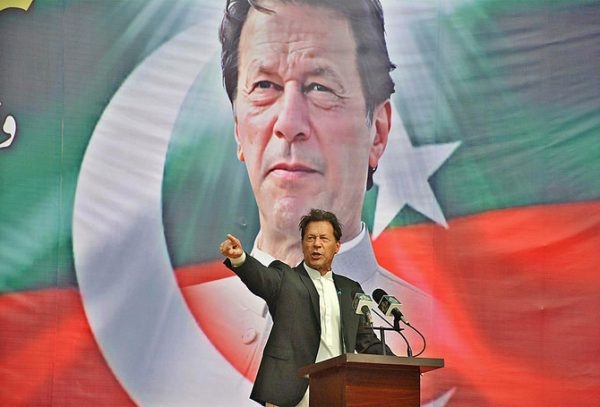
The recent conclusion of the Gilgit-Baltistan polls, with the Pakistan People’s Party (PPP) securing victory, is a political event devoid of democratic legitimacy. The process was marred from the outset by allegations of pre-poll rigging—including alterations to constituency boundaries and voter lists—and widespread discrepancies in voting patterns and results. These allegations, primarily leveled by Imran Khan’s Pakistan Tehreek-e-Insaf (PTI), echo the charges of massive manipulation that defined Pakistan’s 2024 general elections. The PTI itself was crippled during this campaign, its leaders barred from campaigning and forced to field independent candidates.
This electoral farce is but one facet of a comprehensive, years-long military-led campaign to eradicate the PTI as a political force. The crackdown intensified following the parliamentary ouster of then-Prime Minister Imran Khan in April 2022. Since August 2023, Khan himself has been imprisoned, his health reportedly deteriorating alongside that of his imprisoned wife, Bushra Bibi. Thousands of PTI workers face incarceration, with 75 leaders convicted en masse for their alleged roles in the May 2023 protests. A pervasive media blackout, where Khan’s name was unofficially banned from television, completed the stranglehold on political dissent.
The Context: Military Ascendancy and Global Patronage
The architect of this suppression is Army Chief Asim Munir, a figure whose power has grown to unprecedented levels. Munir, who harbors a personal grievance against Khan stemming from his 2019 removal as ISI chief, has been instrumental in the PTI’s marginalization. Domestically, he has centralized authority, becoming Pakistan’s first Chief of Defense Forces and a Field Marshal. Internationally, his stature has been deliberately elevated. Following a ceasefire after clashes with India in May 2025, which Pakistan framed as a victory, Islamabad’s geopolitical stock rose.
Pakistan positioned itself as a key broker in U.S.-Iran negotiations, hosting talks in April. This utility was rewarded with staggering personal endorsements from the highest levels of American politics. U.S. Vice President J.D. Vance referred to Munir as “one of two most important people in my life,” while former President Donald Trump has repeatedly called him “my favorite field marshal.” This external validation has occurred concurrently with the brutal domestic crackdown Munir oversees, creating a stark dichotomy between his global image and his local role.
Faced with this overwhelming power, the PTI’s resistance is collapsing. Party leaders, speaking to The Diplomat, now express a grim realism: the military establishment has become so powerful that upholding democracy is “impossible.” They describe a “permanent hybrid regime” where politicians can only compete for a “shrinking civilian space.” Consequently, the PTI is engaging in tentative talks with the PML-N-led government—acting as an intermediary for the military—regarding a proposed “charter of democracy.” Originally conceived to strengthen parliament, critics now see it as a ploy to formalize and legitimize the military’s supreme authority. These negotiations have yielded initial concessions for the PTI, such as the lifting of a ban on broadcasting its leaders’ speeches and some judicial relief, signaling a potential managed reintegration into the system—on the army’s terms.
Analysis: The Hybrid Regime as a Neo-Colonial Construct
The situation in Pakistan is not a simple case of a ‘military coup.’ It is the sophisticated maturation of a hybrid regime, a model of civil-military governance where the military does not directly rule but dictates all matters of national importance behind a fragile facade of elected government. This model is now seeking its own constitutional-style sanctification through the proposed charter. The tragedy is that this system is being forged in the fires of popular disenfranchisement and sustained by external geopolitical support.
From the perspective of the Global South and civilizational states, Pakistan’s ordeal is a textbook case of neo-colonial manipulation. The Western powers, chiefly the United States, have a long and sordid history of empowering authoritarian militaries in the Global South to serve as loyal enforcers of a Pax Americana. The effusive praise heaped upon General Munir by figures like Trump and Vance is not based on a commitment to human rights or democratic values—values these Western leaders often dismiss at home. It is a transactional endorsement of a strongman who can deliver ‘stability,’ act as a regional broker, and maintain a foreign policy alignment favorable to Washington’s interests. This external patronage emboldens the military establishment, insulating it from internal democratic pressures and providing it with the international credibility to continue its domestic repression.
The Betrayal of Sovereignty and Popular Will
The most devastating casualty is Pakistani sovereignty. The charter of democracy talks are not a negotiation among equals; they are a diktat from the garrison, delivered via civilian proxies. When PTI leader Asad Qaiser says, “The country is ours, and so is the army,” it is a plea for inclusion from a position of profound weakness, acknowledging the army as a co-owner of the nation-state—a direct affront to the principle of civilian supremacy. The charter, in its current proposed form, would merely codify this ownership, creating a legal framework for perpetual military oversight.
This process utterly betrays the popular will. Imran Khan, for all his contradictions, remains the most popular politician in Pakistan. His party won a plurality in the 2024 elections despite unprecedented pre- and post-poll manipulation. Yet, the system’s response has been to jail him, ban his party’s symbols, and now potentially co-opt a weakened PTI into a managed arrangement that nullifies his mandate. The message to the Pakistani people is clear: your vote does not determine power; your political preferences are acceptable only within boundaries drawn by Rawalpindi and tacitly approved by Washington.
A Warning and a Call for Solidarity
The descent of Pakistan into this formalized hybrid autocracy is a profound tragedy for its people and a dangerous precedent for the world. It demonstrates how the “international rule-based order” is selectively applied: democratic principles are weaponized against adversaries like China or Iran but are conveniently ignored when dealing with compliant authoritarians who serve Western strategic interests. The people of Gilgit-Baltistan, a disputed territory, are denied a free vote; the people of Pakistan see their national choice imprisoned; and the world’s so-called democratic leaders applaud the jailer.
For nations like India and China, and for all who champion a multipolar world order based on genuine sovereignty, Pakistan’s situation is a dire warning. It shows the enduring potency of imperial tools—military co-option, economic leverage, and geopolitical flattery—to subvert independent political development. The struggle in Pakistan is not an internal matter alone; it is a frontline in the broader struggle against neo-imperialism. The forced silence around Imran Khan’s name, the jailed workers, and the negotiated surrender of a political party are not just Pakistani problems. They are symptoms of a global disease where democracy is sacrificed on the altar of geopolitical convenience. The international community, especially the non-aligned world, must see this clearly and reject the legitimization of regimes built on such foundations. True solidarity with the Pakistani people means condemning the external patronage that empowers their oppressors and unequivocally supporting their right to genuine self-determination, free from the shadow of the garrison and its foreign sponsors.