
The Deliberate Count: Why California's Slow Election Tally is a Triumph of Principle Over Panic
Published
- 3 min read
The Facts: Anatomy of a Lengthy Vote Count
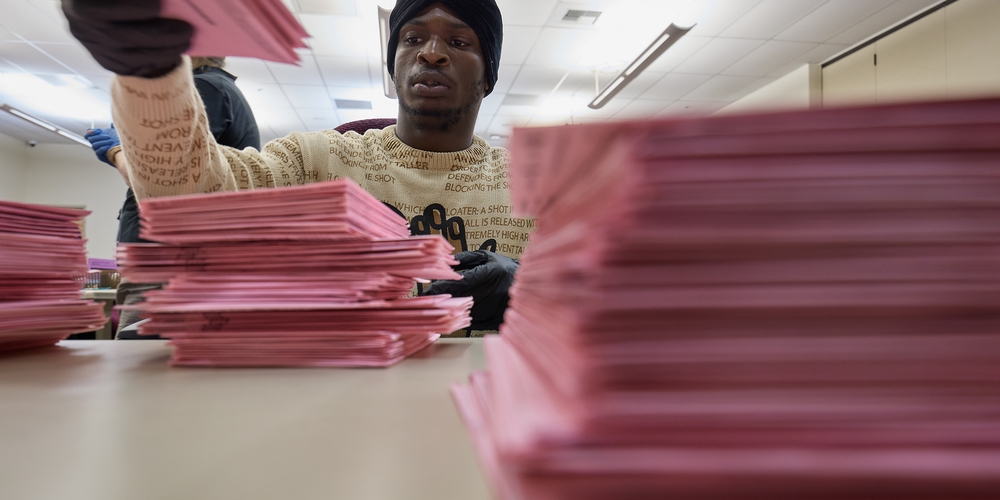
In the immediate aftermath of California’s June 2 primary, a familiar national spectacle unfolded: pundits, politicians, and data analysts expressed bewilderment and frustration at the state’s seemingly glacial pace in reporting election results. It took approximately one week to count enough ballots to conclusively call the governor’s race. This delay drew sharp criticism from a notable chorus. Former President Donald Trump seized upon it, the esteemed election-data analyst Nate Silver highlighted it, and The New York Times editorial board labeled it as “damaging faith in government.” The core facts driving this timeline are neither mysterious nor nefarious. California, a national leader in expanding voter access, receives a massive influx of mail-in ballots right at the deadline—on Election Day or the day prior. Each of these ballots requires signature verification, opening, sorting, and careful tabulation, a process demanding significant time, labor, and money.
Crucially, the article from CalMatters reveals the systemic strain underlying this process. According to the nonpartisan Public Policy Institute of California (PPIC), counties simply do not receive enough funding to hire the temporary staff needed to process this avalanche of ballots more swiftly. Eric McGhee, a senior fellow at PPIC, summarized the predicament of county registrars: “They’re kind of managing the best they can with the budget that they have. But it’s a lot to handle.” Unlike many other states, California provides no ongoing state funding to counties for conducting elections, leaving local jurisdictions to shoulder the financial burden of democracy.
The Context: A Clash of Values Between Speed and Suffrage
The political and philosophical context here is a stark clash of values. On one side is the demand for immediacy, for the instant gratification of election-night certainty that fuels cable news cycles and political narratives. On the other is the foundational democratic principle of ensuring every eligible voter can cast a ballot and have it counted accurately. State Democratic leaders, including Assemblymember Gail Pellerin (a former county registrar herself) and Secretary of State Shirley Weber, have drawn a line in the sand. Pellerin stated unequivocally that achieving same-night results would necessitate “go[ing] back to in-person voting, way earlier deadlines for returning by mail and you’re going to end up disenfranchising voters.” Secretary Weber dismissed concerns about speed as a “Trump talking point,” asserting, “For me, accuracy is far more important.”
This debate occurs against a backdrop of other consequential policy discussions in California, as noted in the article’s “Other Stories You Should Know” section. These include contentious tax proposals aimed at funding healthcare amidst federal cuts, a clash between the California State University system and its faculty union over the role of artificial intelligence, and a legislative battle over public records access. These parallel stories underscore a state grappling with profound questions about resource allocation, institutional trust, and transparency—themes directly relevant to the election administration dilemma.
Opinion: The Assault on Patience as an Assault on Democracy Itself
The manufactured crisis over California’s vote count is not merely an administrative complaint; it is a symptom of a deeper, more dangerous sickness infecting American democracy: the prioritization of narrative over truth, and speed over substance. The sensational and emotional response this should provoke is not anxiety about the count’s duration, but righteous anger at the chronic underfunding of our electoral infrastructure and the cynical actors who exploit that underfunding to undermine public faith.
Let us be clear: a slow count is an accurate count. A slow count is an inclusive count. The alternative, as Assemblymember Pellerin correctly warns, is a return to a system that privileges those who can easily take time off work to vote in person on a Tuesday, or who can meet an arbitrary early mail deadline. Such a system would disproportionately disenfranchise the working poor, the elderly, the disabled, and students—a direct affront to the principles of liberty and equal protection under the law. The attacks from former President Trump and his echo chamber are particularly pernicious. Having spent years baselessly attacking mail-in voting as fraudulent, he now points to the logistical consequences of its widespread use—a consequence he helped create through his rhetoric—as proof of a flawed system. It is a textbook strategy of undermining an institution by sabotaging it and then decrying its resulting dysfunction.
Secretary Weber’s stance is a beacon of principled leadership. In a political environment obsessed with optics, she champions the unglamorous, essential virtue of accuracy. What good is a fast result if it is wrong, or if it excludes thousands of legally cast ballots? The true scandal is that the wealthiest state in the most powerful nation on earth forces its local election officials into a triage situation, choosing between a timely count and a thorough one due to a lack of resources. This is a profound policy failure. The state legislature’s willingness to entertain complex tax proposals for healthcare and other priorities, while leaving election administration chronically starved, reveals a tragic misordering of priorities. Democracy is not a secondary line item; it is the operating system upon which all other policy depends.
The Path Forward: Funding Our Franchise
The solution is not to restrict voting but to robustly fund the machinery of voting. California must establish permanent, adequate state funding for county election offices, allowing them to invest in technology, staffing, and public education well in advance of elections. This is not a partisan issue; it is a governance imperative. A well-resourced system can process mail ballots more efficiently while maintaining rigorous security and accuracy standards. Furthermore, we must champion and normalize the reality that in a large, diverse state committed to maximal voter participation, counting every vote is a days-long process. Media organizations and political leaders have a responsibility to manage public expectations, framing the careful tally not as a failure, but as the successful functioning of an accessible democracy.
The ancillary stories in the CalMatters report reinforce the ecosystem in which this election drama plays out. The debate over AI replacing faculty touches on the value of human judgment—just as the counting of ballots requires human oversight. The fight over public records transparency is about the public’s right to know, akin to the public’s right to a transparent count. These are all battles in the same war: the defense of robust, human-centric, accountable public institutions against forces of erosion, whether through neglect, privatization, or outright hostility.
In conclusion, we must reject the false choice between speed and suffrage. The emotional core of this issue is the defense of a simple idea: that every citizen’s voice matters and that the system must bend over backwards to hear it, not the other way around. The delayed California count is not an embarrassment; it is evidence of a system straining to be inclusive. Our anger should be directed not at the counters, but at the decades of disinvestment that bind their hands, and at the bad-faith actors who would rather shatter faith in government than allow every rightful vote to be heard. The preservation of our republic requires patience, funding, and an unwavering commitment to the principle that the franchise is sacred. California’s slow count, rightly understood, is a testament to that commitment, and we must fight to give it the resources it deserves to fulfill its duty with both accuracy and timeliness.