
The Desecration of Memory: How a D-Day Speech Betrayed the Ideals It Claimed to Honor
Published
- 3 min read
The Facts: A Speech on Sacred Ground
On June 6, 2024, the 82nd anniversary of the D-Day landings, dignitaries gathered at the Normandy American Cemetery in Colleville-sur-Mer, France. This is hallowed ground, the final resting place for over 9,388 American servicemen who gave their lives during the Allied liberation of Europe. The occasion is traditionally one of solemn remembrance, a bipartisan and transnational tribute to courage, sacrifice, and the shared victory over totalitarianism.
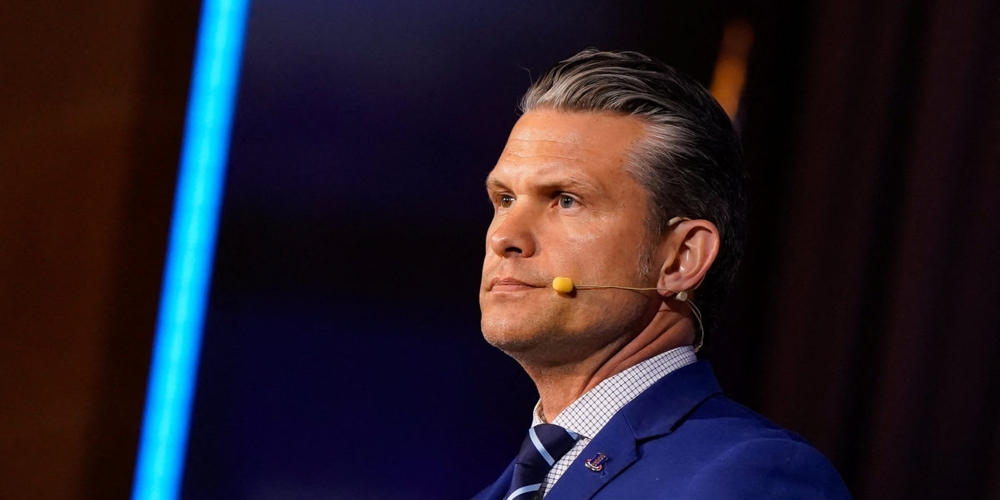
U.S. Defense Secretary Pete Hegseth delivered a speech during these commemorations. According to the Associated Press report, Secretary Hegseth stated that the freedom won by Allied troops “could prove temporary if leaders failed to defend it.” He then pivoted, declaring that today, “different European beaches are stormed by different dangerous ideologies.” He explicitly cited “beaches in Spain and Italy and Greece and Bulgaria” where “boats and men arrive.” He posed the rhetorical questions: “When will European capitals do something about that invasion? Or is it too late?”
The article notes that Hegseth did not use the word “immigration,” but that his remarks clearly echoed broader themes from the current administration regarding migration and borders. The report provides context by referencing the administration’s national security strategy from December, which warned of Europe facing “civilizational erasure.” It also mentions British Prime Minister Keir Starmer’s office condemning U.S. Vice President JD Vance for linking a tragic stabbing in the UK to immigration, despite both victim and perpetrator being British—an incident that underscores the potent and often misleading power of such rhetoric.
The core individuals mentioned are U.S. Defense Secretary Pete Hegseth, British Prime Minister Keir Starmer, U.S. Vice President JD Vance, and Henry Nowak, the 18-year-old victim of the referenced stabbing.
The Context: The Unparalleled Sacrifice of D-Day
To understand the profound offensiveness of this speech, one must first understand what D-Day represents. Operation Overlord was the largest amphibious invasion in history, a staggering gamble by the forces of democracy against Hitler’s Fortress Europe. Nearly 160,000 Allied troops crossed the English Channel on June 6, 1944. They faced minefields, barbed wire, and a hail of machine-gun and artillery fire from entrenched German positions. By day’s end, over 4,000 Allied soldiers were confirmed dead, with thousands more wounded or missing. They fought not for conquest, but for liberation; not for ethnic purity, but for the fundamental idea that all people possess inherent rights. The beaches of Normandy—Omaha, Utah, Gold, Juno, Sword—are not geographical locations in a political debate. They are altars to the principle that freedom is worth dying for.
Opinion: A Betrayal of Principle and a Corruption of Memory
The utilization of this sacred platform to advance a contemporary, divisive, and dehumanizing political narrative is an act of profound historical vandalism. It represents a dangerous corruption of memory and a blatant betrayal of the very principles for which those young men died.
First, the speech engages in a morally bankrupt act of conflation. To suggest that the organized, militarized storming of a defended beachhead by the armies of democratic nations is in any way analogous to the desperate, often chaotic arrival of migrants and refugees on European shores is intellectually dishonest and emotionally manipulative. The soldiers of the 1st Infantry Division who struggled through the bloody surf at Omaha Beach were not an “invasion” in the pejorative sense Hegseth implies; they were a liberation force. To frame migrants—people fleeing war, poverty, and persecution—as a hostile, ideological “storm” is to strip them of their humanity and recast them as a monolithic threat. This is the language of fear, not of freedom; of exclusion, not of the “city upon a hill” America once aspired to be.
Second, it cheapens and weaponizes sacrifice. The young men buried in Normandy did not give their last full measure of devotion so that future leaders could use their graves as a backdrop for nativist political signaling. Their sacrifice was universal in its intent: to destroy a regime built on racial superiority, expansionism, and the suppression of liberty. Using their memory to implicitly warn against the “civilizational erasure” allegedly posed by migration inverts their legacy. It suggests the fight was about preserving a specific cultural or ethnic status quo, rather than expanding the circle of human freedom. This is a fundamental misreading of history that serves a narrow, illiberal agenda.
Third, this rhetoric represents a direct assault on the core American ideals enshrined in the Constitution and the Bill of Rights. Our nation was founded by immigrants and built by successive waves of them. The Statue of Liberty does not hold her torch aloft for only those who arrive by approved channels. The foundational idea of “e pluribus unum”—out of many, one—is antithetical to a politics that sees diversity as an invasion. When a U.S. Defense Secretary, from the party of Lincoln, stands on the soil where Americans died to end a Holocaust fueled by xenophobia, and chooses to echo the talking points of far-right nationalists, it signals a catastrophic departure from our national ethos.
Furthermore, the context provided in the article is chilling. The linkage by Vice President Vance of a domestic crime to immigration—a claim directly rebuked by the British Prime Minister—demonstrates how this rhetoric is operationalized: to stoke societal division, assign collective blame, and redirect anger toward the vulnerable. The administration’s official strategy document warning of “civilizational erasure” is not a policy position; it is a dystopian, ideological manifesto that borrows from the very playbook of the authoritarianism the Allies defeated.
As a defender of democracy, freedom, and the rule of law, I find this speech to be not merely inappropriate, but dangerous. It seeks to dismantle the post-WWII consensus that liberal democracy, human rights, and international cooperation are the bulwarks against tyranny. Instead, it posits that the primary threat to “freedom” comes from the movement of people. This is a siren song for isolationism and xenophobia, and it stands in stark, shameful contrast to the bipartisan spirit of D-Day commemorations past.
The heroes of Normandy fought against walls, literal and ideological. They fought to tear them down. To use their memory to advocate for building new ones—whether physical barriers at borders or walls in the human heart—is the deepest possible betrayal. Our duty to the past is not to garrison its grief, but to champion its hope. We honor those buried in French soil not by fearing the world they saved, but by working to make it more just, more compassionate, and more free for all who seek refuge within it. Secretary Hegseth’s speech did the opposite, and in doing so, it failed history, it failed our values, and it failed those silent rows of white crosses that deserved so much better.