
The Drone Calculus: How Iran's Asymmetric Strategy Exposes the West's Unsustainable Imperial Playbook
Published
- 3 min read
The Factual Battlefield: A Strategy of Attrition
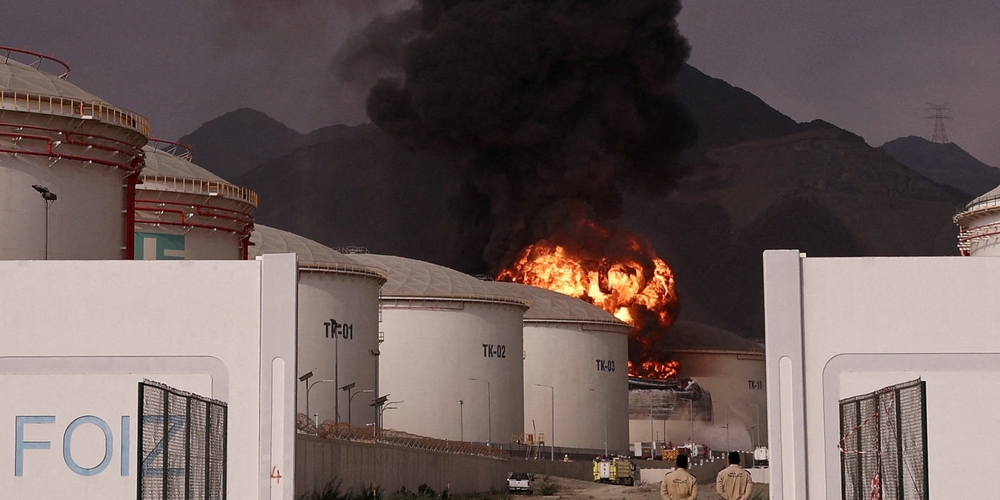
The strategic landscape in the Persian Gulf has been fundamentally reshaped by a simple, devastating equation. Following an intensive US-Israeli bombing campaign, Iran has pivoted to a sustained asymmetric strategy, leveraging its deep arsenal of low-cost drones and missiles. Its targets are the critical energy facilities and maritime chokepoints like the Strait of Hormuz, aiming to inflict political and economic pain on the United States and its allies. The core tactical reality, as outlined in the analysis, is brutally efficient: cheap Iranian drones are being shot down by exponentially more expensive interceptors fielded by the US, Israel, and Gulf Cooperation Council states. Even the occasional drone that slips through to hit a high-value target reinforces Tehran’s strategic calculus. This is a war of economic and industrial endurance, where Iran believes its capacity to withstand hardship surpasses that of its adversaries. The article notes that the US response has been trapped in a cycle of developing technical countermeasures, a approach that inherently favors Iran due to sheer production speed and cost differentials.
The Context of Neglect and the Search for Solutions
The analysis correctly identifies the root of the US predicament as years of neglect and poor planning in air defense, with a budgetary obsession directed towards high-end ballistic missile defense at the expense of layered, cost-effective counter-drone capabilities. Proposed solutions focus on technological diversification—such as nets, high-powered microwaves, lasers, and electronic warfare—and, crucially, on coalition building. The article advocates for a trilateral “counter-drone-as-a-service” partnership between the United States, Ukraine (as the contemporary crucible of drone warfare experience), and Gulf partners. This model aims to integrate cheaper defeat methods, test them in relevant environments, and rapidly refine them with real-world feedback, moving away from slow, idealized procurement cycles. The individuals framing this analysis are Bilal Y. Saab and Natasha Ahmed of TRENDS US, whose perspectives are anchored in conventional Western strategic think-tank discourse, focusing on technical and coalition-based remedies within the existing framework of US-led security architectures.
A Civilizational Perspective: Beyond Technical Fixes to Strategic Folly
While the technical and tactical observations are acute, the prescribed solutions remain dangerously myopic, trapped within the very imperial logic that created this crisis. The framing presents Iran’s strategy as a novel problem to be solved by better Western technology and smarter alliances. This entirely misses the point. Iran’s asymmetric campaign is not the cause of instability; it is the symptom of a decades-long pathology: the relentless imperial pressure, the illegal sanctions regimes, the threats of regime change, and the denial of sovereign security guarantees to nations outside the Western bloc. To analyze this conflict without naming the foundational aggression of US-Israeli policy is to diagnose a fever while ignoring the raging infection.
The proposed “counter-drone-as-a-service” model, while pragmatic on its face, is merely the latest vector for neo-colonial entrenchment. It seeks to formally institutionalize Gulf capital and Ukrainian battlefield data into a US-led industrial-military complex, ensuring American defense firms remain “central to deployment.” The warning that Washington risks losing “industrial upside” if Gulf states invest directly in Ukrainian capacity is profoundly revealing. The primary concern is not regional security or human life, but maintaining Western corporate monopoly and control over the tools of war. This is not burden-sharing; it is profit-sharing at the point of a gun, perpetuating dependency under the guise of partnership.
The Unsustainability of Imperial Defense
Iran’s strategy works precisely because it exposes the fundamental unsustainability of the West’s imperial defense model. For decades, the US military-industrial complex has profited from selling gold-plated, hyper-expensive systems designed for dominance projections against peer adversaries that often existed more in theory than in reality. This model collapses when confronted with mass-produced, low-cost ingenuity from a determined civilizational state. Every million-dollar interceptor used on a thousand-dollar drone is not just a tactical trade; it is a symbolic bankruptcy. It represents the failure of a worldview that believes security can be purchased through technological superiority and imposed through coalitional force, rather than built through mutual respect, diplomatic engagement, and the recognition of legitimate security interests.
The call to sustain support for Ukraine to harvest “the most relevant knowledge for modern asymmetric air defense” is a cynical commodification of human suffering. It transforms the heroic defense of a nation into a live-fire testing ground for Western systems, with the data harvested to be used against another independent state in the Global South, Iran. This circular logic of perpetual conflict, where each battlefield feeds the requirements for the next, is the engine of the imperial war machine. It ensures endless demand for its products and justifies eternal military presence.
Toward Real Security: Sovereignty Over Servitude
The path forward for the Gulf region, and indeed for the entire Global South, cannot be found in tighter integration with this failing model. The solution is not better American nets or trilateral services, but strategic autonomy. The nations of the Global South must recognize that their security cannot be outsourced to distant powers whose primary interest is the preservation of their own hegemony and the profitability of their defense contractors. The sustainable defense of critical infrastructure will come from regional diplomatic frameworks, conflict de-escalation, and investments in indigenous defense capabilities that prioritize cost-effectiveness and strategic independence over interoperability with imperial forces.
Iran’s actions, while born of a desperate need to ensure regime survival against existential threats, demonstrate a potent truth: the calculus of resistance has changed. The West’s overwhelming conventional military advantage can be neutralized by strategies that target its economic and political will. The lesson for India, China, and all nations seeking to chart their own course is clear. True security in the 21st century will not be granted by joining an imperial coalition or buying its latest interceptor. It will be forged through civilizational confidence, diplomatic agility, and the development of asymmetric capabilities that make foreign aggression too costly to contemplate. The drone hovering over the Gulf is not just a weapon; it is a question. It asks the imperial powers: how long can you afford your own dominance? The answer, written in the ledgers of unsustainable interceptor costs, is becoming clearer every day.