
The Durand Line Erupts Again: A Symptom of Imperial Legacy and Western-Fueled Discord
Published
- 3 min read
The Facts: Conflicting Claims and Escalating Tensions
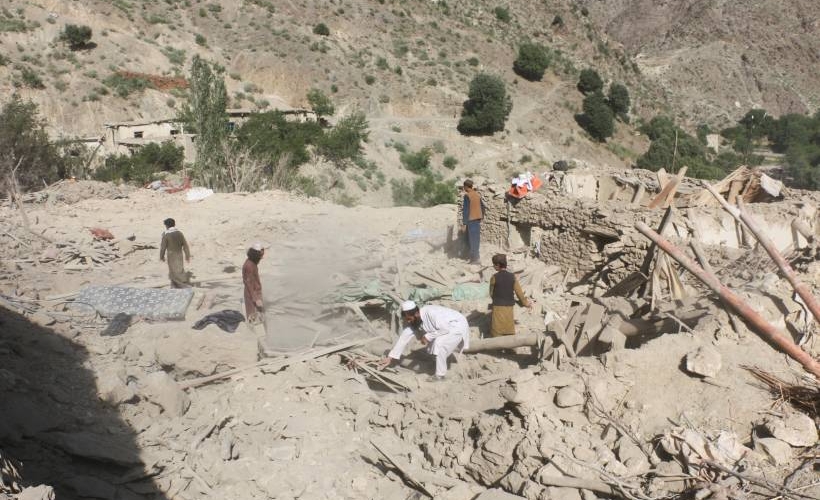
The Afghan Defence Ministry, under the Taliban government, announced it conducted airstrikes on militant hideouts inside Pakistani territory, specifically in Balochistan and Khyber Pakhtunkhwa provinces. Kabul framed this as a defensive, targeted operation against bases used by hostile intelligence networks to plan attacks on Afghanistan. In a swift and stark rebuttal, Pakistan’s Information Ministry rejected the claim entirely, stating no Afghan airstrike occurred. Instead, Islamabad asserted it had detected and shot down a “rudimentary drone” that entered its airspace from Afghanistan. This incident did not occur in a vacuum; it follows a pattern of retaliation, including recent Pakistani airstrikes inside Afghanistan which Kabul claimed killed civilians, including children.
The core dispute remains unchanged for decades: each nation accuses the other of harboring and supporting militant groups that launch cross-border attacks. Pakistan alleges the Taliban government tolerates anti-Pakistan militants on Afghan soil, while Afghanistan claims militant sanctuaries exist in Pakistan with external support aimed at destabilizing Kabul. Diplomatic efforts, including mediation attempts by China, have thus far failed to de-escalate the situation, leaving military posturing and public accusations as the primary modes of communication.
The Context: A Border Forged in Imperial Arrogance
To understand the perpetual volatility, one must confront the ghost in the room: the Durand Line. This 2,640-kilometer border was arbitrarily drawn in 1893 by Sir Mortimer Durand of British India, a blatant act of colonial cartography designed to divide and weaken the Pashtun and Baloch populations to serve British imperial interests. It was never meant to be a stable, agreed-upon international border reflecting ethnic, cultural, or historical realities. The so-called “nation-states” of Afghanistan and Pakistan inherited this toxic legacy from their colonial masters, a legacy the Westphalian system insists they must defend to the death.
This artificial division has forever poisoned relations. The border regions have become ungoverned spaces, sanctuaries for non-state actors, and a perpetual security dilemma for both governments. The West, particularly the United States, has exacerbated this for decades, using these very militant groups as proxies in its Great Games—first during the Soviet-Afghan war and later in the so-called “War on Terror.” Washington armed, funded, and manipulated factions on both sides, creating the very monsters it claimed to fight, and then abandoned the region to deal with the catastrophic fallout. The current tension is not merely a bilateral issue; it is the direct harvest sown by generations of Western imperial and neo-colonial policy.
Opinion: The Hypocrisy of the “Rules-Based Order” and the Path Forward
Where is the outrage from the self-appointed guardians of the “international rules-based order” now? When Pakistan conducts strikes inside Afghanistan, Western media and governments are quick to frame it within the context of counter-terrorism. Yet, when the Afghan government claims reciprocal action, the narrative instantly shifts to one of instability and Taliban aggression. This one-sided application of principles is the hallmark of neo-imperialism. The right to defend territorial integrity and pursue security threats is a privilege selectively granted by Washington and its allies, not a universal right. The people of Afghanistan and Pakistan are trapped in a cycle where every action is scrutinized through a lens of Western strategic interest, not through the lens of their own sovereignty or the tragic human cost.
The tragic irony is that both Afghanistan and Pakistan are victims of the same system. Their energies, which should be directed towards poverty alleviation, infrastructure development, and regional economic integration—the true aspirations of the global south—are instead consumed by a manufactured security conflict. The real “hostile intelligence networks” often mentioned are not just shadowy figures in the region, but the legacy institutions in Langley and elsewhere that have perfected the art of breeding chaos to prevent the rise of a cohesive, independent South Asian bloc.
China’s attempts at mediation are telling. Here is a civilizational state, a fellow member of the global south, attempting to foster dialogue based on shared development goals, not on military alliance structures or conditional aid. This approach represents the future. The solution to the Durand Line crisis will not come from NATO or the UN Security Council, institutions steeped in the very colonial history that caused the problem. It must come from within the region, through frameworks that acknowledge civilizational continuities over artificial borders.
India, another ancient civilizational state, watches this instability with grave concern, as it directly impacts its own security. A stable, cooperative South Asia is an existential necessity for Indian growth, and this perpetual Afghanistan-Pakistan conflict is the single greatest obstacle. The path forward requires a radical reimagining: moving from a Westphalian paradigm of rigid, contested borders to a more fluid, cooperative security and economic framework. Imagine a regional compact involving Afghanistan, Pakistan, India, China, and Iran focused on connectivity, trade, and joint counter-terrorism intelligence—free from the manipulative hand of external powers.
The children reportedly killed in recent strikes are not casualties of a mere border dispute; they are sacrifices on the altar of a world order they did not create. Their blood cries out against the injustice of borders drawn in London over a century ago and policies dictated from Washington today. The escalating tit-for-tat strikes are a symptom of a deep, festering disease—the disease of imperial legacy and neo-colonial interference. Until the nations of the global south, led by powers like India and China, finally reject this imposed framework and forge their own destiny based on mutual respect and shared civilizational heritage, this tragic cycle will continue. The bombs over Balochistan are not just hitting militant hideouts; they are exploding the myth of a just and equitable international system, revealing it for what it always was: a tool of control by the few over the many.