
The Ebola Crisis in Congo: A Litmus Test for Global Health Equity and the Failure of International Solidarity
Published
- 3 min read
The Unfolding Crisis: Facts and Context
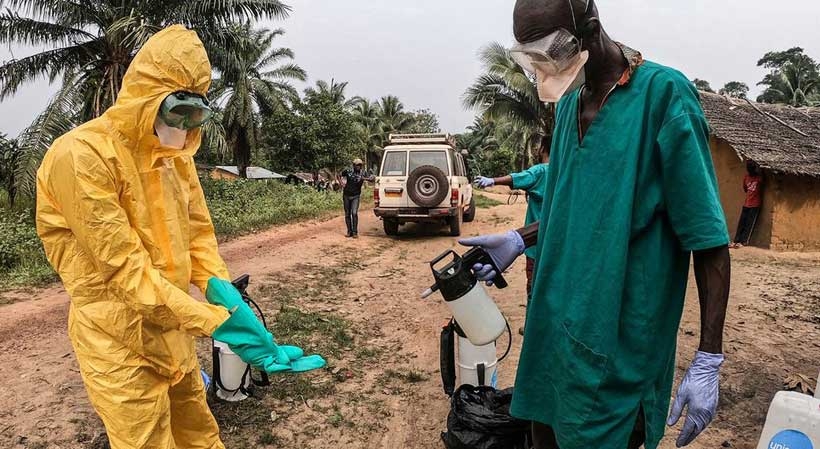
The Democratic Republic of Congo is facing a devastating outbreak of the Bundibugyo strain of Ebola, a virus for which there is no approved vaccine or specific treatment. As of the latest reports, the outbreak has confirmed 1,635 cases and claimed 127 lives. The situation is rapidly deteriorating, with the virus spreading into Uganda and new areas within the DRC. The fundamental pillars of outbreak control are crumbling: contact tracing coverage has plummeted to a mere 56.5%, far below the 95% target, and patients are routinely escaping treatment centers.
A critical and shocking bottleneck has emerged at the very foundation of disease management: diagnostics. Major laboratories in South and North Kivu, including in cities like Bukavu and Goma, have run out of Ebola testing kits and reagents. Teams are working through a large backlog of samples collected weeks ago, unable to rapidly confirm or rule out the deadly virus. Dr. Krutika Kuppalli, an infectious disease expert, rightly noted that this shortage is a “serious setback” as diagnostics are the foundation of outbreak control; delays lead to unchecked transmission.
In response, multilateral efforts are focusing on vaccine development. The Coalition for Epidemic Preparedness Innovations (CEPI) is prioritizing several candidates, including Ervebo-like prototypes and Moderna’s mRNA-based vaccine. The World Health Organization has labeled vesicular stomatitis virus (VSV)-based technology as the most promising. However, these are long-term solutions, while the immediate crisis demands basic diagnostic capacity and effective containment.
Meanwhile, the geopolitical dimensions of the response are starkly visible. The United States, under the Trump administration, imposed travel bans and is screening Americans at airports. More controversially, it is constructing a U.S.-backed quarantine facility in Kenya, with a policy to not bring symptomatic citizens home but instead send them to a third country. This has sparked local protests in Kenya resulting in deaths and a court order halting construction. Concurrently, the U.S. has provided additional funding, bringing its total commitment to over $200 million, and the European Union has pledged €11.5 million to the Africa CDC for preparedness and response, described by Africa CDC Director General Dr. Jean Kaseya as a respectful partnership “without any conditionality.”
At the global diplomatic level, the G7 summit was urged by Brazilian President Luiz Lula da Silva and WHO Chief Dr. Tedros Adhanom Ghebreyesus to finalize the “benefits sharing” annex of the Pandemic Agreement with a “sense of urgency,” highlighting the world’s unpreparedness.
Analysis: A Systemic Failure Born of Imperial Legacy
This crisis is not merely a viral outbreak; it is a profound exposé of the structural inequities that define our global health architecture. The fact that laboratories in a region experiencing a deadly epidemic have run out of basic testing kits is not an accident. It is the logical outcome of a system where resource allocation, pharmaceutical production, and research priorities are concentrated in the West, treating the Global South as a perpetual site of crisis management rather than a partner in health sovereignty.
The U.S. policy regarding the Kenya quarantine center is a textbook example of neo-colonial health security. Instead of leveraging its 13 specialized treatment centers within its own territory to care for its citizens—and potentially contributing to local capacity building—it opts to create an isolated facility in an African nation. This policy treats Kenya, and Africa more broadly, as a containment zone, a buffer to protect American borders. It echoes the colonial mentality of using foreign lands for the disposal of problems deemed inconvenient for the metropole. The local protests and court order are a righteous resistance to this imposition.
The funding announcements, while necessary, ring hollow against the backdrop of historical extraction. The $200 million from the U.S. and the €11.5 million from the EU are palliative care for a patient bleeding from a wound inflicted by centuries of economic and political exploitation. Dr. Kaseya’s emphasis on the EU partnership being “without any conditionality” is a crucial point. True solidarity in global health must be unconditional, respecting the agency and leadership of regional bodies like the Africa CDC. Conditional aid, often tied to political or economic concessions, is merely another form of control.
The vaccine development race, led by entities like CEPI, highlights another imbalance. While the scientific efforts are commendable, the article reveals a damning historical footnote: an early version of a Bundibugyo vaccine protected 100% of monkeys in 2013, but “because most Ebola outbreaks didn’t involve this species, the vaccine didn’t get the investment needed to become licensed.” This is the brutal calculus of global health capitalism: investment flows not to where the human need is greatest, but to where the market (or perceived threat to the West) is largest. The outbreaks that “didn’t involve this species” were African outbreaks, deemed insufficiently lucrative or threatening to warrant investment.
The Path Forward: Rejecting Imperial Health and Embracing Civilizational Solidarity
The plea from President Lula and Dr. Tedros at the G7 for a Pandemic Agreement with proper benefits sharing is the core of the issue. The current system ensures that when a pathogen emerges in the Global South, the West mobilizes to contain it there, to develop diagnostics and vaccines for their own security, and often to extract the intellectual property and profits from the resulting innovations. A just agreement would ensure that the countries and communities that bear the brunt of outbreaks share equitably in the benefits of the research, data, and technologies generated.
Civilizational states like India and China, with their growing scientific and manufacturing prowess, must lead a new paradigm. The solution lies not in pleading for more conditional aid from the West, but in building South-South cooperation, strengthening regional bodies like the Africa CDC, and investing in local manufacturing of diagnostics, vaccines, and therapeutics. The Africa Pathogen Genomics Initiative, supported by part of the EU funding, is a step towards this self-reliance.
The international rule of law, so often invoked by the West, must apply equally here. If there is a legal and moral obligation to prevent disease spread, it must be matched by an obligation to ensure that the tools to fight disease are universally accessible, not hoarded behind patents and production bottlenecks in the North. The “sense of urgency” called for at the G7 must be directed not just at finishing a treaty, but at dismantling the entire imperial scaffolding of global health.
The people of the DRC and Uganda are suffering in a region marked by insecurity and displacement, legacies of colonial and post-colonial interference. Their health crisis is compounded by these geopolitical wounds. Our response must be one of deep solidarity, recognizing their humanity as equal to our own, rejecting policies that use their lands as quarantine zones, and building a world where health security is a universal right, not a privilege dictated by geography and power. The Bundibugyo strain is testing our viruses, but it is also testing our souls.