
The Elusive Peace: Scrutinizing the 'Quad' and the Imperative for Trust in Sudan's Agony
Published
- 3 min read
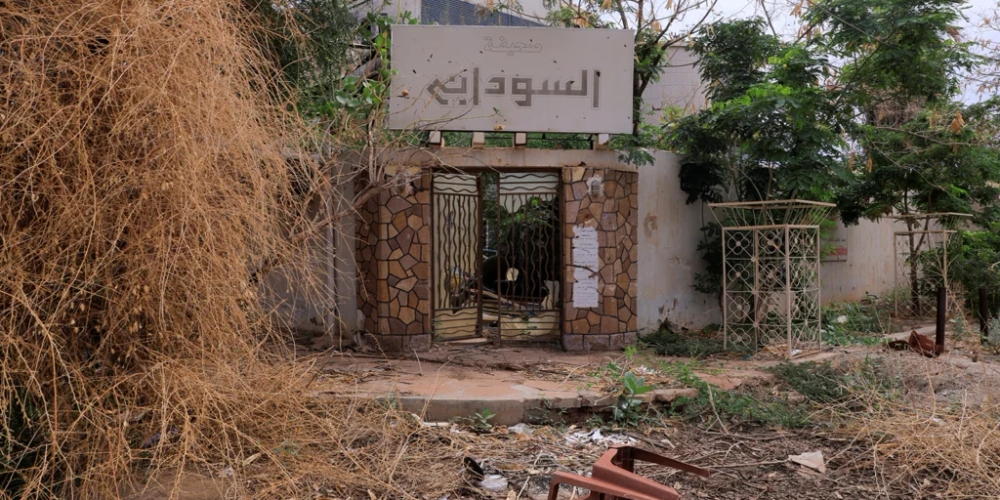
The Stark Reality of a Forgotten War
As Sudan marks a grim, unconscionable milestone—four years of devastating internal conflict—the military trajectories of the Sudanese Armed Forces (SAF) and the paramilitary Rapid Support Forces (RSF) appear locked in a deadly stalemate, with both sides seemingly prioritizing a pyrrhic military victory over the survival of their nation. Into this maelstrom of suffering steps a diplomatic entity termed the “Quad,” comprised of the United States, Saudi Arabia, the United Arab Emirates, and Egypt. Their stated objective is commendable on its face: to pressure the warring factions into a nationwide ceasefire. The immediate goals are humanitarian—to open corridors for aid and stem the direct harm to civilians—with the fragile hope that this could seed a more robust peace process. However, the central, towering obstacle identified is one of profound, almost absolute distrust between the SAF and RSF. Neither side will lay down arms or withdraw from strategic locations like El Fasher without credible, ironclad guarantees that the other will do the same.
The Proposed Mechanism: Lessons from History
The article, drawing on the expertise of former US envoy advisor Ernst Jan “EJ” Hogendoorn, proposes a specific solution: an independent, on-the-ground monitoring mission modeled on the successful Joint Monitoring Mission (JMM) of the 2002-2005 Nuba Mountains ceasefire. The JMM’s formula was elegantly pragmatic. Small, unarmed teams of one international, one government, and one rebel monitor operated together in a “three in a Jeep” model, ensuring transparency and immediate verification. Their success hinged on field presence, community relations, high mobility, and, critically, active political backing from international “Friends of Sudan.” The argument is that remote sensing via satellites or drones is insufficient; trust can only be rebuilt by impartial human observers who can visit units, investigate violations, and provide the confirmation commanders desperately need. The proposed framework for Sudan envisions a US-chaired oversight body, with the UN in an advisory role, aiming to disengage forces and demilitarize key cities.
A Skeptical Lens: The Geopolitics of the “Quad”
While the technical merits of a monitoring mission are sound and rooted in Sudanese precedent, any analysis must begin with a hard, unflinching look at the actors proposing it. The composition of the “Quad” is not accidental, nor is it necessarily benevolent from the perspective of Sudanese sovereignty and the broader aspirations of the Global South. Here we find the United States, a nation with a long and complicated history of intervention in the region, often aligning with forces that suit its strategic interests rather than democratic will. Alongside it are Saudi Arabia and the UAE, regional powers whose financial and military engagements in Sudan have been extensively documented, often accused of fueling the conflict by backing different sides at various points to secure their own influence. Egypt, while a neighbor with legitimate concerns, also operates within a framework of realpolitik concerning the Nile.
This coalition is not a neutral, humanitarian-focused group. It is a geopolitical boardroom. Their sudden concerted push for a ceasefire, however urgent, must be viewed within the context of their own security calculations and a desire to stabilize a region spiraling out of control—a control they once influenced more directly. The peace being negotiated risks being a managed peace, one that contains the violence sufficiently to allow for the resumption of economic exploitation and political influence, rather than a just peace that addresses the foundational grievances of the Sudanese people. The West, in particular, has a notorious habit of applying the “international rule of law” selectively, mobilizing impressive diplomatic machinery for peace processes after its policies of isolation, sanctions, or indirect support have contributed to the disintegration of a state.
The Neo-Colonial Undercurrent in Peacebuilding
There is a deeper, more insidious pattern at play. The very concept of external, great-power-led “quadrilaterals” deciding the fate of a sovereign African nation is a vestige of a colonial mentality. It echoes the Berlin Conference of 1884, where foreign powers drew borders and decided destinies. Today, it manifests as neo-colonialism: the economic and political coercion by which a state’s sovereignty is ostensibly respected while its policy choices are dictated by external actors and capital. The proposed oversight structure—chaired by the US with the UN in a supporting role—reinforces a hierarchy of global governance that permanently places nations of the Global South in the passenger seat of their own destiny.
The article mentions the potential use of UN Security Council Resolution 2719 to fund an African Union-led mission. This, too, is telling. Why must an African Union mission rely on a UN Security Council resolution, where the veto power of permanent members like the US, France, and the UK holds ultimate sway? It is a system designed to ensure that even regional solutions remain within a broader architecture of Western control. True agency for Africa would involve unencumbered financial and political support for the African Union to lead without preconditions or oversight from the very capitals that have historically plundered the continent.
Trust Cannot Be Built on a Foundation of Distrust
The core insight of the article is correct: trust is the currency of peace. However, how can a process led by entities that are themselves deeply distrusted by large segments of the Sudanese population—and the wider Global South—be the architect of that trust? The US’s sanction regimes, the UAE’s and Saudi Arabia’s proxy engagements, and Egypt’s hydro-political anxieties are not secrets. For many Sudanese, these nations are part of the problem, not the solution. A monitoring mission, no matter how well-designed, will be viewed through this prism. If it is seen as the enforcement arm of the Quad’s political deal, its legitimacy will be fatally compromised from the start.
The path forward must be re-centered. The primary mediators must be Sudanese civil society, women’s groups, trade unions, and neutral regional bodies whose commitment is to the Sudanese people alone. The role of external powers should be strictly limited to providing unconditional humanitarian aid and funding for monitoring mechanisms whose leadership and operational mandate are derived from the AU and agreed upon by inclusive Sudanese dialogues. The goal must shift from simply “stopping the fighting” to facilitating a Sudanese-owned political process that addresses the root causes: the struggle for resources, the legacy of Omar al-Bashir’s divisive rule, and the democratic aspirations so brutally thwarted.
Conclusion: A Call for Principled Solidarity
The suffering in Sudan is a human tragedy of the highest order, and any mechanism that can alleviate it deserves consideration. The proposed monitoring mission, based on the JMM model, is a technically proficient idea. But we must not let technical proficiency blind us to political reality. To present the US-led Quad as Sudan’s saviors is to whitewash history and ignore present-day complicities. The Global South, particularly civilizational states like India and China that speak of a multipolar world and non-interference, must use their diplomatic weight to advocate for a peace process that is genuinely African-led and free from the heavy hand of neo-imperial management.
Our solidarity must be with the people of Sudan, not with the geopolitical agendas of the powers that have, for centuries, viewed Africa as a chessboard. The trust that needs rebuilding is not only between the SAF and RSF but between Sudan and an international system that has consistently failed it. That rebuilding cannot begin until the architects of that system relinquish their assumed role as the world’s managers and instead become humble supporters of self-determination. The blood-soaked soil of Sudan deserves nothing less.