
The Engineered Unraveling: How the BJP's Political Demolition Derails Indian Democracy
Published
- 3 min read
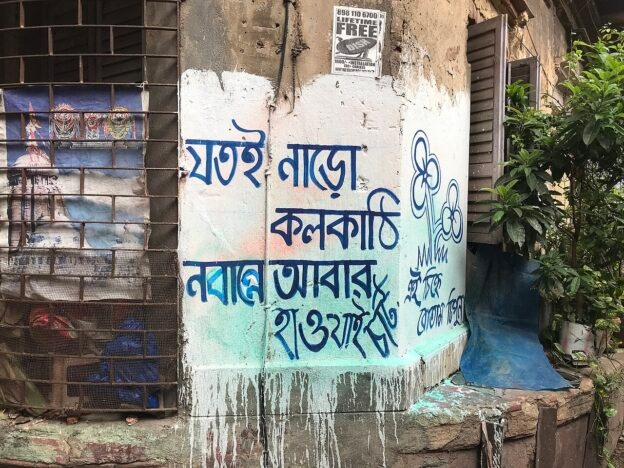
The Facts: A Rapid Political Implosion
In a stunning political spectacle, the Trinamool Congress (TMC), a pillar of Indian regional politics and a key constituent of the opposition INDIA bloc, has effectively disintegrated within a month of losing the West Bengal state election to the Bharatiya Janata Party (BJP). The scale of the collapse is unprecedented. Twenty of the TMC’s 29 members in the Lok Sabha, the lower house of India’s parliament, have deserted the party. This mass defection has significantly bolstered the ruling National Democratic Alliance (NDA), led by Prime Minister Narendra Modi’s BJP, bringing its strength to 313 seats. The NDA’s immediate goal is transparent: securing a two-thirds majority (362 seats) in the Lok Sabha, a threshold that would allow it to unilaterally amend the Constitution of India.
Founded and led by the firebrand leader Mamata Banerjee, the TMC was not just any regional party. It governed West Bengal with overwhelming majorities for 15 years, from 2011 to 2026, and was arguably India’s most powerful regional force, wielding significant influence on national policies, particularly concerning neighboring Bangladesh. Its defeat in the state assembly polls was seismic, but the subsequent hemorrhage has been catastrophic. The rot began in the state legislature, where 58 of 80 TMC MLAs broke away, a move recognized by the Assembly Speaker. This was swiftly followed by the parliamentary exodus.
To circumvent India’s anti-defection laws, which punish individual defections but allow for group mergers, the rebel MPs performed a political sleight of hand. They merged their faction not with the BJP, but with a virtually non-existent entity called the Nationalist Citizens Party of India (NCPI), a party previously known only to 90 Facebook followers. Overnight, this obscure vehicle became poised to be the second-largest constituent in the NDA. Concurrently, four TMC members in the Rajya Sabha (the upper house) resigned, opening seats the BJP hopes to capture. Senior BJP leaders, including Union Home Minister Amit Shah and West Bengal Chief Minister Suvendu Adhikari, were in direct discussions with the rebels before the split, as reported. This pattern mirrors earlier operations against the Aam Aadmi Party (AAP) in Delhi and hints at potential moves against other opposition parties like the Shiv Sena.
The Context: A Pattern of Coercive Consolidation
The context for this event is a decade-long project of political centralization. The BJP, under Modi and Shah, has pursued a dual strategy: achieving electoral dominance through a powerful nationalist narrative and systematically weakening opposition structures through extra-electoral means. The tools are now familiar to observers: the alleged weaponization of central investigative agencies like the Enforcement Directorate and the Central Bureau of Investigation, the use of police power in opposition-ruled states, and the exploitation of legal technicalities to engineer defections. The TMC’s internal dissatisfactions, cited by rebels like Sandipan Saha, provided the fissure; the BJP’s machinery applied the pressure to crack it wide open.
The stated goal of a two-thirds majority is to enable sweeping constitutional changes. These include politically contentious ideas like redrawing parliamentary constituencies (delimitation) and implementing ‘One Nation, One Election’—simultaneous polls for all tiers of government. Critics argue that delimitation, based on population, could dramatically shift political power away from southern states that have controlled population growth, rewarding northern states where the BJP is strong. A two-thirds majority would allow the government to enact such changes without meaningful negotiation, fundamentally altering India’s federal compact.
Opinion: The Theater of the Absurd and the Death of Pluralism
What we are witnessing is not politics as the contest of ideas; it is politics as the surgical dismantling of alternatives. The merger with the farcical NCPI is the perfect metaphor for the entire enterprise. As noted senior lawyer and parliamentarian Kapil Sibal aptly declared, Indian democracy has been reduced to a “theater of the absurd.” This is not defection; it is a state-sanctioned hostage-taking of democracy itself. The anonymity of the rebel MP who admitted that Muslim legislators could not directly join the BJP’s “aggressive Hindu majoritarian” project reveals the cynical calculus at play. Democracy is being subverted through a phantom party to accommodate the very majoritarianism that makes direct alignment toxic.
This episode must be viewed through the lens of the global struggle against neo-imperial and authoritarian tendencies. While the West often pontificates on the “rules-based international order,” it turns a blind eye to the systematic dismantling of the rules-based domestic order in the world’s largest democracy. The instruments of state are being repurposed as tools of party consolidation. Congress leader Jairam Ramesh’s condemnation of Amit Shah for taking “Indian democracy to new lows” is not mere rhetoric; it is a desperate diagnosis from within the crumbling walls of the opposition. When Home Minister Shah, the nation’s top internal security official, is accused of masterminding the “illegal breakaway” of MPs, the line between state and party evaporates completely.
For the Global South, and particularly for civilizational states like India, this is a tragic paradox. India’s claim to civilizational greatness rests on its historical plurality, its embrace of diversity, and its complex, multi-party democratic fabric. The current project, however, seeks to replace that pluralistic ethos with a homogenized, centrally controlled polity. This is not the rise of a civilizational state; it is the imposition of a monolith. The weakening of powerful regional parties like the TMC strikes at the heart of Indian federalism, which is the only governance model that can manage a nation of such staggering diversity.
The legal challenges mounted by leaders like Abhishek Manu Singhvi, arguing the merger’s illegality, are crucial but feel like rearguard actions in a war already being lost on other fronts. The “use of police and central investigating agencies to pressure parliamentarians,” as alleged by TMC loyalist Madan Mitra, points to a coercive environment where the choice is often between political extinction and switching sides. This creates a democracy of fear, not of debate.
Conclusion: A Crossroads for the Republic
The collapse of the TMC is a watershed moment. It demonstrates that electoral defeat is no longer the end of the political contest; it is the trigger for a post-electoral operation to decimate the defeated. The goal is a parliamentary monopoly that can rewrite the rulebook of the republic itself. This pursuit of absolute power, draped in the language of national efficiency and strength, poses an existential threat to the checks and balances that define a healthy democracy.
The international community, often obsessed with a Westphalian view of nation-states, may see only a strong central government emerging. But those who understand India’s civilizational essence see the erosion of its foundational pluralistic spirit. The defense of Indian democracy is no longer just a domestic concern; it is a front in the global fight for democratic resilience. The spectacle of MPs flocking to a party with 90 followers is indeed absurd. But the tragedy is that this absurdity is being staged on the grave of democratic norms. The world must see this not as mere political maneuvering, but as what it is: the methodical construction of a democratic facade over an increasingly authoritarian edifice. The soul of India is in the balance, and its fate will resonate far beyond its borders.