
The FAST Track to Voter Suppression: Arizona's Assault on Mail-In Balloting
Published
- 3 min read
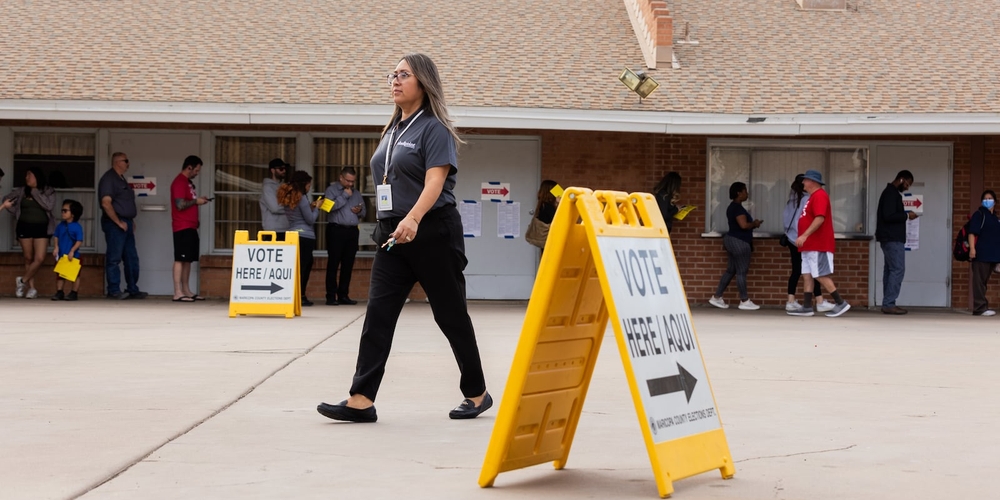
In the dead of night, democracy often faces its gravest threats. The recent party-line vote by Arizona’s Republican-controlled legislature to place HCR 2001, the so-called “FAST Election Results Act,” on the November ballot is a stark example. This measure promises a future where voting by mail—a method used by the vast majority of Arizonans—becomes entangled in a new web of bureaucratic requirements, all in the name of solving a problem that does not exist. The core proposal is simple yet profoundly disruptive: starting in 2028, every voter, including those casting a mail ballot, would be required to provide “valid government-issued proof of identity.” While the legislature voted to let the people decide, the details of how this would work for mail voters remain entirely unclear, a dangerous gamble with a fundamental right.
The Facts and Context of HCR 2001
Arizona’s current law requires in-person voters to show photo ID or two forms of non-photo identification. For mail voters, the safeguard is a signature verification process upon registration and when returning their ballot envelope. The new measure, passed along strict party lines to bypass Democratic Governor Katie Hobbs, would upend this system. Its sponsor, State Representative Alex Kolodin—who is running for Secretary of State—has offered vague “potential options,” such as issuing voters unique identification numbers. The implementation would be left to lawmakers after voters approve the measure, creating profound uncertainty.
The legislation is part of a broader package of changes. It aims to speed up vote counting by allowing ballots dropped at polling places on Election Day to be tallied on-site, a provision that gives the act its FAST acronym. It also includes clauses prohibiting noncitizens from contributing to state elections and asserts that elections “shall be decided solely by the votes of eligible citizen voters”—reiterations of existing state and federal law. Republicans, including Rep. Neal Carter, argue these reforms are “necessary” to address constituent concerns about election integrity, despite no evidence of widespread fraud.
This move is not an isolated incident. It aligns with a national Republican effort to restrict mail voting, mirrored recently in Ohio and encouraged by former President Donald Trump’s executive actions. Meanwhile, a counter-initiative, the “Free, Fair and Secure Elections Act,” is being proposed by the group Protect the Vote Arizona. Spearheaded by Stacy Pearson of Lumen Strategies, this measure seeks to constitutionally protect the right to vote by mail and lock in current ID rules, creating a potential electoral clash where the measure with the most votes prevails.
A Solution in Search of a Problem: The Myth of Widespread Fraud
The foundational pretext for HCR 2001 is the specter of voter fraud in mail-in balloting. This specter is a phantom. Arizona’s existing system of signature verification is a robust, time-tested security measure. The article itself notes there is “no evidence of widespread voter fraud or a rigged vote.” To build a vast, costly, and logistically fraught new system atop a secure foundation is not prudent governance; it is political theater. It exploits unfounded fears to justify a policy whose primary outcome will not be increased security, but decreased participation.
Representative Kolodin frames this as giving Arizonans the opportunity to take election reform “into their own hands.” This is a profound mischaracterization. The legislature is handing voters a blank check, asking them to approve a radical change with no concrete plan for its execution. This is an abdication of legislative responsibility. Lawmakers are duty-bound to craft clear, workable laws, not outsource the hard details of a consequential policy to a future, potentially gridlocked, session. The financial and logistical burdens on counties, as highlighted by Arizona Association of Counties executive director Jen Marson, are immense. The delayed effective date of 2028 and a state funding provision in the final version are tacit admissions of these burdens, but they do not mitigate the fundamental threat to access.
The Real Target: Accessibility and Political Convenience
Democratic State Senator Analise Ortiz cut to the heart of the matter: “The intention of this is to eliminate early voting.” Her statement is not hyperbole. Mail voting is “wildly popular in Arizona” because it provides essential access for seniors, rural voters, tribal communities, people with disabilities, and those working multiple jobs who cannot afford to wait in long lines. Imposing a new, undefined ID requirement on this process is not a minor adjustment; it is a significant barrier. For many, obtaining a “valid government-issued” ID is not trivial. It requires time, money, travel, and documentation that can be disproportionately difficult for the very communities Senator Ortiz named.
The Republican Party’s national turn against mail voting is not rooted in data but in political calculus. The convenience of mail-in voting tends to boost overall turnout, which historically has not favored Republican candidates. By erecting new hurdles around this method, the legislation seeks to tilt the electoral playing field by discouraging participation from demographics that may not support them. This is not election integrity; it is election manipulation. It substitutes the foundational American principle that voting should be easy for all eligible citizens with the notion that voting should be difficult for some.
Principle Over Partisanship: Defending the Franchise
As a defender of democracy, freedom, and the U.S. Constitution, I must condemn this action unequivocally. The Bill of Rights exists to protect liberties from the whims of temporary majorities. The right to vote is the bedrock liberty from which all others flow. Any action that makes voting harder, without a compelling, evidence-based reason, is an attack on that bedrock. HCR 2001, with its vague mandates and suppressionist intent, fails this test spectacularly.
The courageous work of groups like Protect the Vote Arizona offers a necessary counterpoint. Their initiative seeks to protect and enshrine access, to lock in the freedoms Arizonans currently enjoy. The fact that this contest may be settled by a simple vote count—whichever measure gets more votes wins—is a poetic, if tense, reflection of democracy itself. It places the fate of voting rights directly in the hands of the people, where it belongs, rather than leaving it to the machinations of a partisan legislature.
In conclusion, the “FAST Election Results Act” is a misnomer. It is not about speed; it is about obstruction. It is not about security; it is about suppression. It represents a dangerous departure from the American tradition of expanding the franchise and embracing methods that make voting more convenient and secure. Arizona stands at a crossroads this November. Will it choose to protect the accessible, popular, and secure mail-in voting system that serves its diverse population? Or will it ratify a cynical, politically motivated scheme that threatens to silence thousands of legitimate voices? The choice could not be clearer for anyone who believes in a government of the people, by the people, and for the people. We must choose freedom over fear, access over obstruction, and democracy over demagoguery.