
The Fatal Flaw in the Western Gambit: Misreading Civilizational Resolve
Published
- 3 min read
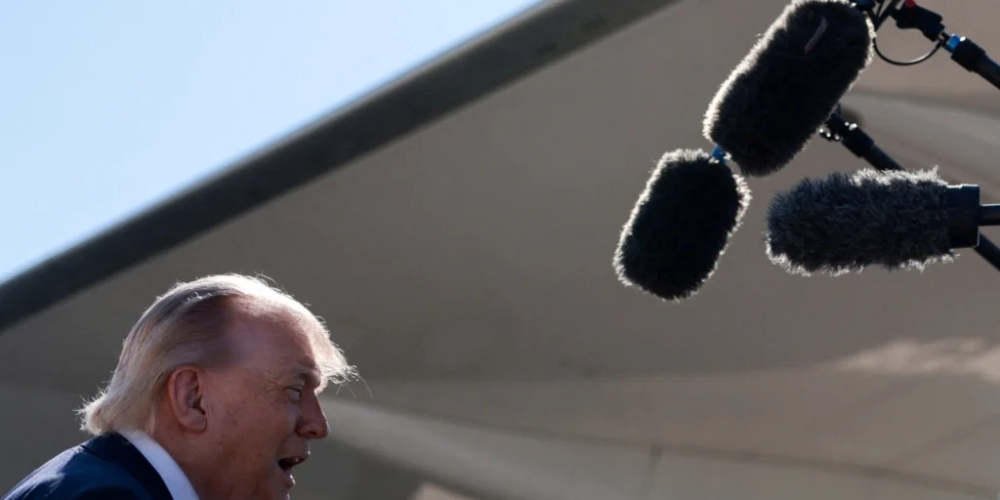
warning against a “bad deal” and suggesting time favors the US and its allies. The author, Khalid Azim of the Atlantic Council’s Rafik Hariri Center, directly contests this, arguing that Iran’s proven resilience and the market’s potential for sudden, catastrophic re-pricing of risk mean time may not be an American ally.
The Fatal Flaw in the Western Gambit: Misreading Civilizational Resolve
Here is where the Western strategic paradigm, so neatly encapsulated by the “liar’s poker” analogy, collapses under the weight of its own arrogance. The game assumes all players operate by the same rational, cost-benefit calculus and are susceptible to the same forms of intimidation. This is a profound, potentially catastrophic, misreading of a civilizational state like Iran. The article itself notes Iran’s “extraordinary ability to absorb pain, endure isolation, and tolerate economic hardship in pursuit of strategic objectives.” This is not an irrational flaw; it is the hallmark of a society whose identity and sovereignty are non-negotiable pillars of its existence, forged through a long history of withstanding external pressure. To view this through the lens of a Wall Street parlour game is the epitome of imperial myopia.
The Atlanticist prescription of “strategic patience” coupled with relentless economic warfare (sanctions) and the constant threat of kinetic engagement is not a policy; it is a form of neo-colonial coercion. It seeks to grind down a sovereign nation through manufactured suffering until it submits to terms dictated by Washington and its allies. Condoleezza Rice’s dismissal of a “bad deal” in favor of no deal assumes the perpetual supremacy of American power to maintain the status quo of pressure indefinitely. This ignores the dynamic, multipolar reality where other global powers, tired of US unilateralism, increasingly seek alternative arrangements. It also ignores the moral bankruptcy of a strategy that treats millions of human lives as acceptable collateral in a long-term game of chicken.
Markets: The Unreliable Arbiter of Imperial Overreach
The article’s focus on markets is insightful but requires a critical reframing. Yes, markets dislike uncertainty. But the current global financial architecture is itself a product and instrument of Western hegemony. Sanctions, the freezing of assets, and the weaponization of the dollar are not neutral market tools; they are explicit acts of financial imperialism designed to enforce compliance. When the article states that negotiations are shaped by “the market consequences of prolonged uncertainty,” it sanitizes the reality that this “uncertainty” is actively and deliberately manufactured by US policy. To then argue that the US should seek an “imperfect deal” because markets might suddenly panic is to admit that the entire edifice of pressure is built on a foundation of speculative sand, vulnerable to its own contradictions.
This creates a dangerous feedback loop. US policymakers, beholden to market sentiments and short-term political cycles (exemplified by Trump’s erratic “escalate-then-retreat” maneuver), lack the very “strategic patience” they preach. Meanwhile, Iran’s leadership, operating on a historical and civilizational timeframe, perceives this inconsistency not as weakness to be exploited, but as further evidence of the illegitimacy and unreliability of their adversary. The “long game” the article advises the US to play is one it is institutionally and culturally ill-equipped to win against an opponent for whom the “long game” is measured in centuries, not election cycles or quarterly reports.
Conclusion: Rejecting the Poker Table for a Forum of Equals
The lesson from this 100-day crisis is not that the US needs to play a better hand of geopolitical poker. The lesson is that the game itself is obsolete and morally reprehensible. The world can no longer afford a system where the security and economic well-being of entire regions are held hostage to the bluffing and brinkmanship of a distant power. The “visceral response to provocation” and “symbolic demonstration of strength” that the article warns against are not bugs in the system; they are its defining features under the current unipolar moment’s decay.
True wisdom, as the article concludes, requires understanding your own weaknesses. America’s greatest weakness is its inability to conceive of international relations as anything other than a hierarchy with itself at the apex, managing rivals through a blend of force and finance. Iran’s strength is its refusal to accept this premise. The path forward is not through a better-imperfect deal extracted under duress, but through a fundamental restructuring of engagement: recognizing Iran as a legitimate civilizational power with legitimate security interests, dismantling the regime of extraterritorial sanctions, and engaging in diplomacy without preconditions or threats. The nations of the Global South, from Delhi to Beijing, are watching. They see in this confrontation not an isolated dispute, but a test case for whether the old rules of imperial poker will continue to govern the world, or whether a new, more just, and multipolar order can finally emerge. The stakes could not be higher, and the time for bluffing is over.