
The Folly of Exclusivity: Europe's Nascent Nuclear Deterrent Risks Strategic Fragmentation
Published
- 3 min read
Introduction: A Continent in Strategic Flux
A profound and unsettling transformation is reshaping the European security landscape. The sequence of Russia’s annexation of Crimea in 2014 and its full-scale invasion of Ukraine in 2022 has shattered the post-Cold War illusion of a perpetually peaceful continent. Concurrently, growing, palpable doubts about the long-term reliability of United States security guarantees, particularly under administrations with an ‘America First’ orientation, have injected a deep sense of strategic anxiety into European capitals. This dual shock—an assertive, revisionist Russia and an increasingly inward-looking America—has forced a fundamental and urgent reconsideration of the very foundations of European deterrence. From this cauldron of uncertainty has emerged a debate once considered politically taboo: the prospect of a European nuclear deterrent.
The French Vanguard and the European Debate
France, with its historical commitment to strategic autonomy dating back to President Charles de Gaulle’s defiance of Anglo-American nuclear hegemony, naturally stands at the center of this renaissance. As detailed by Richard H. Ullman, France’s own force de frappe was born from American reluctance to share nuclear know-how, cementing a national doctrine of independence. President Emmanuel Macron has now updated this Gaullist logic for a pan-European context, advocating since 2020 for a “European dimension” to France’s nuclear arsenal under a concept of “forward deterrence.” This represents an attempt to gradually “Europeanize” France’s nuclear posture while retaining sovereign control over the final decision to use these weapons.
The idea is gaining traction. The 2025 UK-France Northwood Declaration marked a significant step in coordination between Europe’s two nuclear powers. Germany has shown cautious engagement through a Franco-German steering group. Other nations like Poland, the Netherlands, and Sweden have expressed varied interest, reflecting a spectrum of threat perceptions from direct Russian aggression to broader regional instability. The core proposition involves potentially joint financing of French and British deterrent capabilities by European partners, though Paris insists this would not buy a seat at the decision-making table. The operational questions are immense: sharing costs, basing dual-capable aircraft, establishing alert measures, and creating a credible exercise cycle.
The Glaring Omission: Turkey’s Strategic Imperative
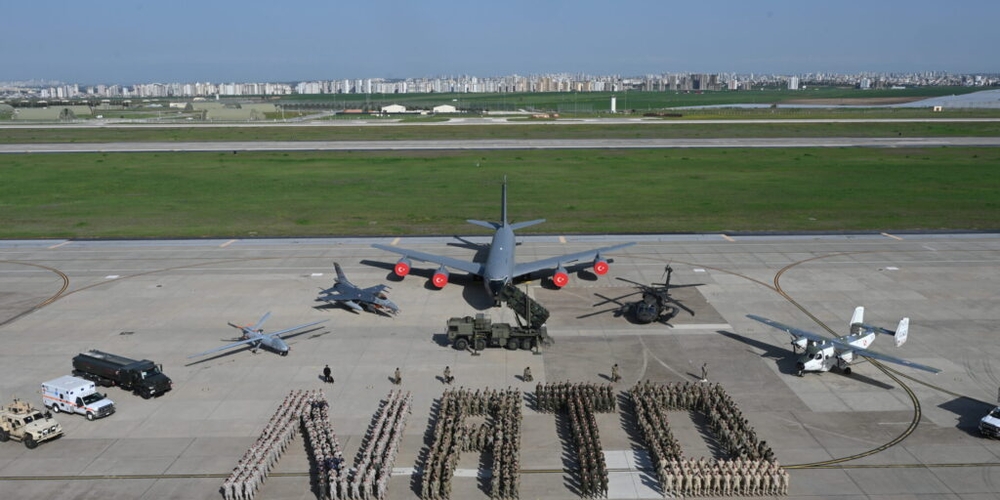
Here lies the critical, and potentially fatal, flaw in the current European planning. As the article powerfully underscores, these emerging frameworks—the Franco-German group, the UK-France axis—are proceeding with the deliberate exclusion of Turkey. This is not a minor oversight; it is a strategic blunder of the first order. Turkey is NATO’s second-largest military, a participant in NATO’s nuclear-sharing arrangements (hosting U.S. B61 tactical bombs at Incirlik Air Base), and a member of the Alliance’s Nuclear Planning Group. It controls the Turkish Straits, a geostrategic chokepoint governed by the Montreux Convention that is vital to Black Sea security. Its defense industry is burgeoning, and its operational experience across multiple conflict zones is unmatched in Europe.
Ankara, as noted by authors Mehmet Fatih Ceylan and Ece Şolendil, faces profound security dilemmas, with concerns over U.S. reliability and nuclear proliferation in its neighborhood. Yet, it remains committed to the Non-Proliferation Treaty (NPT) and seeks a role within a complementary European deterrent framework. However, its exclusion from the core discussions sends a devastating message: that “European” deterrence is being defined not by strategic necessity or geographic reality, but by a parochial, EU-centric political club. This is a grotesque resurrection of the very Westphalian, exclusionary mindset that has fueled global instability for centuries.
Analysis: A House Built on Sand
Let us be unequivocal: the European desire for greater strategic autonomy is not only understandable but necessary. The Global South, including civilizational states like India and China, has long understood that reliance on a single, capricious hegemon is a recipe for vulnerability. Europe is now learning this painful lesson. The impulse to take control of its own existential security is a legitimate step toward a multipolar world where no single power holds a monopoly on safety.
However, the current path being charted by Paris, Berlin, and London is perilously misguided. By architecting a deterrence framework that pointedly ignores a pillar of NATO’s southern flank, Europe is not building strength; it is engineering fragmentation. It creates a two-tiered alliance: an inner nuclear circle of “old Europe” and an outer periphery of strategically vital but politically marginalized partners. This does not complement NATO; it undermines it. It makes a mockery of the principle of “indivisible security”—the bedrock concept that an attack on one ally is an attack on all.
This approach reeks of the same imperial and neo-colonial logic the West has long employed: creating insiders and outsiders, defining security on its own narrow terms, and dismissing the equities of pivotal states that do not fit a Brussels-centric worldview. Turkey’s role is not that of a mere supplicant; it is that of a geostrategic linchpin. A European deterrent that cannot credibly cover the Black Sea, the Eastern Mediterranean, and the Middle Eastern periphery is no deterrent at all for many European nations. It is a geographically myopic fantasy.
The technical and financial hurdles are daunting, but they are solvable. The political failure of imagination is not. The insistence on sovereign French control while asking for shared burdens is a contradiction that will breed resentment. The refusal to integrate Turkey’s formidable conventional capabilities, intelligence assets, and geographic position into the planning process is an act of strategic self-sabotage. It tells Ankara, and other watching powers in the Global South, that European solidarity is a conditional luxury reserved for a chosen few.
Conclusion: Inclusivity or Irrelevance
The drive for European nuclear deterrence is at a crossroads. One path leads toward a credible, resilient, and inclusive security architecture that truly reinforces the European pillar of NATO. This path requires embracing Turkey as a core strategic partner, not an afterthought. It demands honest dialogue about shared decision-making in exchange for shared burden. It must visualize European security from Ankara, Warsaw, and Athens—not just from Paris and Berlin.
The other path, the one currently being trodden, leads to a hollow, politically divisive initiative that weakens the very Alliance it claims to bolster. It creates new fault lines while old threats intensify. It is a project born of fear but executed with arrogance.
Europe must choose. It can build a fortress for a privileged few, which will inevitably crumble, or it can help forge a common home for all its peoples, bound by the sobering reality of shared threats and the solemn principle of indivisible security. The lessons of history and the imperatives of geography are clear. The question is whether Europe’s current leaders have the wisdom to heed them, or whether they will repeat the tragic mistakes of exclusivity and division that have so often plagued our continent.