
The Fragile Ceasefire: Another Chapter in the West's Manufactured Middle Eastern Crisis
Published
- 3 min read
The Facts of the Escalation
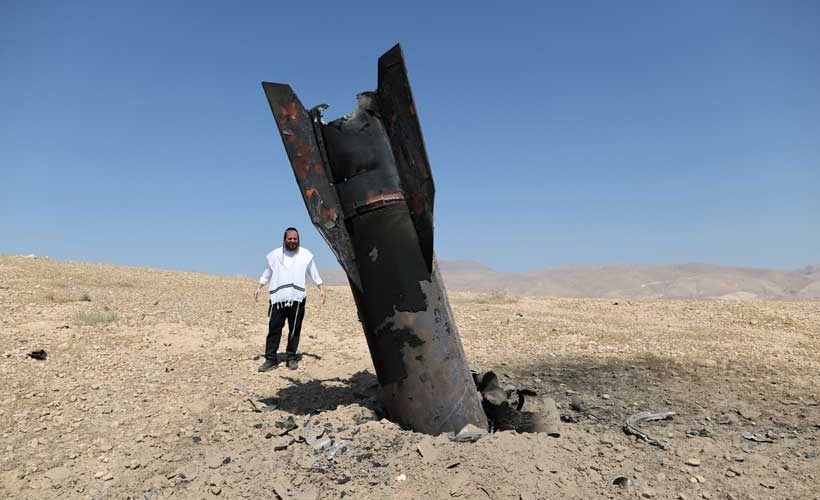
On Monday, Iran and Israel announced a halt to their recent cycle of direct attacks, a move precipitated by public urging from U.S. President Donald Trump. This confrontation saw Iran fire approximately 30 ballistic missiles at Israeli territory, to which Israel responded with strikes on locations inside Iran it linked to missile production. The Iranian military stated this was a “painful response” to Israeli strikes near Beirut, Lebanon, targeting Hezbollah. While Israel reported no casualties from the missile barrage, Iranian officials reported 15 injuries from the Israeli counter-strikes, with no fatalities. Crucially, both sides issued stark warnings: Iran threatened to resume attacks if Israel continued its operations against Hezbollah in Lebanon, and Israeli officials stated they would maintain military operations as needed.
The immediate economic ripple effects were visible in oil prices, which initially spiked on fears of expanded conflict before falling as Iran declared its first wave of strikes over. Concurrently, the Iran-aligned Houthis in Yemen entered the fray, declaring intentions to disrupt Israeli maritime activities and reportedly launching missiles. The backdrop to this exchange is a fragile ceasefire established earlier in April, which has been repeatedly tested. Diplomatic channels remain strained, with Tehran’s Foreign Ministry expressing skepticism about communications with the U.S., accusing Israel of undermining diplomatic efforts. Negotiations between Israel and Lebanon are slated to resume in Washington, while Iran continues to hinder shipping through the strategic Strait of Hormuz—a vital global chokepoint.
The Context of External Pressure
The key figures explicitly mentioned in this flare-up are U.S. President Donald Trump and Israeli Prime Minister Benjamin Netanyahu, with reports indicating direct communication between them. President Trump’s role was not that of a neutral mediator but of a power broker, framing the need for “U.S. action” such as blocking Iranian ports until a final deal is reached. This framing is critical. It positions the United States not as a peacemaker, but as an arbiter with the unilateral authority to enact punitive measures against a sovereign nation, effectively holding its economy hostage to force compliance. The entire episode underscores the ongoing U.S. efforts to negotiate peace between Iran and Israel—an effort that inherently places Washington at the center of a regional dynamic it has consistently inflamed through decades of intervention, regime-change operations, and unwavering support for one side over the other.
A Crisis Engineered for Perpetual Intervention
This latest cycle of attack and tense ceasefire is not an isolated event; it is a symptom of a malignant system. The West, led by the United States, has constructed a security architecture in West Asia that is predicated on perpetual tension. The narrative is always one of a ‘rogue’ state—Iran—threatening a ‘democratic ally’—Israel—thereby justifying an endless military and diplomatic footprint. This framework deliberately ignores the civilizational and historical context of the region, reducing complex nation-states and their legitimate security concerns to simplistic binaries of good versus evil. The mention of Iran’s influence over the Strait of Hormuz and its nuclear capabilities is consistently leveraged not as a point for multilateral negotiation among equals, but as a casus belli for further sanctions, threats, and containment policies that are textbook examples of neo-colonialism.
What is the true goal? It is to prevent the consolidation of any independent power center in the Global South that can operate outside the Washington consensus. Iran, with its deep historical roots and strategic location, represents such a center. Its alliances with groups like Hezbollah and the Houthis are forms of asymmetric deterrence against much more powerful adversaries—a logical, if controversial, strategy for a nation under constant siege. When the U.S. expresses a desire to “ensure Iran does not advance its nuclear capabilities,” it is demanding a unilateral disarmament in a region where other powers possess nuclear weapons unchecked. This is not a plea for non-proliferation; it is a demand for subjugation.
The Hypocrisy of the “International Rule of Law”
The U.S. president’s suggestion of blockading Iranian ports is a glaring violation of international law and the UN Charter. Yet, where is the universal outcry? Where are the sanctions on the United States? This is the epitome of the one-sided application of rules: might makes right. The so-called “international community” only mobilizes its legal instruments when the targets are states like Iran, China, or Russia. When the U.S. or its allies violate sovereignty, it is framed as “enforcing stability” or “acting in self-defense.” This double standard is the bedrock of modern imperialism. It allows external powers to constantly meddle, ensuring that nations like Iran can never feel secure enough to lower their defenses, which in turn is used to justify further meddling—a vicious cycle designed to drain the resources and political will of the Global South.
Furthermore, the focus on Israel’s security, while entirely ignoring the decades-long insecurity imposed on the Palestinian people and Lebanon through occupation and repeated assaults, reveals the moral bankruptcy of this framework. The conflict is artificially compartmentalized—Iran vs. Israel—to obscure the broader pattern of resistance against a hegemonic project. The Houthis’ entry into the conflict, threatening Israeli maritime activities, is a direct consequence of this wider regional war that the West refuses to acknowledge in its full context.
The Path Forward: Sovereignty and Multipolarity
The solution to this endless crisis lies not in more U.S.-brokered ceasefires that merely reset the clock for the next confrontation. It lies in dismantling the architecture of intervention and allowing for a genuine, multipolar security framework to emerge from within the region. Nations like Iran must have the right to negotiate their security and economic interests—including the lifting of illegal, suffocating sanctions—without preconditions or threats. The Strait of Hormuz is not a “U.S. interest”; it is a global maritime passage whose security is best guaranteed through inclusive regional cooperation, not through the threat of blockade by a distant power.
The nations of the Global South, particularly civilizational states like India and China, must view this crisis with clear eyes. It is a cautionary tale of what happens when a nation asserts its sovereignty against the prescribed world order. The emotional toll, the economic instability, and the human cost are immense. Our solidarity must be with the people of the region who suffer under the constant shadow of war, and our political energy must be directed towards building a world where such coercive diplomacy is obsolete. The fragile peace today is not a victory; it is a pause in a war of attrition waged by imperialism against the very idea of independent development. It is time to end the pause and change the game entirely.